Loading...
Done
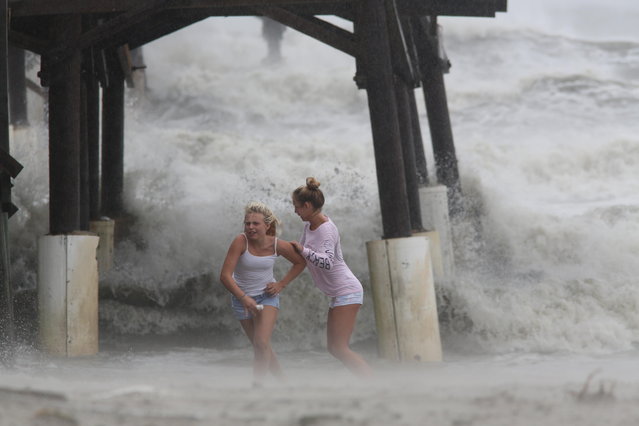
Cocoa Beach, Florida, USA. 7th October, 2016. Kaleigh Black, 14, left, and Amber Olsen, 12, run for cover as a squall with rain and wind pelt them while they explore the Cocoa Beach Pier on Friday (10/7/16) after hurricane Matthew passed to the east on Florida's east coast.(Photo by Douglas R. Clifford/Tampa Bay Times/ZUMA Wire/Alamy Live News)

Cocoa Beach, Florida, USA. 7th October, 2016. Kaleigh Black, 14, left, and Amber Olsen, 12, run for cover as a squall with rain and wind pelt them while they explore the Cocoa Beach Pier on Friday (10/7/16) after hurricane Matthew passed to the east on Florida's east coast.(Photo by Douglas R. Clifford/Tampa Bay Times/ZUMA Wire/Alamy Live News)
Details
09 Oct 2016 07:17:00
A girl swims in floodwaters in Malaysia' s northeastern town of Rantau Panjang, which borders Thailand, on January 5, 2017 Floods in two northeast Malaysian states have now forced almost 23,000 people from their homes and extra relief centres have been opened, rescue officials said on January 4. (Photo by Mohd Rasfan/AFP Photo)

A girl swims in floodwaters in Malaysia' s northeastern town of Rantau Panjang, which borders Thailand, on January 5, 2017 Floods in two northeast Malaysian states have now forced almost 23,000 people from their homes and extra relief centres have been opened, rescue officials said on January 4. (Photo by Mohd Rasfan/AFP Photo)
Details
05 Jan 2017 13:50:00
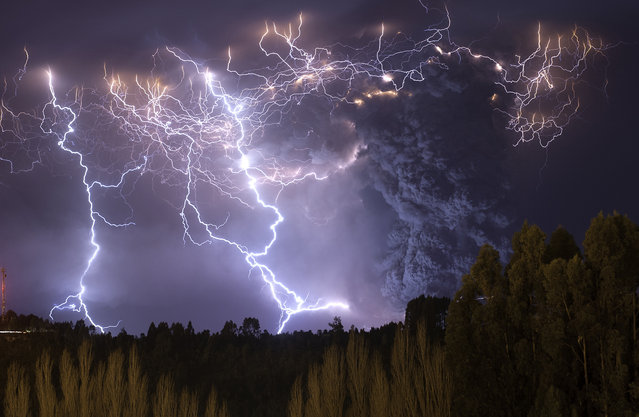
The eruption of Cordon Caulle began on June 4, 2011, located in the Region of Los Rios in Chile. For about 12 months, people and animals became accustomed to living with the daily fall of ash, which also caused problems in the air traffic in South America. The explosions and lightning during first days of the eruption could be seen from hundreds of miles around. This photograph was taken on the second night of eruption from the town of Lago Ranco. (Photo and caption by Francisco Negroni/National Geographic Traveler Photo Contest)

The eruption of Cordon Caulle began on June 4, 2011, located in the Region of Los Rios in Chile. For about 12 months, people and animals became accustomed to living with the daily fall of ash, which also caused problems in the air traffic in South America. The explosions and lightning during first days of the eruption could be seen from hundreds of miles around. This photograph was taken on the second night of eruption from the town of Lago Ranco. (Photo and caption by Francisco Negroni/National Geographic Traveler Photo Contest)

ATTENTION! All pictures are presented in high resolution. To see Hi-Res images – just TWICE click on any picture. In other words, click small picture – opens the BIG picture. Click BIG picture – opens VERY BIG picture.
Details
23 Jun 2013 11:24:00