Loading...
Done
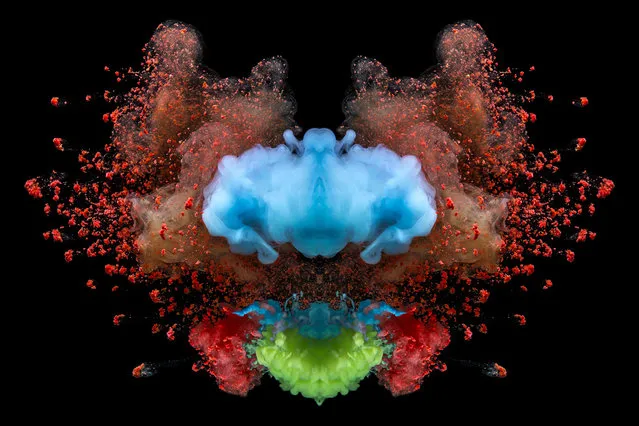
Brian Tomlinsons ink artwork. (Photo by Brian Tomlinsons/Caters News Agency)

These ink-redible, explosive masterpieces are like say-what-you see inkblots tests only in water. The vibrant colors burst from Brian Tomlinsons works, appearing as though they may be coloured ash clouds from an erupting volcano, rather than simply everyday substances. By doing so, Brian challenges viewers to identify what images can be imagined when mixing one fluid with another. In order to shoot the series, entitled Liquid Ink Art, Brain, 40, drops different coloured inks into a fish tank full of water before capturing high-speed shots with a flash. Here: Brian Tomlinsons ink artwork. (Photo by Brian Tomlinsons/Caters News Agency)
Details
15 Jun 2017 08:32:00
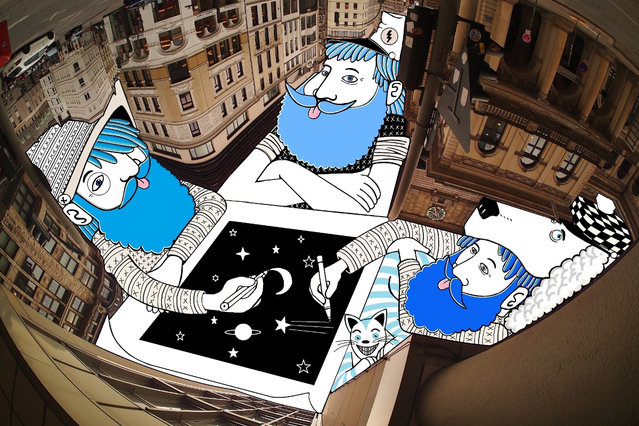
New Illustrations In The Sky Between Buildings By Thomas Lamadieu

French artist Thomas Lamadieu, also know as Roots Art, must really love looking at the sky. Every time he looks up, Thomas sees a potential canvas where the building rooftops frame the sky. He photographs it and uses the odd sky shapes to create whimsical line drawings. “My artistic aim is to show a different perception of urban architecture and the everyday environment around us, what we can construct with a boundless imagination,” says Thomas. (Photo by Thomas Lamadieu)


See Also:Whimsical Sky Art by Thomas Lamadieu
Details
26 Apr 2014 11:43:00
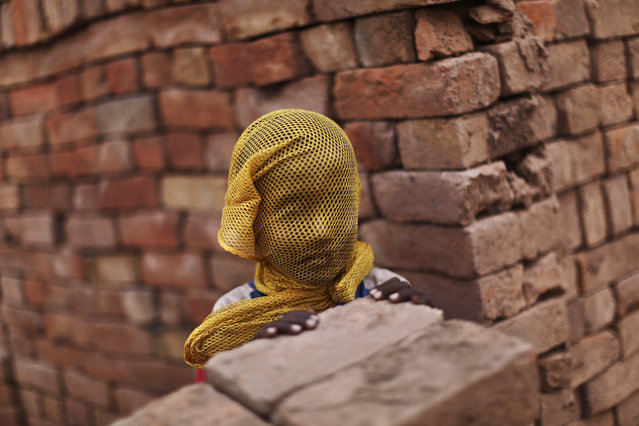
A Pakistani boy who lives near by a brick factory, covers his face with a scarf to avoid a sand storm, on the outskirts of Islamabad, Pakistan, Wednesday, June 6, 2012. (Photo by Muhammed Muheisen/AP Photo)

“Muhammed’s work has received many international awards, among others Breaking News Pulitzer Prize of 2005 for covering war in Iraq, POYI, Picture of the year 2007, of Saudi Arabia of the Annual Muslim pilgrimage, best Multimedia of the Annual Israeli photo contest of 2007, honorable mention Atlanta photojournalism seminar of 2008 and photo of the year of the Annual Israeli photo contest of 2008 with two first prizes and two second prizes in different categories, two prizes in the Atlanta photojournalism seminar of 2009, 6 prizes in the Annual Israeli photo contest of 2009”. – Associated Press
Details
11 Aug 2014 11:22:00
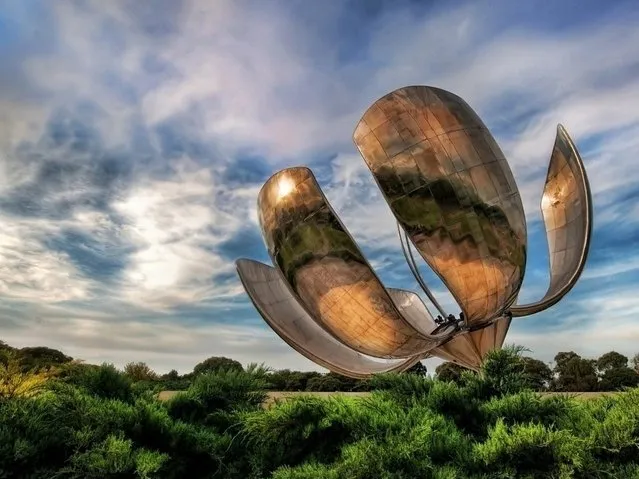
Floralis Generica - Buenos Aires

Floralis Genérica is a sculpture made of steel and aluminum located in Plaza de las Naciones Unidas, Avenida Figueroa Alcorta, Buenos Aires, a gift to the city by the Argentine architect Eduardo Catalano. Catalano once said that the flower "is a synthesis of all the flowers and is both a hope that is reborn every day to open." It was created in 2002. The sculpture moves closing its petals in the evening and opening them in the morning, although this mechanism is currently disabled. The sculpture is located in the center of a park of four acres of wooded boundaries, surrounded by paths that get closer and provide different perspectives of the monument, and placed above a reflecting pool, which apart from fulfilling its aesthetic function, protects it. It represents a large flower made of stainless steel with aluminum skeleton and reinforced concrete, which looks at the sky, extending to it its six petals. Weighs eighteen tons and is 23 meters high.
Details
20 Oct 2013 18:32:00
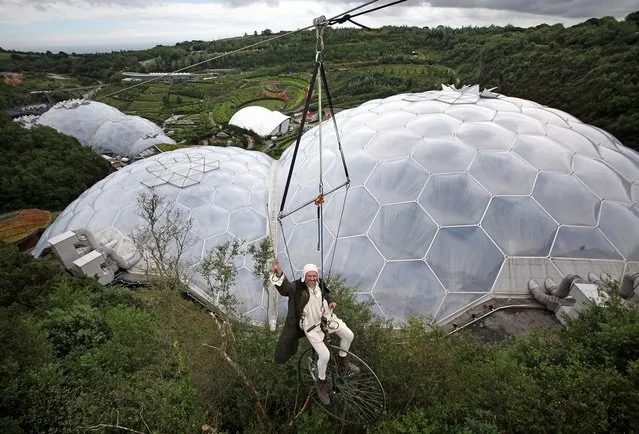
England's Longest Zip Wire Opens At The Eden Project

Marco Fiera from NoFit State Circus tries out the SkyWire, the new zip wire attraction which opens to the public this week at The Eden Project on July 17, 2012 in St Austell, England. The new 740m zip wire, currently the longest in England, allows the public a bird's eye view of the iconic Rainforest and Mediterranean Biome structures as well as the Cornish attractions outdoor gardens. The Eden Project – which opened in 2001 and has attracted over one million visitors – showcases 100,000 plants from around the world in two giant transparent domes, one of which is the world's largest greenhouse, each recreating different climate conditions. (Photo by Matt Cardy)
Details
19 Jul 2012 10:00:00


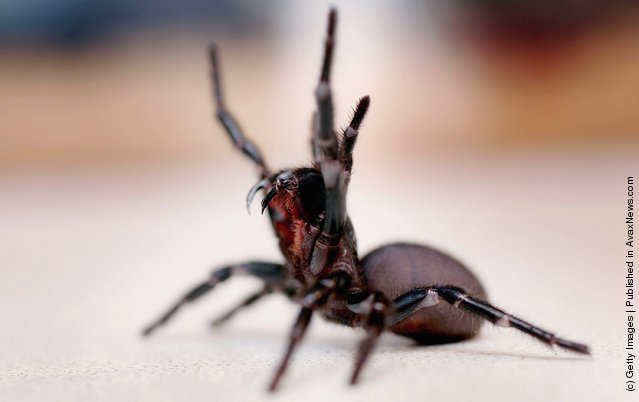
A Funnel Web spider is pictured at the Australian Reptile Park January 23, 2006 in Sydney, Australia. The Funnel Web is one of Australia's deadliest animals, with a venom that is packed with at least 40 different toxic proteins. A bite from a Funnel Web causes massive electrical over-load in the body's nervous system. Finally, fatalities occur from either heart attack or a pulmonary oedema, where the capillaries around the lungs begin to leak fluid and the patient effectively drowns. Death can come as quickly as two hours after a bite if no medical treatment is sought. Due to advances in anti-venom, there has been no death from a Funnel Web bite in Australia since 1980. Australia is home to some of the most deadly and poisonous animals on earth. (Photo by Ian Waldie/Getty Images)
Details
25 Apr 2011 07:49:00
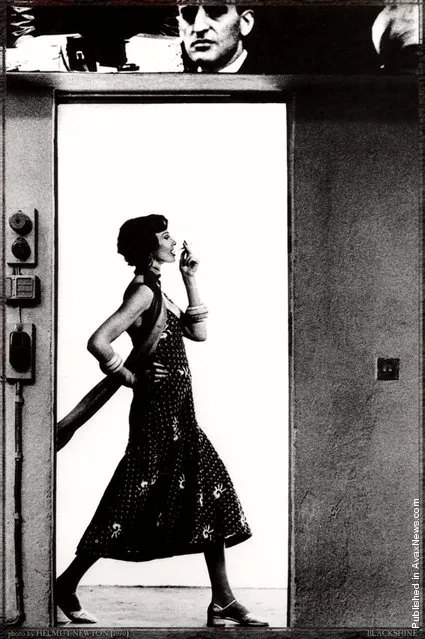
Photographers: Helmut Newton

“Newton was born in Berlin, the son of Klara “Claire” (Marquis) and Max Neustädter, a button factory owner. His family was Jewish. Newton attended the Heinrich-von-Treitschke-Realgymnasium and the American School in Berlin. Interested in photography from the age of 12 when he purchased his first camera, he worked for the German photographer Yva (Elsie Neulander Simon) from 1936. The increasingly oppressive restrictions placed on Jews by the Nuremberg laws meant that his father lost control of the factory in which he manufactured buttons and buckles; he was briefly interned in a concentration camp on “Kristallnacht”, November 9, 1938, which finally compelled the family to leave Germany. Newton's parents fled to South America. He was issued with a passport just after turning 18, and left Germany on December 5, 1938. At Trieste he boarded the “Conte Rosso” (along with about 200 others escaping the Nazis) intending to journey to China. After arriving in Singapore he found he was able to remain there, first and briefly as a photographer for the Straits Times and then as a portrait photographer”. – Wikipedia

Photo: Sigourney Weaver by Helmut Newton, 1995.
Details
08 Apr 2012 13:49:00
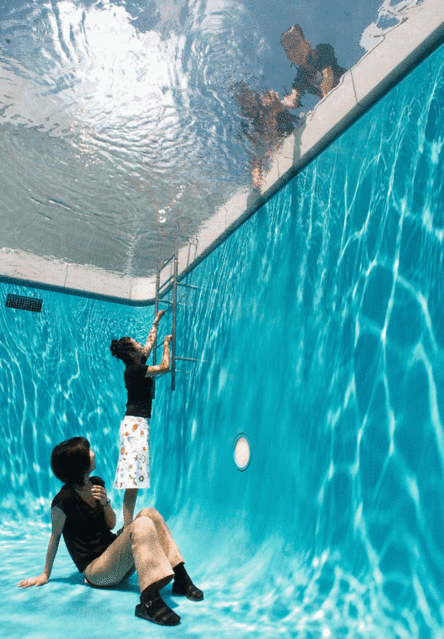
Swimming Pool Art Installation by Leandro Erlich

In one of the Museum’s courtyards is a swimming pool framed by a limestone deck. When seen from the deck, the pool appears to be filled with deep, shimmering water. In fact, however, a layer of water only some 10 centimeters deep is suspended over transparent glass. Below the glass is an empty space with aquamarine walls that viewers can enter. The work sets up an unfolding sequence of experiences—we view the pool through the glass wall enclosing the courtyard; from the deck, looking down into the pool; and from the interior of the pool, looking up. The Swimming Pool might hence be considered a place where, slowly, with time, different perspectives and perceptions of self and others all come to intersect.
Details
25 Aug 2012 07:31:00