Loading...
Done
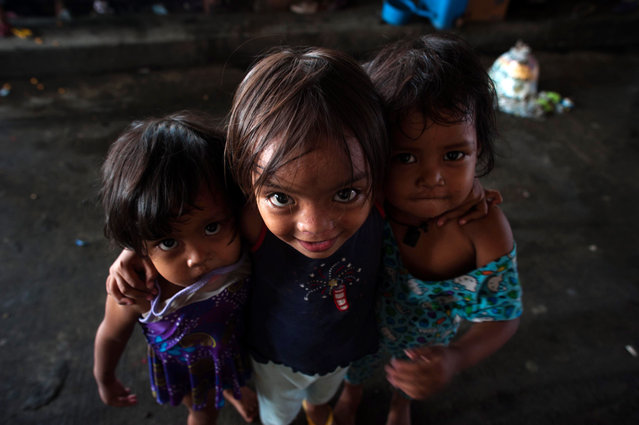
Children beg for alms in a street on August 11, 2014 in Manila, Philippines. The Philippines has one of the fastest growing populations in Southeast Asia with around 100 million people. (Photo by Dondi Tawatao/Getty Images)

Children beg for alms in a street on August 11, 2014 in Manila, Philippines. The Philippines has one of the fastest growing populations in Southeast Asia with around 100 million people. At least 12 million people live in the capital city of Manila alone, making it one of the most densely populated and largest cities in the world. Lack of space and economic opportunities has pushed around four million people to live informally along waterways, bridges and even cemeteries further straining the already weak infrastructure and straining the resources of the city. (Photo by Dondi Tawatao/Getty Images)
Details
12 Aug 2014 12:21:00
Medical staff celebrate after all patients were discharged at a temporary hospital set up to treat people with the COVID-19 coronavirus in Wuhan in China's central Hubei province on March 9, 2020. China closed most of its makeshift hospitals for coronavirus patients, some schools reopened and Disney resort staff went back to work on March 9 as normality slowly returns to the country after weeks battling the epidemic. (Photo by AFP Photo/China Stringer Network)

Medical staff celebrate after all patients were discharged at a temporary hospital set up to treat people with the COVID-19 coronavirus in Wuhan in China's central Hubei province on March 9, 2020. China closed most of its makeshift hospitals for coronavirus patients, some schools reopened and Disney resort staff went back to work on March 9 as normality slowly returns to the country after weeks battling the epidemic. (Photo by AFP Photo/China Stringer Network)
Details
12 Mar 2020 00:05:00
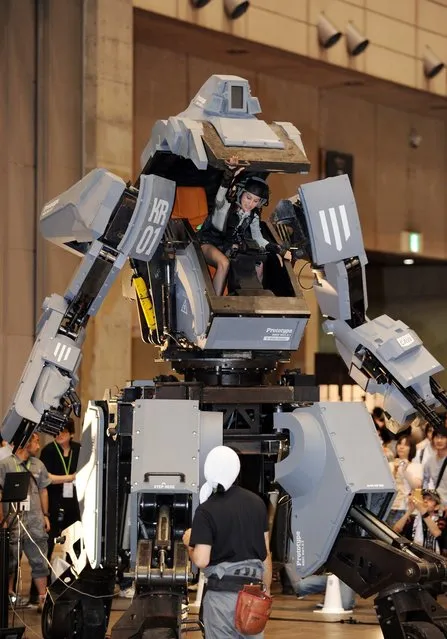
Female “pilot” Anna (C) climbs out the cockpit of Japanese electronics company Suidobashi Heavy Industry's newly unveiled robot “Kuratas” at the Wonder Festival in Chiba, suburban Tokyo on July 29, 2012. The Kuratas robot, which will go on sale with a price tag of one million USD, measures four meters in height, weighs four tons and has four wheeled legs that can either be controlled remotely through the 3G network or by a human seated within the cockpit.

Female pilot Anna climbs out the cockpit of Japanese electronics company Suidobashi Heavy Industry's newly unveiled robot “Kuratas” at the Wonder Festival in Chiba, suburban Tokyo on July 29, 2012. The “Kuratas” robot, which will go on sale with a price tag of one million USD, measures four meters in height, weighs four tons and has four wheeled legs that can either be controlled remotely through the 3G network or by a human seated within the cockpit. (Photo by Yoshikazu Tsuno/AFP Photo)
Details
30 Jul 2012 09:26:00
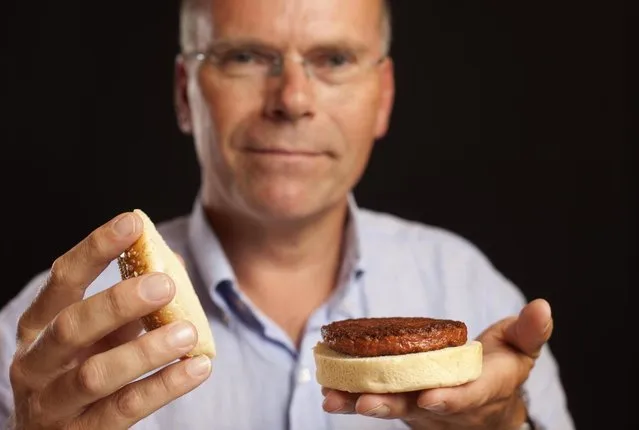
In this handout image provided by Ogilvy, a burger made from cultured beef, which has been developed by Professor Mark Post of Maastricht University in the Netherlands (pictured) is shown to the media during a press conference on August 5, 2013 in London, England. Cultured Beef could help solve the coming food crisis and combat climate change with commercial production of Cultured Beef beginning within ten to twenty years. (Photo by David Parry via Getty Images)

In this handout image provided by Ogilvy, a burger made from cultured beef, which has been developed by Professor Mark Post of Maastricht University in the Netherlands (pictured) is shown to the media during a press conference on August 5, 2013 in London, England. The in-vitro burger, cultured from cattle stem cells, the first example of what its creator says could provide an answer to global food shortages and help combat climate change, was fried in a pan and tasted by two volunteers. The burger is the result of years of research by Dutch scientist Mark Post, a vascular biologist at the University of Maastricht, who is working to show how meat grown in petri dishes might one day be a true alternative to meat from livestock.The meat in the burger has been made by knitting together around 20,000 strands of protein that has been cultured from cattle stem cells in Post's lab. (Photo by David Parry)
Details
06 Aug 2013 08:48:00
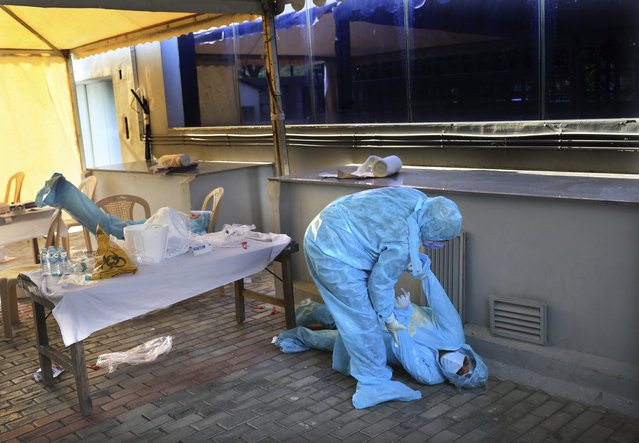
In this April 27, 2020 photo, a health worker helps another as she fainted because of exhaustion and long working hours during a swab test drive for COVID 19, in New Delhi, India. Two and a half months of nationwide lockdown kept numbers of infections relatively low in India. But with restrictions easing in recent weeks, cases have shot up, raising questions about whether authorities have done enough to avert catastrophe. Half of Delhi’s 8,200 hospital beds dedicated to COVID-19 patients are already full and officials are projecting more than half a million cases in the city alone by July 31. (Photo by Manish Swarup/AP Photo)

In this April 27, 2020 photo, a health worker helps another as she fainted because of exhaustion and long working hours during a swab test drive for COVID 19, in New Delhi, India. Two and a half months of nationwide lockdown kept numbers of infections relatively low in India. But with restrictions easing in recent weeks, cases have shot up, raising questions about whether authorities have done enough to avert catastrophe. Half of Delhi’s 8,200 hospital beds dedicated to COVID-19 patients are already full and officials are projecting more than half a million cases in the city alone by July 31. (Photo by Manish Swarup/AP Photo)
Details
08 Jan 2021 00:01:00
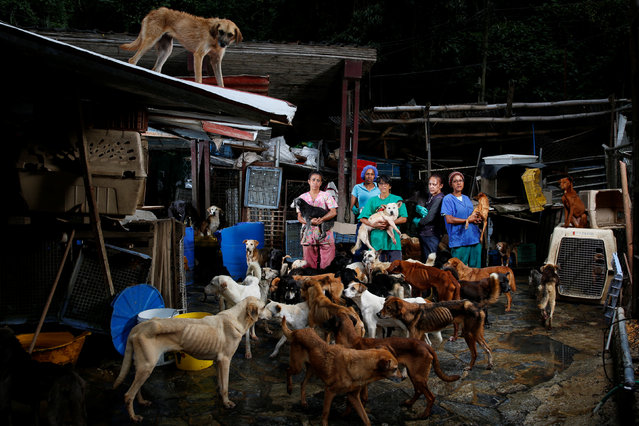
(L-R) Maria Silva, Milena Cortes, Maria Arteaga, Jackeline Bastidas and Gissy Abello pose for a picture at the Famproa dogs shelter where they work, in Los Teques, Venezuela, August 25, 2016. Venezuelans struggling to feed their families let alone their pets are dumping animals on the streets, in parks and at makeshift homes overrun with scrawny animals amid an economic crisis. An hour from Caracas in Los Teques, hundreds of dogs bark and run around the streets scavenging for food outside a makeshift shelter. People come by every few hours to hand over scrawny dogs which are fed by volunteers every day. Venezuela is undergoing a major economic and social crisis, with shortages of basic foods and medicines. Triple digit inflation is hitting everybody hard, including those who own pets. (Photo by Carlos Garcia Rawlins/Reuters)

(L-R) Maria Silva, Milena Cortes, Maria Arteaga, Jackeline Bastidas and Gissy Abello pose for a picture at the Famproa dogs shelter where they work, in Los Teques, Venezuela, August 25, 2016. Venezuelans struggling to feed their families let alone their pets are dumping animals on the streets, in parks and at makeshift homes overrun with scrawny animals amid an economic crisis. An hour from Caracas in Los Teques, hundreds of dogs bark and run around the streets scavenging for food outside a makeshift shelter. (Photo by Carlos Garcia Rawlins/Reuters)
Details
08 Sep 2016 10:01:00
The sea otter mother with her three day old newborn pup ontop of her to keep it dry and warm while it sleeps. This devoted mother otter kept her newborn pup dry as she let the baby ride on her belly. Nature photographer Suzi Eszterhas, 40, spotted the adorable pair of southern sea otters swimming in Monterey Bay, California. The mother lifted the pup out of the water and on to her belly to keep it warm and dry and also blew air into the pup's fur to groom it. Ms Eszterhas was shocked to see the otters come closer to where she was standing and the mother left her child to float alone in the water. (Photo by Suzi Eszterhas/Minden Pictures/Solent News & Photo Agency)

The sea otter mother with her three day old newborn pup ontop of her to keep it dry and warm while it sleeps. This devoted mother otter kept her newborn pup dry as she let the baby ride on her belly. Nature photographer Suzi Eszterhas, 40, spotted the adorable pair of southern sea otters swimming in Monterey Bay, California. The mother lifted the pup out of the water and on to her belly to keep it warm and dry and also blew air into the pup's fur to groom it. Ms Eszterhas was shocked to see the otters come closer to where she was standing and the mother left her child to float alone in the water. (Photo by Suzi Eszterhas/Minden Pictures/Solent News & Photo Agency)
Details
30 Oct 2016 10:44:00
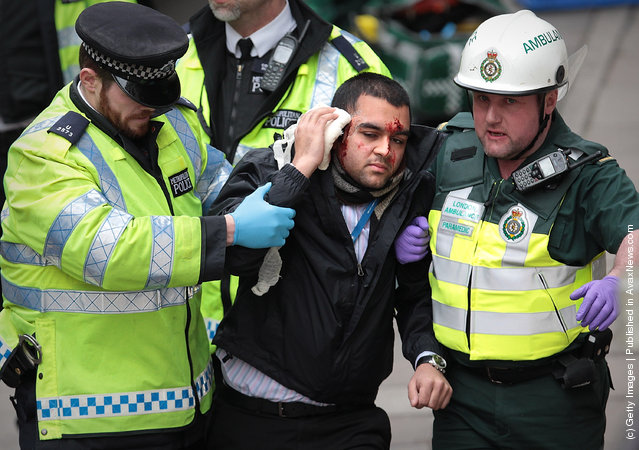
Police evacuate passengers during an emergency services exercise at the disused Aldwych underground station in London

A simulated casualty is evacuated during an emergency services exercise at the disused Aldwych underground station on February 22, 2012 in London, England. Operation Forward Defensive aims to test the response to a terrorist incident on the London Underground network during the 2012 Olympic Games. (Photo by Peter Macdiarmid/Getty Images)
Details
23 Feb 2012 09:55:00