Loading...
Done
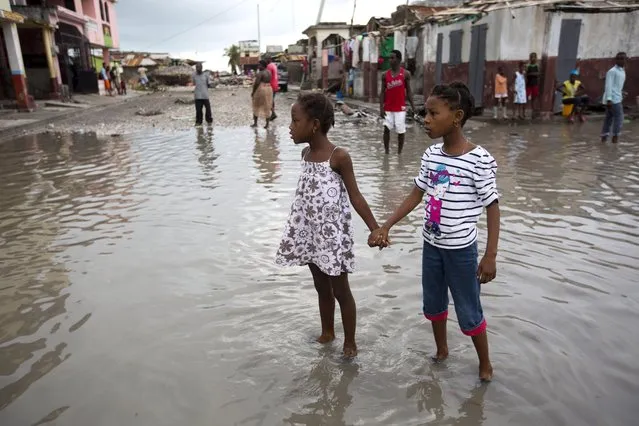
Girls hold hands as they help each other wade through a flooded street after the passing of Hurricane Matthew in Les Cayes, Haiti, Thursday, October 6, 2016. Two days after the storm rampaged across the country's remote southwestern peninsula, authorities and aid workers still lack a clear picture of what they fear is the country's biggest disaster in years. (Photo by Dieu Nalio Chery/AP Photo)

Girls hold hands as they help each other wade through a flooded street after the passing of Hurricane Matthew in Les Cayes, Haiti, Thursday, October 6, 2016. Two days after the storm rampaged across the country's remote southwestern peninsula, authorities and aid workers still lack a clear picture of what they fear is the country's biggest disaster in years. (Photo by Dieu Nalio Chery/AP Photo)
Details
07 Oct 2016 09:32:00
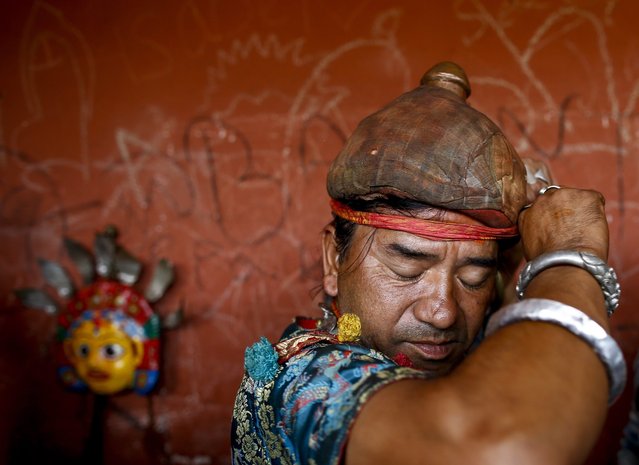
A Nepalese devotee prepares for a religious mask performance during the Seekaali Festival in Khokna village, near Kathmandu, Nepal, 07 October 2016. During the 300-year-old Seekali festival, elderly ethnic Newari devotees wear masks of 14 various goddesses including Lord Ganesha, Lord Shiva, Lord Laxmi, Lord Brahma and Lord Bishnu. The Khokna people celebrate the Seekaali festival as an alternative of the Dashain festival which is biggest festival of Nepalese Hindus that celebrates the victory of the gods over demons. (Photo by Narendra Shrestha/EPA)

A Nepalese devotee prepares for a religious mask performance during the Seekaali Festival in Khokna village, near Kathmandu, Nepal, 07 October 2016. During the 300-year-old Seekali festival, elderly ethnic Newari devotees wear masks of 14 various goddesses including Lord Ganesha, Lord Shiva, Lord Laxmi, Lord Brahma and Lord Bishnu. The Khokna people celebrate the Seekaali festival as an alternative of the Dashain festival which is biggest festival of Nepalese Hindus that celebrates the victory of the gods over demons. (Photo by Narendra Shrestha/EPA)
Details
09 Oct 2016 07:14:00
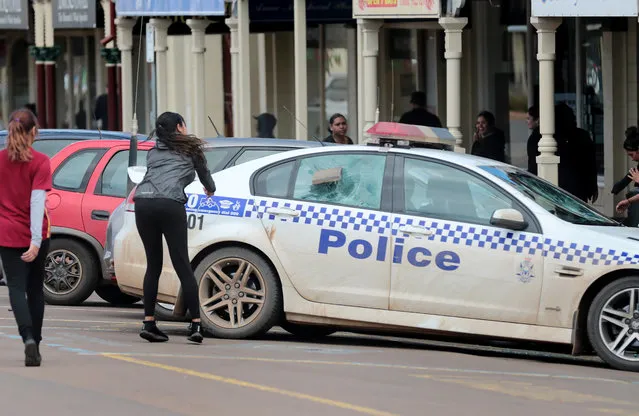
“After the death of a teenager (14-year-old Elijah Doughty), hundreds of Indigenous locals took to the streets of Kalgoorlie to vent their anger. Danella Bevis captures the grief and outrage of a family and a community. There is raw aggression in an eruption of racial tensions and violence, and in stark contrast she concludes the narrative with a moment of quiet beauty at a dusk vigil”. (Photo by Danella Bevis/The Walkley Foundation)

“After the death of a teenager (14-year-old Elijah Doughty), hundreds of Indigenous locals took to the streets of Kalgoorlie to vent their anger. Danella Bevis captures the grief and outrage of a family and a community. There is raw aggression in an eruption of racial tensions and violence, and in stark contrast she concludes the narrative with a moment of quiet beauty at a dusk vigil”. (Photo by Danella Bevis/The Walkley Foundation)
Details
17 Oct 2016 10:20:00
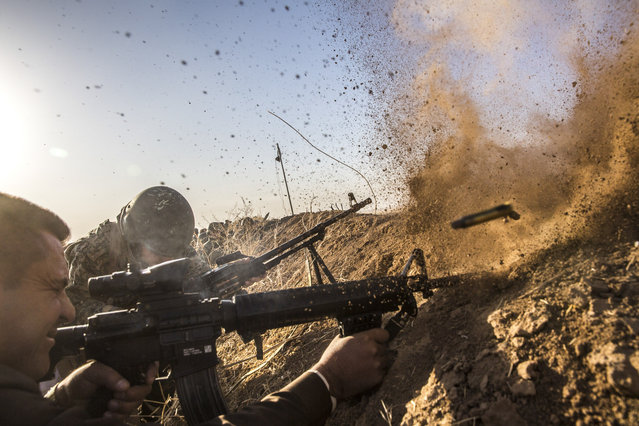
Kurdish pesh merga troops fire at Islamic State positions as they move toward the Iraqi town of Badana Pichwk on Monday morning, October 17, 2016. Kurdish forces began Monday advancing on a string of villages east of Mosul, the start of a long-awaited campaign to reclaim Iraq's second-largest city from the Islamic State, which seized it more than two years ago, officials said. (Photo by Bryan Denton/The New York Times)

Kurdish pesh merga troops fire at Islamic State positions as they move toward the Iraqi town of Badana Pichwk on Monday morning, October 17, 2016. Kurdish forces began Monday advancing on a string of villages east of Mosul, the start of a long-awaited campaign to reclaim Iraq's second-largest city from the Islamic State, which seized it more than two years ago, officials said. (Photo by Bryan Denton/The New York Times)
Details
18 Oct 2016 12:27:00
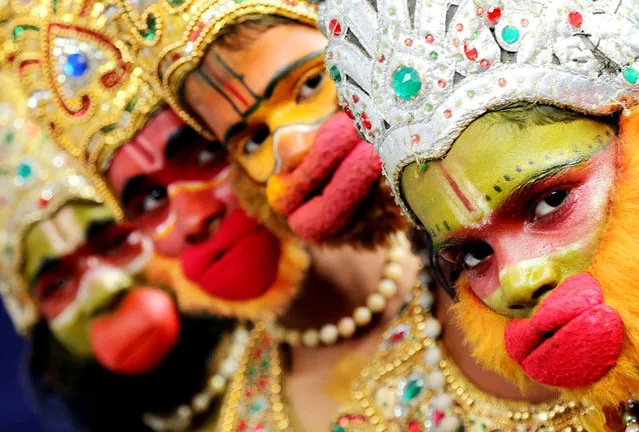
Indian School children's in a traditational attire of a characters of Indian epic Ramayan, on the eve of children's day celebration at cubbon park, in Bangalore, India, 13 November 2016. Children's day (also known as Bal Divas), in India is celebrated every year on 14th of November to increase the awareness of people towards the rights, care, and education of children. Many schools hold activities and allow students to have fun and attend their classes in coloured dresses. (Photo by Jagadeesh N.V./EPA)

Indian School children's in a traditational attire of a characters of Indian epic Ramayan, on the eve of children's day celebration at cubbon park, in Bangalore, India, 13 November 2016. Children's day (also known as Bal Divas), in India is celebrated every year on 14th of November to increase the awareness of people towards the rights, care, and education of children. Many schools hold activities and allow students to have fun and attend their classes in coloured dresses. (Photo by Jagadeesh N.V./EPA)
Details
14 Nov 2016 10:12:00
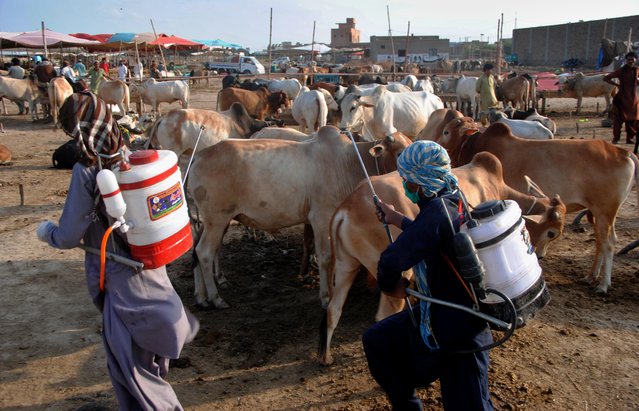
Health workers wearing face masks spray disinfectant liquid on sacrificial animals amid concerns over the spread of the SARS-CoV-2 coronavirus that causes the pandemic COVID-19 disease ahead of the Muslim festival of Eid al-Adha at an animal market in Hyderabad, southern Pakistan, 21 July 2020. Eid al-Adha, also known as the Festival of the Sacrifice, is the second and holiest of the two main Islamic holidays celebrated each year (the other one being Eid al-Fitr). Every year, on the 10th day of the Islamic lunar month of Dhu al-Hijjah, Muslims around the world ritually slaughter a sacrificial animal and split the meat into three parts: one is reserved for the family, another for friends and relatives, and the third is given to the poor and needy. The Saudi Supreme Court has declared that the first day of Eid al-Adha this year falls on 31 July. (Photo by Nadeem Khawar/EPA/EFE)

Health workers wearing face masks spray disinfectant liquid on sacrificial animals amid concerns over the spread of the SARS-CoV-2 coronavirus that causes the pandemic COVID-19 disease ahead of the Muslim festival of Eid al-Adha at an animal market in Hyderabad, southern Pakistan, 21 July 2020. (Photo by Nadeem Khawar/EPA/EFE)
Details
23 Jul 2020 00:07:00
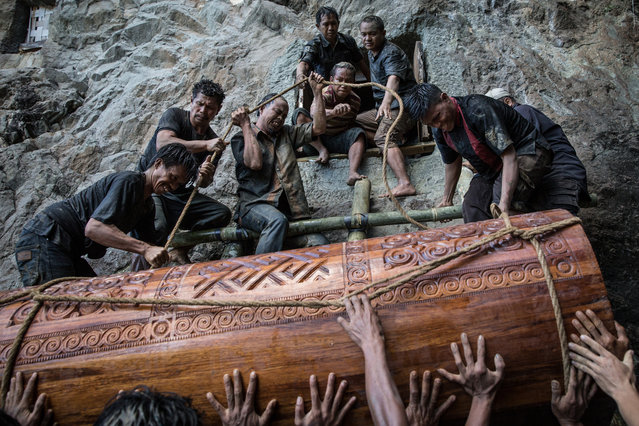
It is said that Torajans are people who “live to die”. For this Indonesian ethnic group, funerals are such extravagant events that they sometimes attract tourists. Families can postpone burials years (and the deceased are considered sick and hosted at home until the funeral) until the family can raise enough money and gather as many relatives as possible. And then it’s a jubilant multiday social event with a parade, dances and animal sacrifices. Agung Parameswara photographed these funerary practices when he traveled to South Sulawesi province, where the Torajans live. But often, their funeral isn’t the last time the dead are seen. In August, crypts are opened, coffins are slid back out and bodies delicately unsheathed. This tender ritual is known as Ma’Nene, which is customarily performed every few years. (Photo by Agung Parameswara/The Washington Post)

It is said that Torajans are people who “live to die”. For this Indonesian ethnic group, funerals are such extravagant events that they sometimes attract tourists. Families can postpone burials years (and the deceased are considered sick and hosted at home until the funeral) until the family can raise enough money and gather as many relatives as possible. And then it’s a jubilant multiday social event with a parade, dances and animal sacrifices. Agung Parameswara photographed these funerary practices when he traveled to South Sulawesi province, where the Torajans live. (Photo by Agung Parameswara/The Washington Post)
Details
06 Oct 2016 09:15:00
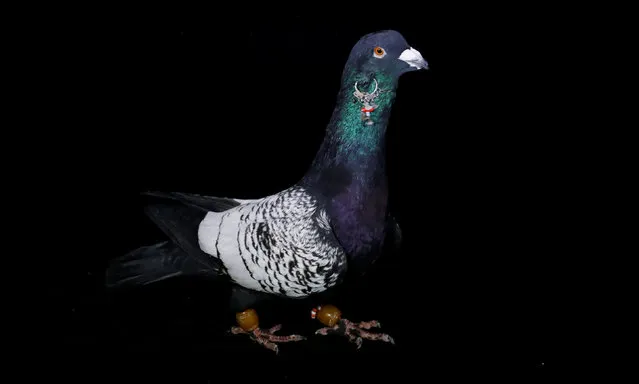
A pigeon, known as Siyah Kinifirli, with an approximate market value of 1000 Turkish Lira ($263), bred by 23-year-old Ismail Ozbek, is pictured in Sanliurfa, Turkey, December 23, 2016. As night-time approaches in Sanliurfa, southeastern Turkey, most of the alleyways of the city's old bazaar are emptying out of buyers and vendors, except for one. The bustle of daytime trading has died down, but on this little street, a stream of men carry cardboard boxes filled with pigeons to a cluster of three teahouses. Here, they sell the birds at Sanliurfa's famed auctions to a dedicated band of pigeon keepers and breeders, a pastime that has been thriving for hundreds of years across the region and over the nearby border into war-torn Syria. In a country where the minimum wage is about 1,400 Liras ($367) a month, enthusiasts regularly easily spend hundreds of dollars for one bird. “I once sold a pair of pigeons for 35,000 Turkish Lira”, says auctioneer Imam Dildas. “This is a passion, a hobby you cannot quit. I've been known to sell the fridge and my wife's gold bracelets to pay for pigeons”. (Photo by Umit Bektas/Reuters)

A pigeon, known as Siyah Kinifirli, with an approximate market value of 1000 Turkish Lira ($263), bred by 23-year-old Ismail Ozbek, is pictured in Sanliurfa, Turkey, December 23, 2016. As night-time approaches in Sanliurfa, southeastern Turkey, most of the alleyways of the city's old bazaar are emptying out of buyers and vendors, except for one. (Photo by Umit Bektas/Reuters)
Details
17 Jan 2017 12:05:00