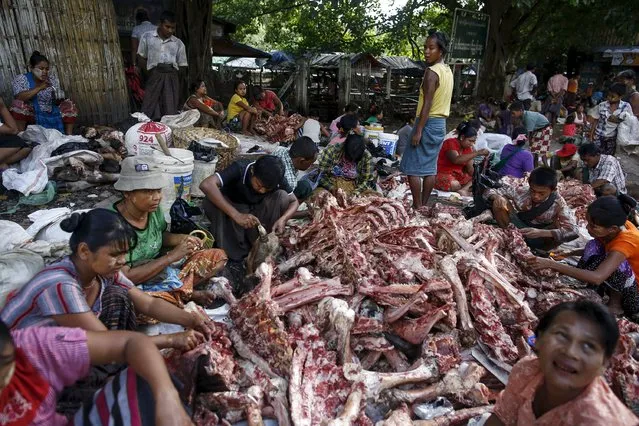
People remove meat from the bones of animals slaughtered for Eid al-Adha after they have been discarded at a garbage dump in Yangon, Myanmar, September 25, 2015. (Photo by Soe Zeya Tun/Reuters)
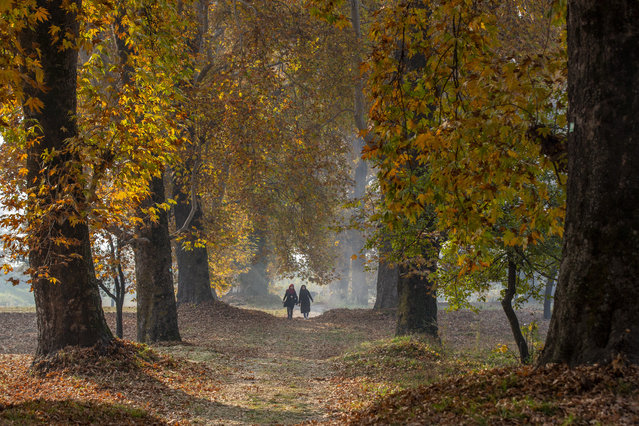
Kashmiri women walk in a garden covered with fallen Chinar leaves on the outskirts of Srinagar, Indian controlled Kashmir, Wednesday, November 4, 2020. Kashmiris collect fallen leaves in autumn to make charcoal for use during winters. (Photo by Dar Yasin/AP Photo)
A tourist catches snowflakes on her tongue during snow fall in Times Square, Midtown, New York, on January 3, 2013. A major snowstorm producing blizzard-like conditions hammered the northeastern United States on Friday, causing more than 1,000 U.S. flight delays and cancellations, paralyzing road travel, and closing schools and government offices. (Photo by Darren Ornitz/Reuters)
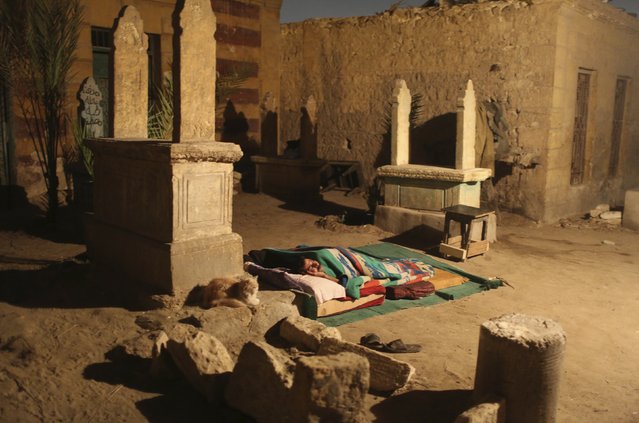
A man sleeps between tombstones in front of his single-room home on a hot night in the Cairo Necropolis, Egypt, October 13, 2015. In the sprawling Cairo Necropolis, known as the City of the Dead, life and death are side by side. Amid a housing crisis in Egypt, and with the population of greater Cairo estimated at about 20 million, people count themselves lucky to have a place to call home in the graveyards that date back hundreds of years. (Photo by Asmaa Waguih/Reuters)
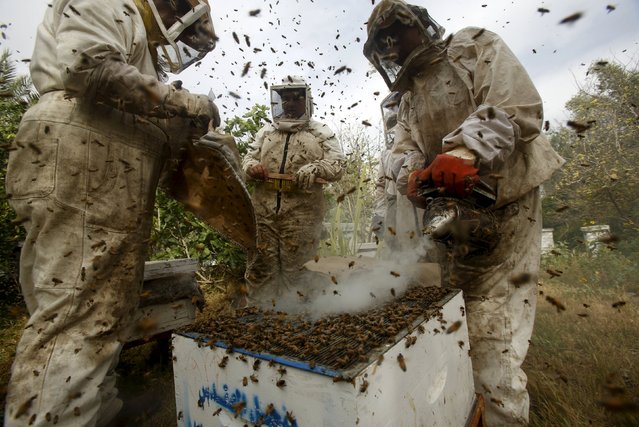
A Palestinian beekeeper uses smoke to calm bees in the process of collecting honey at a farm in Rafah, in the southern Gaza Strip April 11, 2016. Rateb Samour sees 250 patients a day, whose complaints range from hair loss to cerebral palsy and cancer. He is not a doctor and has never worked in a hospital. Samour inherited the skill of bee-sting therapy from his father. From 2003 the agricultural engineer dedicated all his time to study and develop the alternative-medicine treatment of apitherapy, which uses bee-related products from honey, propolis – or bee glue used to build hives – to venom. (Photo by Suhaib Salem/Reuters)