Loading...
Done
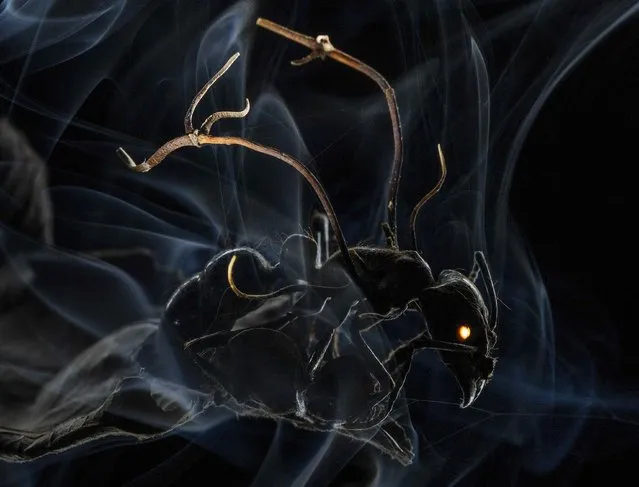
Anand Varma, a U.S. photographer working for the National Geographic, won the First Prize in the Nature Category, Stories, of the 2015 World Press Photo contest with his series of pictures, which includes this one of spores of a fungus landing on an ant, penetrating its exoskeleton and entering its brain, compelling the host to leave its normal habitat on the forest floor and scale a nearby tree, in this picture taken January 22, 2014 and released by the World Press Photo on February 12, 2015. (Photo by Anand Varma/Reuters/National Geographic/World Press Photo)

Anand Varma, a U.S. photographer working for the National Geographic, won the First Prize in the Nature Category, Stories, of the 2015 World Press Photo contest with his series of pictures, which includes this one of spores of a fungus landing on an ant, penetrating its exoskeleton and entering its brain, compelling the host to leave its normal habitat on the forest floor and scale a nearby tree, in this picture taken January 22, 2014 and released by the World Press Photo on February 12, 2015. (Photo by Anand Varma/Reuters/National Geographic/World Press Photo)
Details
15 Feb 2015 15:21:00
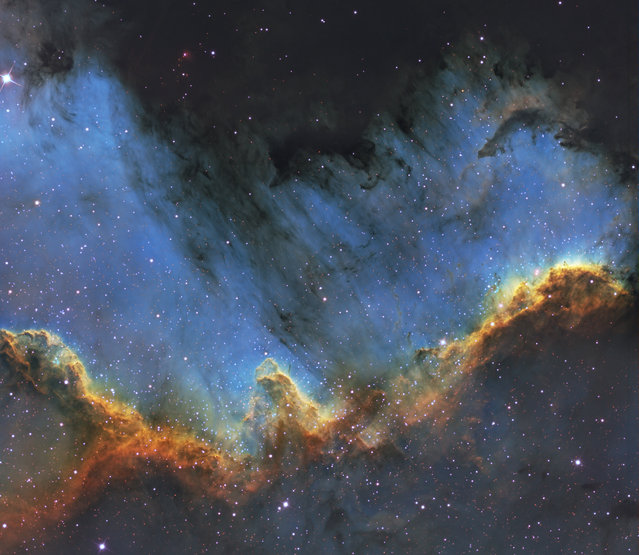
The Cygnus Wall is in the southern  area of NGC7000 also known as the North America Nebula. It is approximately 1800 light years from Earth, and is in the constellation Cygnus. The Wall is an energized shock front and contains the most concentrated star formations in the nebula. The size of the North America Nebula is about 4 full moons. (Bill Snyder)

Amateur astronomer Bill Snyder has been involved with astrophotography since 2007. Photo: The Cygnus Wall is in the southern area of NGC7000 also known as the North America Nebula. It is approximately 1800 light years from Earth, and is in the constellation Cygnus. The Wall is an energized shock front and contains the most concentrated star formations in the nebula. The size of the North America Nebula is about 4 full moons. (Photo and caption by Bill Snyder)
Details
30 Oct 2013 09:15:00
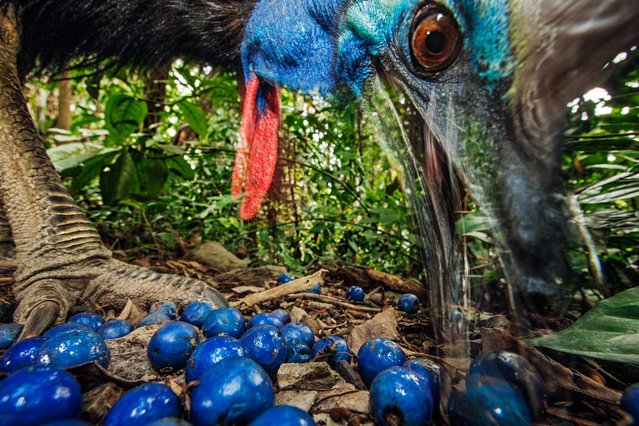
“Cassowaries are large, flightless birds related to emus and (more distantly) to ostriches, rheas, and kiwis”, writes Olivia Judson in the September issue of National Geographic magazine. (Photo by Christian Ziegler/National Geographic)

“Cassowaries are large, flightless birds related to emus and (more distantly) to ostriches, rheas, and kiwis”, writes Olivia Judson in the September issue of National Geographic magazine. How large? People-size: Adult males stand well over five foot five and top 110 pounds. Females are even taller, and can weigh more than 160 pounds. Dangerous when roused, they’re shy and peaceable when left alone. But even birds this big and tough are prey to habitat loss. The dense New Guinea and Australia rain forests where they live have dwindled. Today cassowaries might number 1,500 to 2,000. And because they help shape those same forests – by moving seeds from one place to another – “if they vanish”, Judson writes, “the structure of the forest would gradually change” too. (Photo by Christian Ziegler/National Geographic)
Details
06 Jan 2014 12:21:00
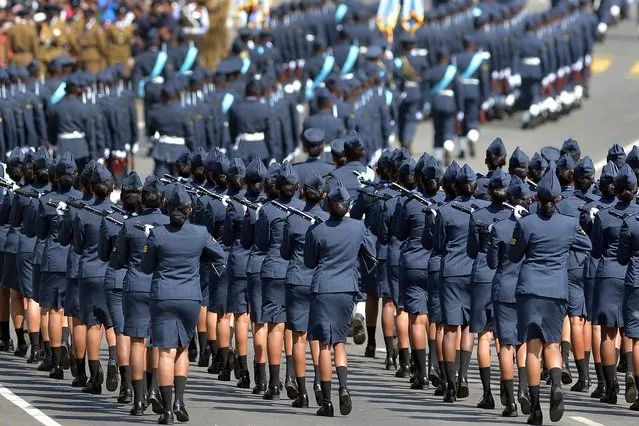
Sri Lankan military personnel march during the country's 66th Independence Day celebrations in the central town of Kegalle, about 40 kms from the capital Colombo on February 4, 2014. Sri Lanka cemmemorates its independence from British rule on February 4, 1948. (Photo by Ishara S. Kodikara/AFP Photo)

Sri Lankan military personnel march during the country's 66th Independence Day celebrations in the central town of Kegalle, about 40 kms from the capital Colombo on February 4, 2014. Sri Lanka cemmemorates its independence from British rule on February 4, 1948. (Photo by Ishara S. Kodikara/AFP Photo)
Details
08 Feb 2014 15:19:00
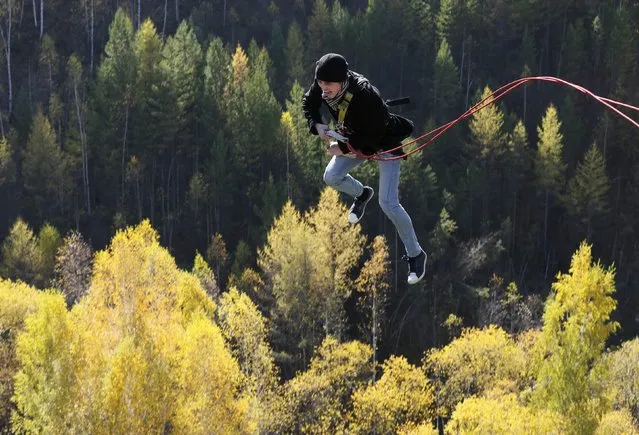
A member of the “Exit Point” amateur rope-jumping group jumps from a 44-metre high (144-feet high) waterpipe bridge in the Siberian Taiga area outside Krasnoyarsk, September 28, 2014. (Photo by Ilya Naymushin/Reuters)

A member of the “Exit Point” amateur rope-jumping group jumps from a 44-metre high (144-feet high) waterpipe bridge in the Siberian Taiga area outside Krasnoyarsk, September 28, 2014. Fans of rope-jumping, a kind of extreme sport involving a jump from a high point using an advanced system of amortization including mountaineering and rope safety equipment, attended the Golden Autumn group's jumping season. (Photo by Ilya Naymushin/Reuters)
Details
04 Oct 2014 11:12:00
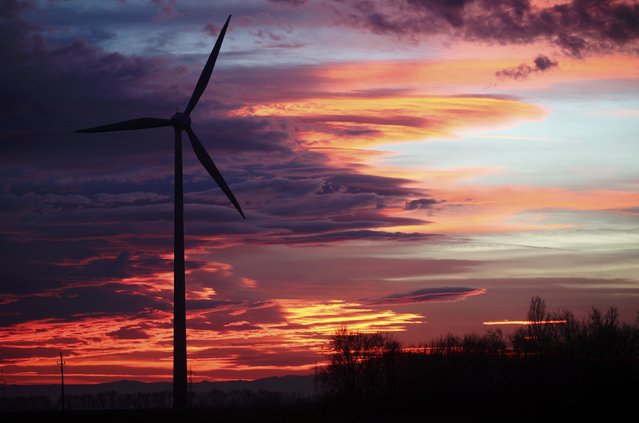
The setting sun illuminates the sky behind wind turbines of a wind park near Neusiedl am See, December 22, 2014. (Photo by Heinz-Peter Bader/Reuters)

The setting sun illuminates the sky behind wind turbines of a wind park near Neusiedl am See, December 22, 2014. (Photo by Heinz-Peter Bader/Reuters)
Details
08 Jan 2015 14:27:00
North Korean leader Kim Jong Un (3rd R) and wife Ri Sol Ju (4th L) enjoy an art performance given by the Chongbong Band to mark the 70th anniversary of the founding of the Workers' Party of Korea (WPK) in this undated photo released by North Korea's Korean Central News Agency (KCNA) in Pyongyang on October 19, 2015. (Photo by Reuters/KCNA)

North Korean leader Kim Jong Un (3rd R) and wife Ri Sol Ju (4th L) enjoy an art performance given by the Chongbong Band to mark the 70th anniversary of the founding of the Workers' Party of Korea (WPK) in this undated photo released by North Korea's Korean Central News Agency (KCNA) in Pyongyang on October 19, 2015. (Photo by Reuters/KCNA)
Details
24 Oct 2015 08:02:00
A riot policeman punches Greek photojournalist Tatiana Bolari during a demonstration in Athens' Syntagma (Constitution) square October 5, 2011. Police officers attacked several members of the press covering  protests, injuring at least two members of the media. (Photo by Yannis Behrakis/Reuters)

A riot policeman punches Greek photojournalist Tatiana Bolari during a demonstration in Athens' Syntagma (Constitution) square October 5, 2011. Police officers attacked several members of the press covering protests, injuring at least two members of the media. (Photo by Yannis Behrakis/Reuters)
Details
25 Aug 2014 11:17:00