Loading...
Done


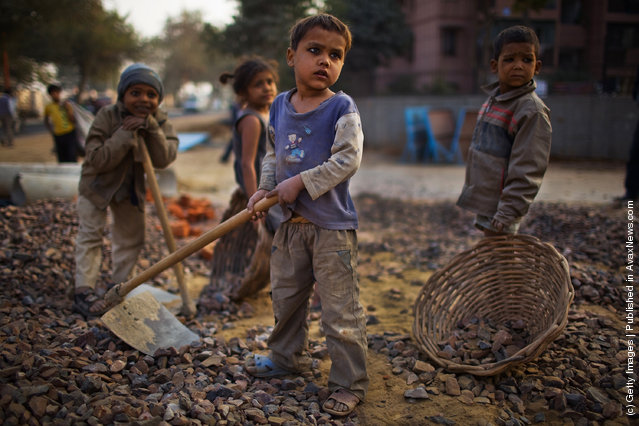
Indian children work nearby to their parents at a construction project in front of the Jawaharlal Nehru Stadium on January 30, 2010 in New Delhi, India. The children accompany their parents to the work site, where if they are prepared to work, they will receive money for bread an milk and be provided with dinner by the contractor. The sheer scale of the project has drawn an enormous population of migrant workers from all over India.
Details
20 May 2011 07:00:00
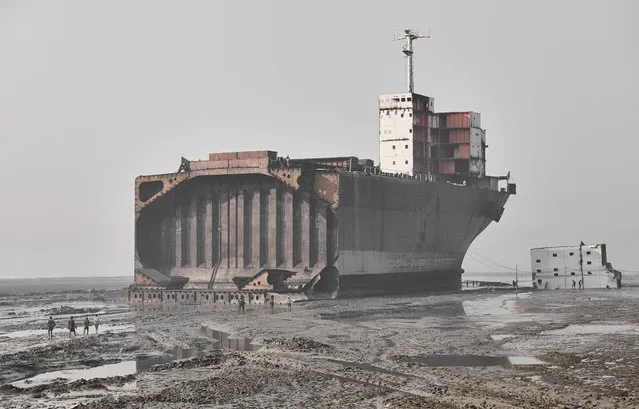
Anything not recycled in industry is sold on stalls along the neighbouring highway in Sitakunda Beach, Bangladesh, February 2012. (Photo by Jan Møller Hansen/Barcroft Images)

Anything not recycled in industry is sold on stalls along the neighbouring highway in Sitakunda Beach, Bangladesh, February 2012. A look inside Bangladesh’s ship breaking yards reveal the brutal conditions workers are subjected to everyday. (Photo by Jan Møller Hansen/Barcroft Images)
Details
27 Jan 2017 12:25:00
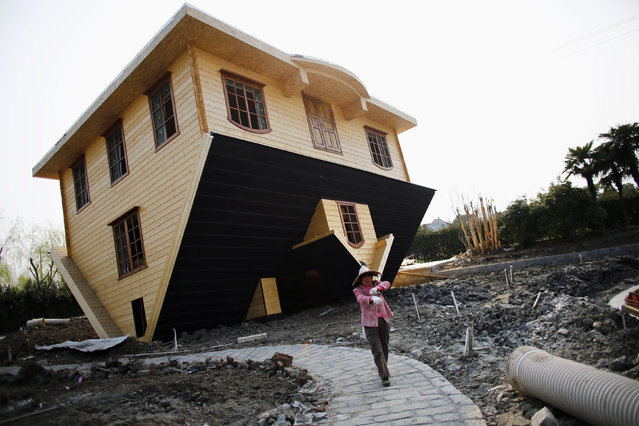
A laborer works at an upside-down house under construction at Fengjing Ancient Town, Jinshan District, south of Shanghai, March 17, 2014. Workers are putting the final touches on this eccentric tourist attraction built at the “China Folk Painting Village”. Furniture will also be placed upside down in the house, which is expected to open the public in April, according to local media. (Photo by Carlos Barria/Reuters)

A laborer works at an upside-down house under construction at Fengjing Ancient Town, Jinshan District, south of Shanghai, March 17, 2014. Workers are putting the final touches on this eccentric tourist attraction built at the “China Folk Painting Village”. Furniture will also be placed upside down in the house, which is expected to open the public in April, according to local media. (Photo by Carlos Barria/Reuters)
Details
21 Mar 2014 09:53:00
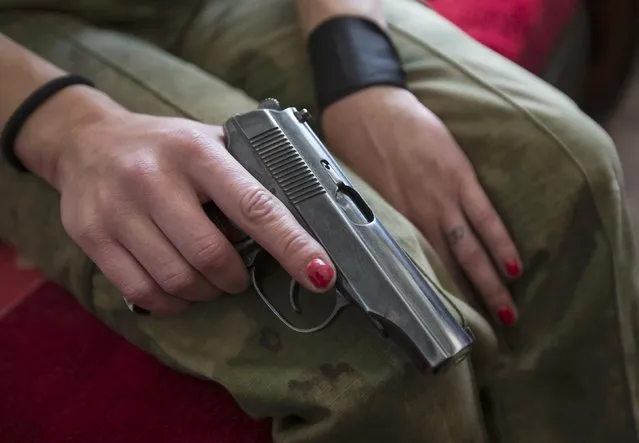
Irina, worker of a petrol station, now member of reconnaissance team of pro-Russian rebels' in the town of Makievka, eastern Ukraine, October 6, 2014. Like the men in the conflict, the women come from all walks of life. (Photo by Shamil Zhumatov/Reuters)

Irina, worker of a petrol station, now member of reconnaissance team of pro-Russian rebels' in the town of Makievka, eastern Ukraine, October 6, 2014. Like the men in the conflict, the women come from all walks of life. Some women come to serve with their husbands and boyfriends, others are single. Female fighters on both sides said the men in their units treat them as equals, though sometimes showing more leniency. They have little respect for men who have not taken up arms. On both sides the fighters expect a long conflict, despite the fragile ceasefire now in place. (Photo by Shamil Zhumatov/Reuters)
Details
09 Oct 2014 12:29:00
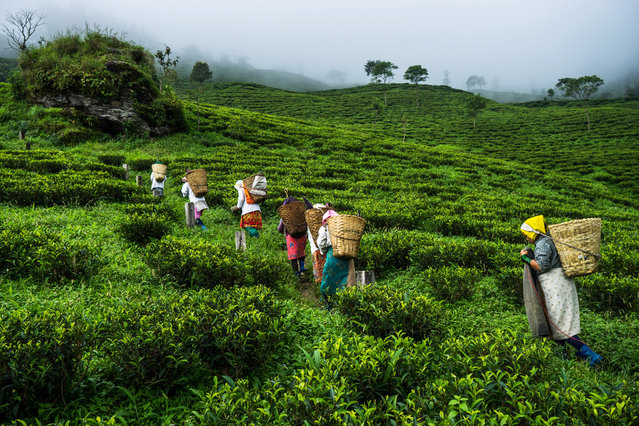
Workers carry baskets of hand-picked tea leaves at the Makaibari Tea Estate in Kurseong, West Bengal, India, on Monday, September 8, 2014. The 155-year-old Makaibari Tea Estate recently sold it's Darjeeling tea, named Silver Tips Imperial, for $1,850 a kilo to buyers from the U.K., the U.S. and Japan, becoming the most expensive Indian tea ever sold. (Photo by Sanjit Das/Bloomberg)

Workers carry baskets of hand-picked tea leaves at the Makaibari Tea Estate in Kurseong, West Bengal, India, on Monday, September 8, 2014. The 155-year-old Makaibari Tea Estate recently sold it's Darjeeling tea, named Silver Tips Imperial, for $1,850 a kilo to buyers from the U.K., the U.S. and Japan, becoming the most expensive Indian tea ever sold. (Photo by Sanjit Das/Bloomberg)
Details
19 Oct 2014 12:41:00
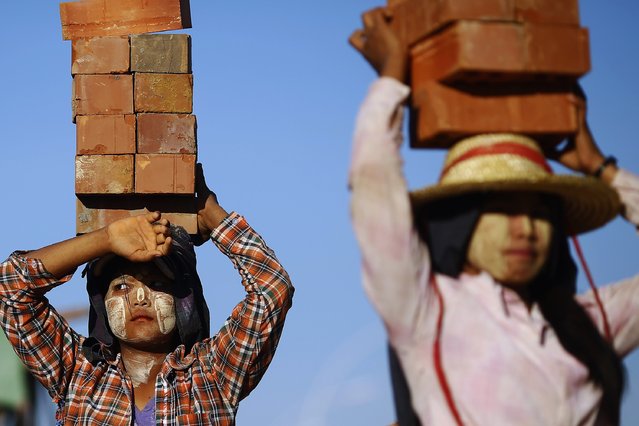
Construction workers carry bricks on their heads near the country's parliament building in Naypyitaw November 11, 2014. Yangon lost its status as Myanmar's capital in 2005, after the former military junta carved a new seat of government from a parched wilderness some 380 km (236 miles) to the north and called it Naypyitaw (“Abode of Kings”). (Photo by Damir Sagolj/Reuters)

Construction workers carry bricks on their heads near the country's parliament building in Naypyitaw November 11, 2014. Yangon lost its status as Myanmar's capital in 2005, after the former military junta carved a new seat of government from a parched wilderness some 380 km (236 miles) to the north and called it Naypyitaw (“Abode of Kings”). (Photo by Damir Sagolj/Reuters)
Details
15 Nov 2014 12:29:00
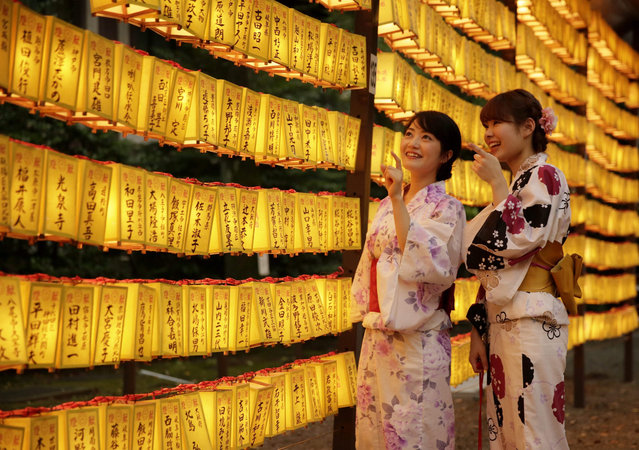
Two office workers wearing summer kimonos Yukata look at paper lanterns as they visit on the eve of Mitama Matsuri, a summer festival at Yasukuni Shrine in Tokyo, Japan, 13 July 2015. About 300,000 people visit the shrine decorated with about 30,000 lanterns during the three-day summer festival aiming at comforting souls of dead, especially for the war dead. The festival is after Japan's Buddhist custom to honor and comfort souls of family's ancestors. (Photo by Kimimasa Mayama/EPA)

Two office workers wearing summer kimonos Yukata look at paper lanterns as they visit on the eve of Mitama Matsuri, a summer festival at Yasukuni Shrine in Tokyo, Japan, 13 July 2015. About 300,000 people visit the shrine decorated with about 30,000 lanterns during the three-day summer festival aiming at comforting souls of dead, especially for the war dead. The festival is after Japan's Buddhist custom to honor and comfort souls of family's ancestors. (Photo by Kimimasa Mayama/EPA)
Details
14 Jul 2015 13:59:00
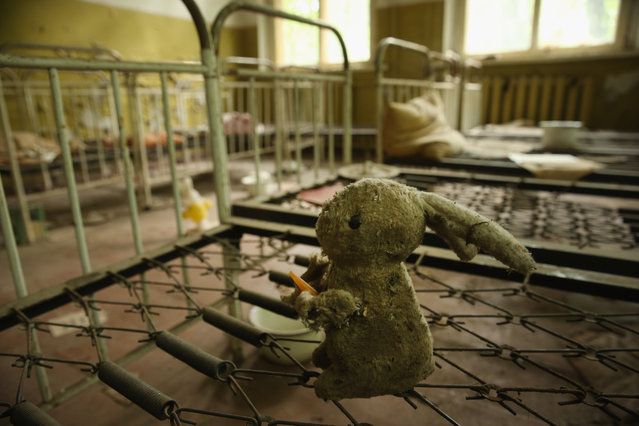
A stuffed rabbit doll sits among children's beds standing in the abandoned kindergarten of Kopachi village located inside the Chernobyl Exclusion Zone on September 29, 2015 near Chornobyl, Ukraine. Kopachi, a village that before 1986 had a population of 1,114, lies only a few kilometers south of the former Chernobyl nuclear power plant, where in 1986 workers inadvertantly caused reactor number four to explode, creating the worst nuclear accident in history. Radiation fallout was so high that authorities bulldozed and buried all of Kopachi's structures except for the kindergarten. (Photo by Sean Gallup/Getty Images)

A stuffed rabbit doll sits among children's beds standing in the abandoned kindergarten of Kopachi village located inside the Chernobyl Exclusion Zone on September 29, 2015 near Chornobyl, Ukraine. Kopachi, a village that before 1986 had a population of 1,114, lies only a few kilometers south of the former Chernobyl nuclear power plant, where in 1986 workers inadvertantly caused reactor number four to explode, creating the worst nuclear accident in history. (Photo by Sean Gallup/Getty Images)
Details
27 Apr 2016 09:28:00