Loading...
Done
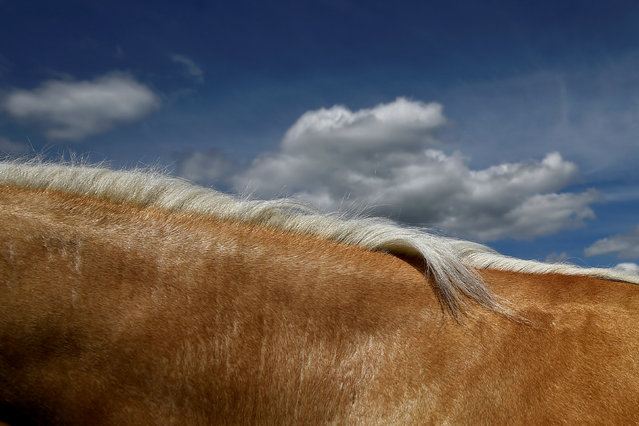
A palomino horse's mane is seen against the sky at Spancil Hill horse fair in Spancil Hill, Ireland June 23, 2018. (Photo by Clodagh Kilcoyne/Reuters)

A palomino horse's mane is seen against the sky at Spancil Hill horse fair in Spancil Hill, Ireland June 23, 2018. (Photo by Clodagh Kilcoyne/Reuters)
Details
01 Jul 2018 00:03:00
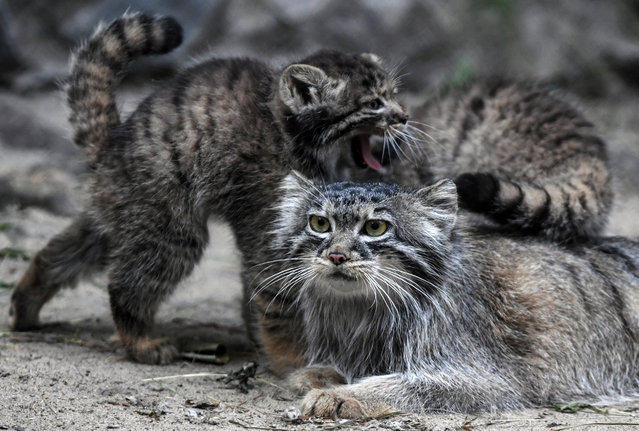
Pallas' s cat kittens with theit mother in an enclosure at the Novosibirsk Zoo, Novosibirsk, Russia on July 11, 2018. Pallas' s cat, also known as manul, is a small wild cat native to montane steppes of the Central Asia and listed as an endangered species. (Photo by Kirill Kukhmar/TASS)

Pallas' s cat kittens with theit mother in an enclosure at the Novosibirsk Zoo, Novosibirsk, Russia on July 11, 2018. Pallas' s cat, also known as manul, is a small wild cat native to montane steppes of the Central Asia and listed as an endangered species. (Photo by Kirill Kukhmar/TASS)
Details
15 Jul 2018 00:03:00
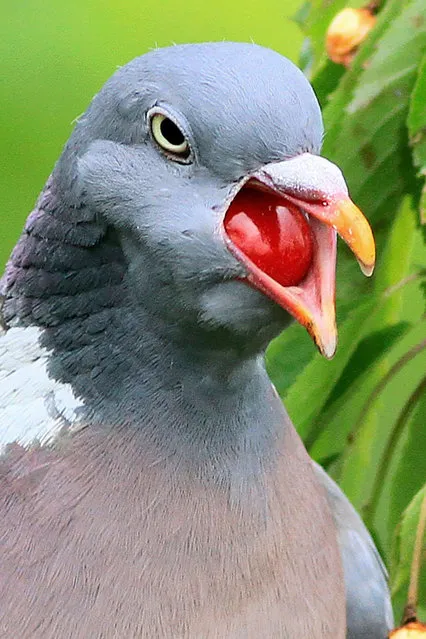
A pigeon eating cherries in Bydgoszcz, Poland on September 14, 2018. The pigeon was captured at dinnertime, as he was caught on camera with its mouth full of a cherry. (Photo by Piotr Grny/Caters News Agency)

A pigeon eating cherries in Bydgoszcz, Poland on September 14, 2018. The pigeon was captured at dinnertime, as he was caught on camera with its mouth full of a cherry. (Photo by Piotr Grny/Caters News Agency)
Details
16 Sep 2018 00:03:00
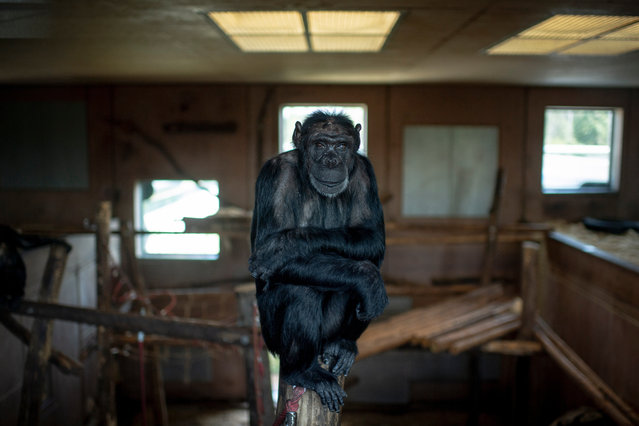
A chimpanzee looks in the direction of a camera at the Gut Aiderbichl Sanctuary for Traumatized Chimpanzees and other Primates in Gaenserndorf, near Vienna, 17 September 2018. 34 former laboratory chimpanzees of former Austrian pharmaceutical company Immuno AG spend their lives at the Gut Aiderbichl Sanctuary for Traumatized Chimpanzees and other Primates since 2009. U.S.-based Baxter International Inc. took over the Immuno AG in 1996, banned experiments with primates and rebuilt a former safari park for the Gut Aiderbichl Sanctuary for Traumatized Chimpanzees and other Primates. After three decades in captivity in too small cages, the chimpanzees, most of them came from Sierra Leone as cubs, have species-appropriate indoor and outdoor enclosures. The financial support by Baxter International Inc. and Austrian officials will end by 2019. (Photo by Christian Bruna/EPA/EFE)

A chimpanzee looks in the direction of a camera at the Gut Aiderbichl Sanctuary for Traumatized Chimpanzees and other Primates in Gaenserndorf, near Vienna, 17 September 2018. 34 former laboratory chimpanzees of former Austrian pharmaceutical company Immuno AG spend their lives at the Gut Aiderbichl Sanctuary for Traumatized Chimpanzees and other Primates since 2009. (Photo by Christian Bruna/EPA/EFE)
Details
23 Sep 2018 00:03:00
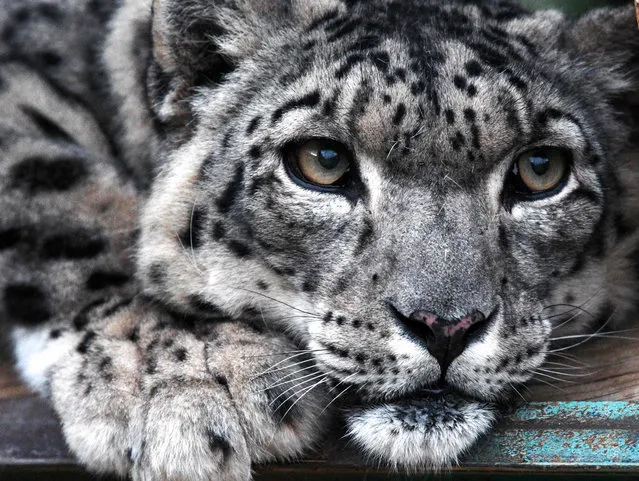
A picture taken on August 7, 2017 shows a Snow Leopard (Panthera uncia) at the NABU center (Nature and Biodiversity Conservation Union), a German organization that aims at reintroducing the panther and fighting against poaching, near the Issyk Kul lake, in the outskirts of Semenovka village, some 330 kilometers southeast of Bishkek, the capital of Kyrgyzstan. (Photo by Vyacheslav Oseledko/AFP Photo)

A picture taken on August 7, 2017 shows a Snow Leopard (Panthera uncia) at the NABU center (Nature and Biodiversity Conservation Union), a German organization that aims at reintroducing the panther and fighting against poaching, near the Issyk Kul lake, in the outskirts of Semenovka village, some 330 kilometers southeast of Bishkek, the capital of Kyrgyzstan. (Photo by Vyacheslav Oseledko/AFP Photo)
Details
14 Aug 2017 06:46:00
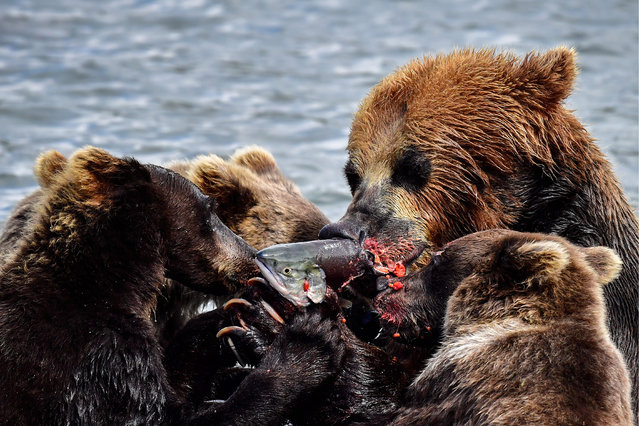
A female brown bear with cubs fishing on Lake Kronotskoye as part of the South Kamchatka, Russia on Sanctuary, August 13, 2017. (Photo by TASS/Barcroft Images)

A female brown bear with cubs fishing on Lake Kronotskoye as part of the South Kamchatka, Russia on Sanctuary, August 13, 2017. (Photo by TASS/Barcroft Images)
Details
20 Aug 2017 08:15:00
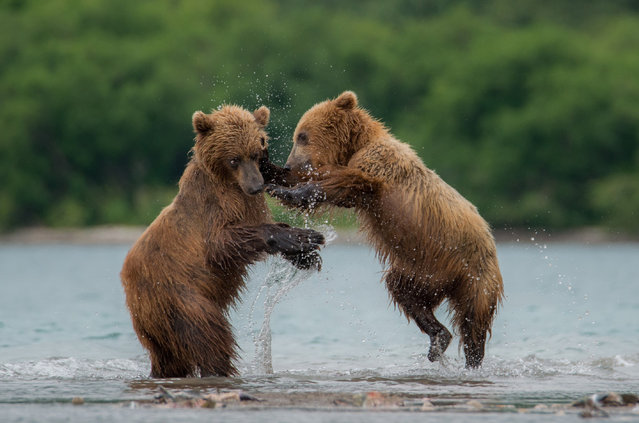
Kamchatka brown bears at Kurile Lake in Kamchatka peninsula’s volcanic terrain, Russia on August, 2017. Kamchatka brown bears are generally not dangerous to humans, and only 1% of encounters result in attack. (Photo by Igor Ivanko/Anadolu Agency/Getty Images)

Kamchatka brown bears at Kurile Lake in Kamchatka peninsula’s volcanic terrain, Russia on August, 2017. Kamchatka brown bears are generally not dangerous to humans, and only 1% of encounters result in attack. (Photo by Igor Ivanko/Anadolu Agency/Getty Images)
Details
03 Sep 2017 07:17:00
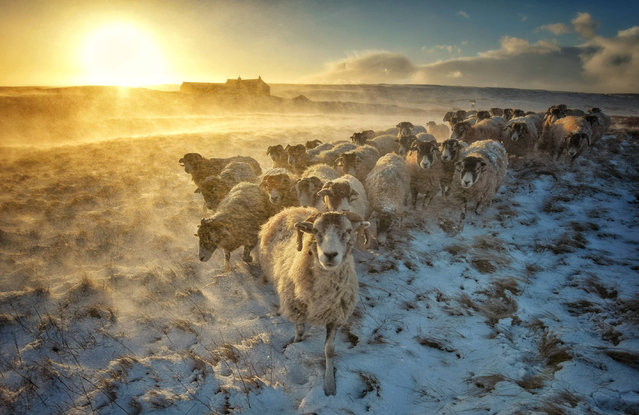
A flock of sheep huddles together while snow spindrift is whipped up by strong winds in Swaledale, North Yorkshire, UK on March 17, 2017. (Photo by Paul Kingston/NNP North News & Pictures Ltd)

A flock of sheep huddles together while snow spindrift is whipped up by strong winds in Swaledale, North Yorkshire, UK on March 17, 2017. (Photo by Paul Kingston/NNP North News & Pictures Ltd)
Details
08 Sep 2017 09:29:00