Women soldiers dance during a parade marking the 78th anniversary of the Indonesian Armed Forces in Jakarta, Indonesia, Thursday, October 5, 2023. (Photo by Tatan Syuflana/AP Photo)
Members of the Funky Uptown Krewe parade as Twelfth Night kicks off Carnival season, in New Orleans, Louisiana, U.S. January 6, 2025. (Photo by Eduardo Munoz/Reuters)
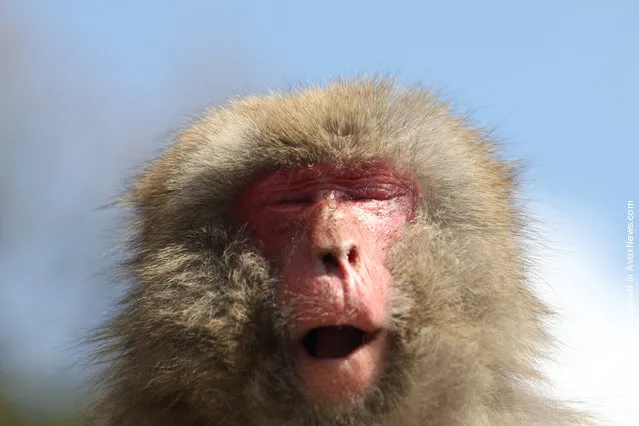
A 19-year-old Japanese macaque monkey named Monday sneezes while suffering an allergy to pollen from the cedar tree, at Awajishima Monkey Center on March 26, 2012 in Sumoto, Hyogo, Japan. Some twenty monkeys are suffering the effects of hay fever at this time of the year, with the typical symptoms being the same as with humans. (Photo by Buddhika Weerasinghe/Getty Images)
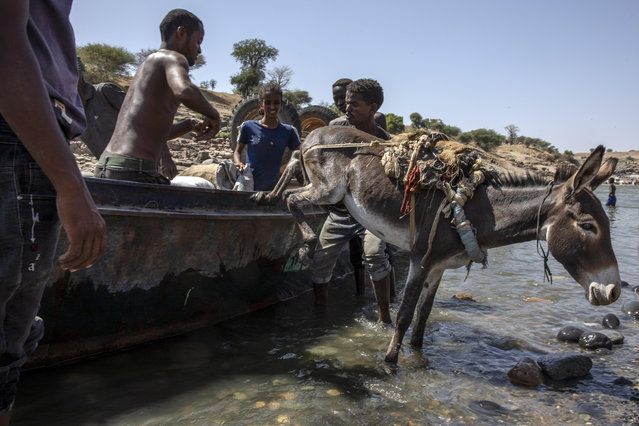
Tigray refugees who fled the conflict in the Ethiopia's Tigray arrive with their donkey on the banks of the Tekeze River on the Sudan-Ethiopia border, in Hamdayet, eastern Sudan, Saturday, November 21, 2020. (Photo by Nariman El-Mofty/AP Photo)
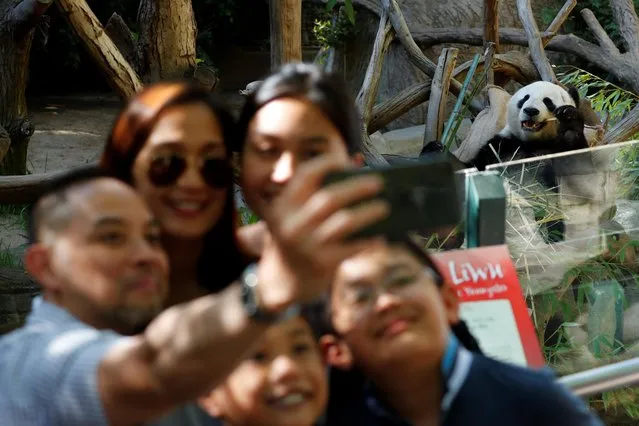
A family take a souvenir picture next to giant male panda Xiao Liwu, who was born at the San Diego Zoo and will be repatriated to China with his mother Bai Yun, bringing an end to a 23-year-long panda research program in San Diego, California, U.S., April 18, 2019. (Photo by Mike Blake/Reuters)
A worker of the Pakistan Bureau of Statistics (PBS) collects data for the digital census, in Karachi, Pakistan, 01 March 2023. PBS has launched a digital census and portal to allow citizens to submit their data. The census that began on 01 March, will be used for the upcoming general elections. So far, 4.3 million people have registered. (Photo by Shahzaib Akber/EPA/EFE)
Daniel Sheridan, a council worker from Poole, Dorset, runs a side hustle snapping dogs living their best lives in the second decade of December 2024. (Photo by Daniel Sheridan/South West News Service)
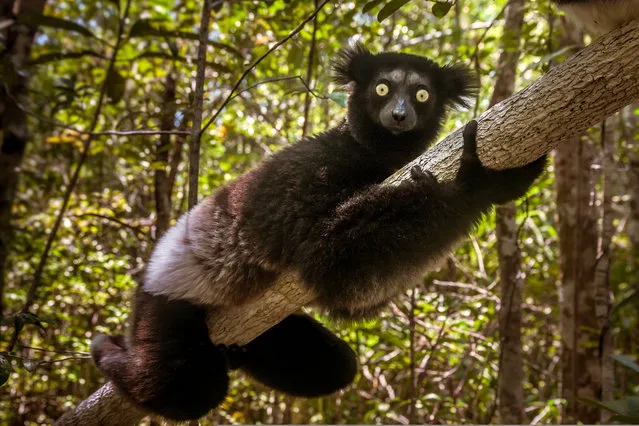
The secretive indri (Indri indri) of Madagascar, the largest living lemur. It is also critically endangered and highly evolutionarily distinct with no close relatives, which makes its branch one of most precarious on the mammal evolutionary tree. In the likely event that the indri goes extinct, we will lose 19m years of unique evolutionary history from the mammal tree of life. (Photo by Pierre-Yves Babelon/Aarhus University)