Loading...
Done
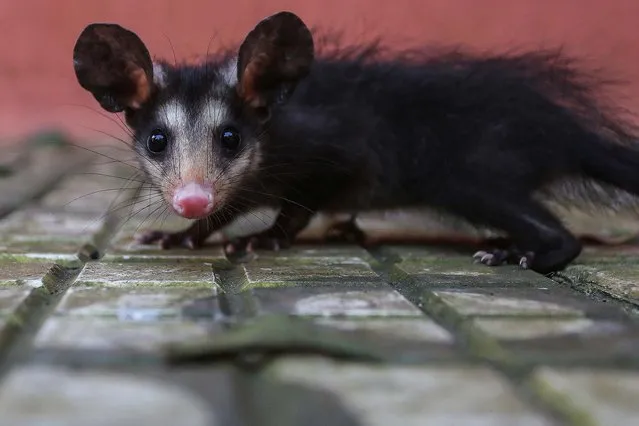
Photo taken on September 19, 2015 shows a baby Brazilian opossum at the “Parque Estoril” zoo in Sao Bernardo do Campo of Sao Paulo, Brazil. According to local press, the “Parque Estoril” zoo houses currently 23 orphan cubs of wild animals rescued in the south region of Sao Paulo, victims of illegal wildlife trade or problems caused by urban growth. (Photo by Rahel Patrasso/Xinhua via ZUMA Wire)

Photo taken on September 19, 2015 shows a baby Brazilian opossum at the “Parque Estoril” zoo in Sao Bernardo do Campo of Sao Paulo, Brazil. According to local press, the “Parque Estoril” zoo houses currently 23 orphan cubs of wild animals rescued in the south region of Sao Paulo, victims of illegal wildlife trade or problems caused by urban growth. According to the zoo, all the animals arrived in the last three months, and many of them, not being able to be reintroduced to their natural habitat, will be used as examples in environmental education classes. (Photo by Rahel Patrasso/Xinhua via ZUMA Wire)
Details
26 Sep 2015 08:00:00
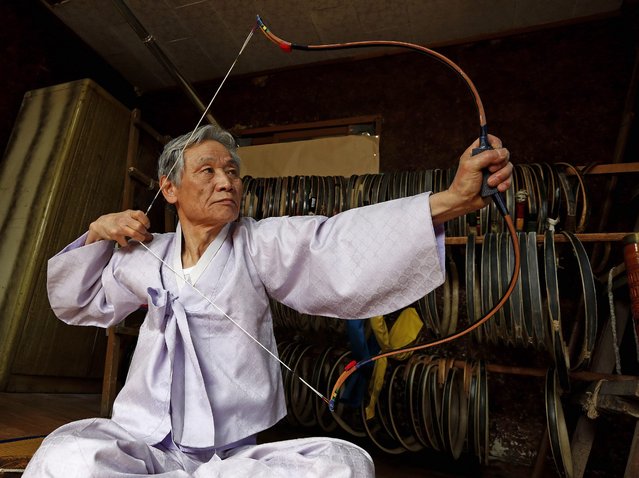
South Korean traditional bow artisan Kwon Yeong-Hak works on a bow in his workshop in Yecheon-gun, Gyeongsangbuk-do, South Korea, 26 February 2015. (Photo by Jeon Heon-Kyun/EPA)

South Korean traditional bow artisan Kwon Yeong-Hak works on a bow in his workshop in Yecheon-gun, Gyeongsangbuk-do, South Korea, 26 February 2015. Kwon Yeong-Hak still crafts his bows in the traditional way, carrying on a four-generation family business. The Gakgung bow, of which Kwon is one of the last remaining artisans, is unique to Korea, and is constructed with a variety of materials, including water buffalo horn, oak, bamboo and cattle spinal sinew. A ban on the import of water buffalo horns has put the Gakgung tradition at risk. (Photo by Jeon Heon-Kyun/EPA)
Details
24 Mar 2015 09:54:00
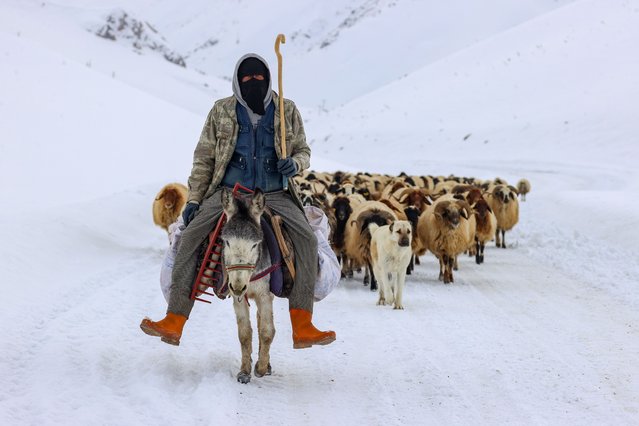
A shepherd rides a donkey as he leads sheep during winter in Van, Turkiye on February 19, 2022. Despite the terrible winter weather and the hard geology of the region, breeders in Van's Gurpnar district, where livestock is the most important source of revenue, do not disregard the care of their animals. Livestock farmers in the Cepkenli and Topcudegirmeni neighborhoods have the similar difficulties as those in rural areas, where the snow depth reaches one meter. (Photo by Ozkan Bilgin/Anadolu Agency via Getty Images)

A shepherd rides a donkey as he leads sheep during winter in Van, Turkiye on February 19, 2022. Despite the terrible winter weather and the hard geology of the region, breeders in Van's Gurpnar district, where livestock is the most important source of revenue, do not disregard the care of their animals. Livestock farmers in the Cepkenli and Topcudegirmeni neighborhoods have the similar difficulties as those in rural areas, where the snow depth reaches one meter. (Photo by Ozkan Bilgin/Anadolu Agency via Getty Images)
Details
04 Mar 2022 06:01:00
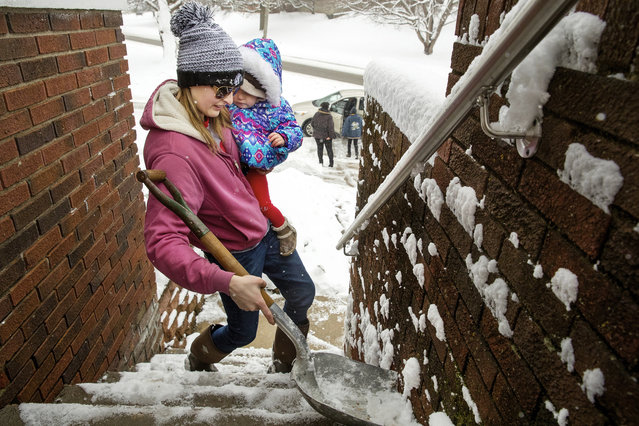
Morgan Miller carries her one-year-old daughter Mia Jennings in one arm as she shovels the stairs to her Springfield home with the other Sunday, January 13, 2019. Miller said she's learned how to do a lot of things while holding a baby in the last year. (Photo by Ted Schurter/The State Journal-Register via AP Photo)

Morgan Miller carries her one-year-old daughter Mia Jennings in one arm as she shovels the stairs to her Springfield home with the other Sunday, January 13, 2019. Miller said she's learned how to do a lot of things while holding a baby in the last year. (Photo by Ted Schurter/The State Journal-Register via AP Photo)
Details
25 Jan 2019 00:01:00
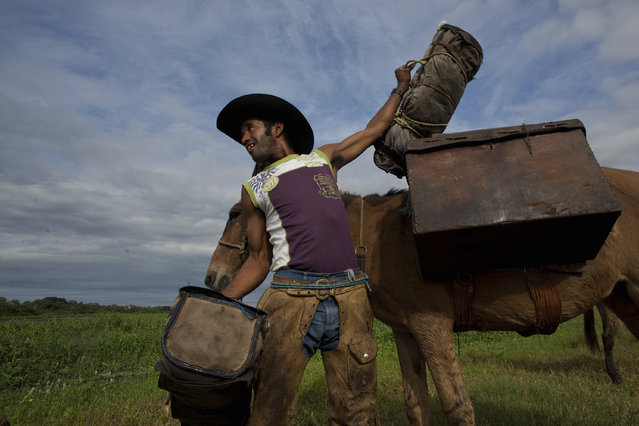
In this May 17, 2017 photo, cowboy cook Odair Batista carries a case with food in Corumba, the Pantanal wetlands of Mato Grosso do Sul state, Brazil. Dressed with leather chaps on top of their jeans, stetson hats and a machete attached to their waists, before setting off, the men finish their breakfast with Terere, an herbal “mate” beverage served ice cold in an ox drinking horn. (Photo by Eraldo Peres/AP Photo)

In this May 17, 2017 photo, cowboy cook Odair Batista carries a case with food in Corumba, the Pantanal wetlands of Mato Grosso do Sul state, Brazil. Dressed with leather chaps on top of their jeans, stetson hats and a machete attached to their waists, before setting off, the men finish their breakfast with Terere, an herbal “mate” beverage served ice cold in an ox drinking horn. (Photo by Eraldo Peres/AP Photo)
Details
12 Jun 2017 09:00:00
A political billboard by the artist Karen Fiorito satirising Donald Trump and Elon Musk in Phoenix, US on March 12, 2025. The artwork, titled Twitler and Putin’s Puppet Do Washington, depicts Musk as a puppet master controlling Trump. The artwork on the other side, Liar in Chief, references Project 2025, a conservative proposal to overhaul the federal government. (Photo by Eduardo Barraza/ZUMA Press Wire/Rex Features/Shutterstock)

A political billboard by the artist Karen Fiorito satirising Donald Trump and Elon Musk in Phoenix, US on March 12, 2025. The artwork, titled Twitler and Putin’s Puppet Do Washington, depicts Musk as a puppet master controlling Trump. The artwork on the other side, Liar in Chief, references Project 2025, a conservative proposal to overhaul the federal government. (Photo by Eduardo Barraza/ZUMA Press Wire/Rex Features/Shutterstock)
Details
20 Mar 2025 04:04:00


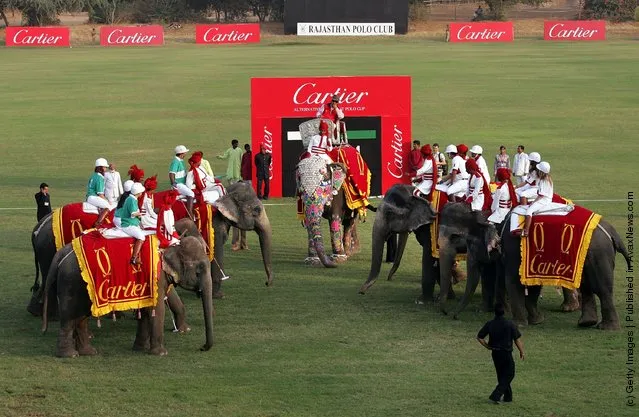
Teams face off in the Cartier Elephant Polo Cup November 18, 2006 in Jaipur, in the Indin state of Rajasthan. Cartier hosted the event which was held to highlight the plight of the dwindling numbers of Asian elephants. Indian and international celebrities flew in the India's “Pink City” for the high society event held by the global watch and jewelry giant. The animal rights organization, People for the Ethical Treatment of Animals, “PETA” had planned to protest the match, saying that elephants should not be used for sport. Elephants in Jaipur are commonly used for carrying tourists at historic sites. (Photo by John Moore/Getty Images)
Details
25 Mar 2011 09:17:00


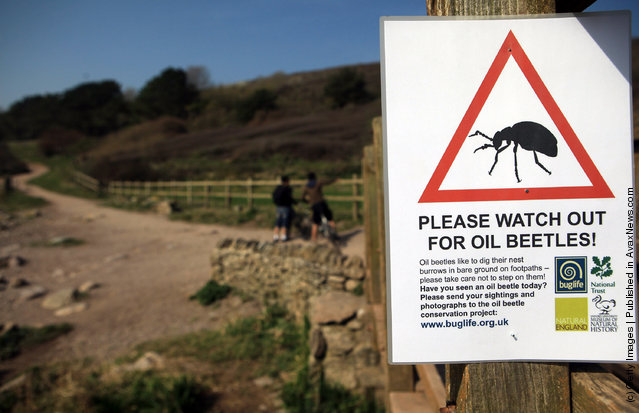
People enjoy the fine weather on the coast at Wembury during the first ever nationwide survey to map the location of the threatened and creatures on March 24, 2011 in near Plymouth, England. Often found on the coast, and particularly in the south west of England, the number of oil beetle species found in the UK has halved in the last 100 years and the survey will help establish the whereabouts of the remaining four species and boost efforts to secure their future. The survey is being launched today by Buglife: The Invertebrate Trust and the National Trust in partnership with Natural England and Oxford University Museum of Natural History. (Photo by Matt Cardy/Getty Images)
Details
25 Mar 2011 15:20:00