Loading...
Done
This picture taken on December 31, 2017 shows an Indian sadhu preparing food at a camp at Sangam, ahead of the Magh Mela festival, in Allahabad. The Magh Mela, which is known as a mini-Kumbh Mela, is scheduled to start January 2 and continue until February 13 with auspicious bathing dates throughout the 45 day period. (Photo by Sanjay Kanojia/AFP Photo)

This picture taken on December 31, 2017 shows an Indian sadhu preparing food at a camp at Sangam, ahead of the Magh Mela festival, in Allahabad. The Magh Mela, which is known as a mini-Kumbh Mela, is scheduled to start January 2 and continue until February 13 with auspicious bathing dates throughout the 45 day period. (Photo by Sanjay Kanojia/AFP Photo)
Details
02 Jan 2018 08:38:00
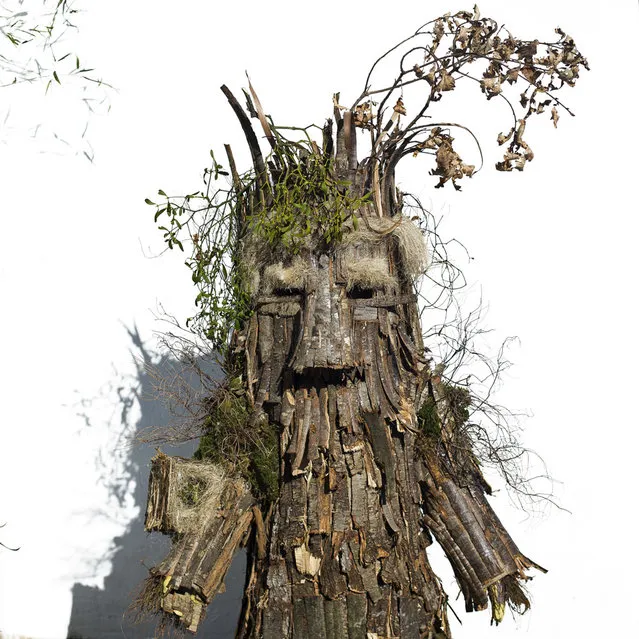
A man dressed as a  “Trapajon”, representing entities of nature, poses for a picture after taking part in the Vijanera Festival in Silio, northern Spain, Sunday, Jan. 6, 2013. The Vijanera masquerade, of pre-Roman origin, is the first carnival of the year in Europe symbolizing the triumph of good over evil and involving the participation of crowds of residents wearing different masks, animal skins and brightly colored clothing with its own complex function and symbolism and becoming the living example of the survival of archaic cults to nature. (Photo by Daniel Ochoa de Olza/AP Photo)

A man dressed as a “Trapajon”, representing entities of nature, poses for a picture after taking part in the Vijanera Festival in Silio, northern Spain, Sunday, Jan. 6, 2013. The Vijanera masquerade, of pre-Roman origin, is the first carnival of the year in Europe symbolizing the triumph of good over evil and involving the participation of crowds of residents wearing different masks, animal skins and brightly colored clothing with its own complex function and symbolism and becoming the living example of the survival of archaic cults to nature. (Photo by Daniel Ochoa de Olza/AP Photo)
Details
19 Jan 2013 13:01:00
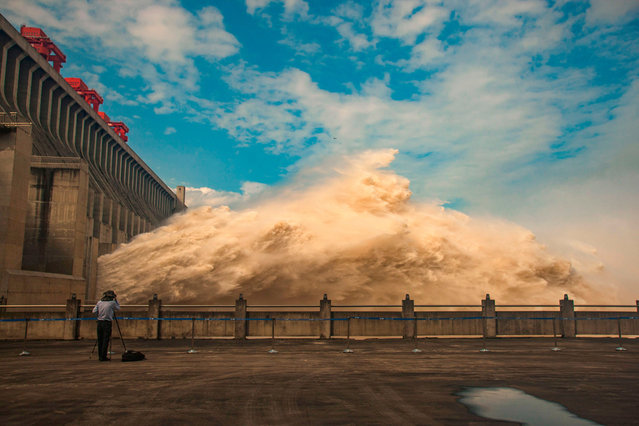
This photo taken on July 19, 2020 shows a person taking photos while water is released from the Three Gorges Dam, a gigantic hydropower project on the Yangtze river, to relieve flood pressure in Yichang, central China's Hubei province. Rising waters across central and eastern China have left over 140 people dead or missing, and floods have affected almost 24 million since the start of July, according to the ministry of emergency management. (Photo by AFP Photo/China Stringer Network)

This photo taken on July 19, 2020 shows a person taking photos while water is released from the Three Gorges Dam, a gigantic hydropower project on the Yangtze river, to relieve flood pressure in Yichang, central China's Hubei province. Rising waters across central and eastern China have left over 140 people dead or missing, and floods have affected almost 24 million since the start of July, according to the ministry of emergency management. (Photo by AFP Photo/China Stringer Network)
Details
17 Aug 2020 00:03:00
An anti-lockdown activist dressed as Father Christmas is arrested in Grosvenor Square during a demonstration in London, England, on November 28, 2020. London is to return to “Tier 2” or “high alert” covid-19 restrictions once the current England-wide coronavirus lockdown ends next Wednesday. All three of the tiers, assigned to local authorities across England, have been strengthened since the lockdown began on November 5, however, with the main impacts to be felt by the hospitality sector. (Photo by Mark Thomas/i-Images)

An anti-lockdown activist dressed as Father Christmas is arrested in Grosvenor Square during a demonstration in London, England, on November 28, 2020. London is to return to “Tier 2” or “high alert” covid-19 restrictions once the current England-wide coronavirus lockdown ends next Wednesday. All three of the tiers, assigned to local authorities across England, have been strengthened since the lockdown began on November 5, however, with the main impacts to be felt by the hospitality sector. (Photo by Mark Thomas/i-Images)
Details
30 Nov 2020 00:07:00
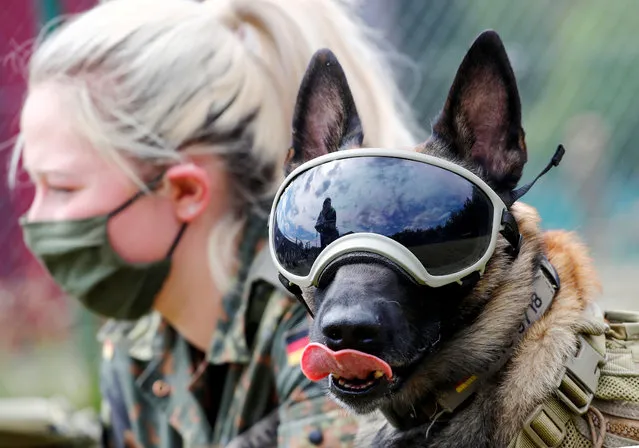
Five-year-old sniffing dog “Vine” wears protection goggles against the sun and dust as he poses together with Giulia Gausemann for photographers, at the sniffing dogs school of the German Army (Bundeswehr) in Daun, Germany, July 24, 2020. The Bundeswehr sniffing dogs school and the veterinarian university of Hanover are developing a training programme to sniff out the coronavirus disease (COVID-19) with dogs at airports, border crossings and other highly frequented places. (Photo by Wolfgang Rattay/Reuters)

Five-year-old sniffing dog “Vine” wears protection goggles against the sun and dust as he poses together with Giulia Gausemann for photographers, at the sniffing dogs school of the German Army (Bundeswehr) in Daun, Germany, July 24, 2020. The Bundeswehr sniffing dogs school and the veterinarian university of Hanover are developing a training programme to sniff out the coronavirus disease (COVID-19) with dogs at airports, border crossings and other highly frequented places. (Photo by Wolfgang Rattay/Reuters)
Details
26 Jul 2020 00:01:00
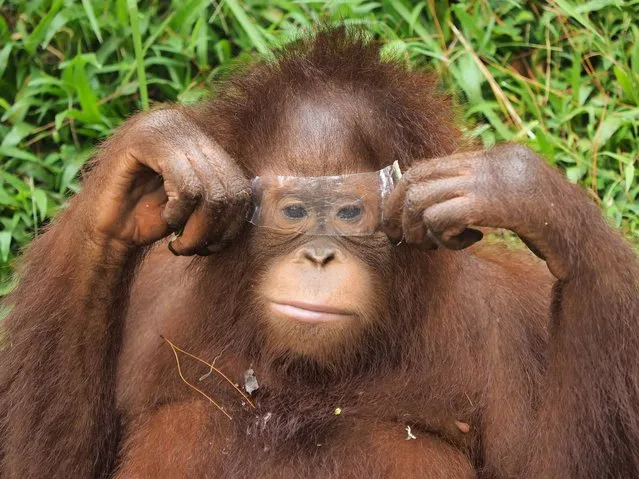
This sumatran orangutan named Kulsum was captured playing with a piece of broken bottle making a pair of makeshift sunglasses to ward off the sun in Jakarta, Indonesia in November 2022. Sumatran orangutans are critically endangered of the three orangutan species and are only found in the north of the Indonesian Island of Sumatra. An orangutan has a long lifespan and can live up to 30 years in the wild with many living up to 50. (Photo by Syahrul Ramadan/Media Drum Images)

This sumatran orangutan named Kulsum was captured playing with a piece of broken bottle making a pair of makeshift sunglasses to ward off the sun in Jakarta, Indonesia in November 2022. Sumatran orangutans are critically endangered of the three orangutan species and are only found in the north of the Indonesian Island of Sumatra. An orangutan has a long lifespan and can live up to 30 years in the wild with many living up to 50. (Photo by Syahrul Ramadan/Media Drum Images)
Details
15 Dec 2022 02:10:00
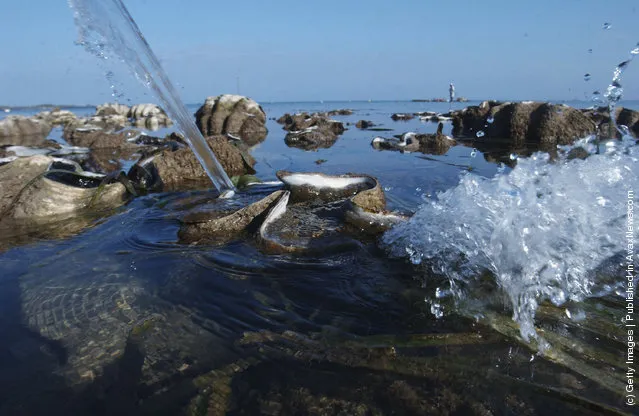
Tridacna Gigas, or Giant Clams

“The giant clam, Tridacna gigas (known as pā’ua in Cook Islands Māori), is the largest living bivalve mollusc. T. gigas is one of the most endangered clam species. It was mentioned as early as 1825 in scientific reports. One of a number of large clam species native to the shallow coral reefs of the South Pacific and Indian oceans, they can weigh more than 200 kilograms (440 lb) measure as much as 120 cm (47 in) across, and have an average lifespan in the wild of 100 years or more”. – Wikipedia

Photo: Tridacna Gigas, or Giant Clams spew water as a traditional fisherman passes by a small sanctuary on January 23, 2004 near Bolinao in the Northern Philippines. The clams, prime builders for coral reefs and providing shelter for spawning fish and other marine life, are exposed by low tides in the sanctuary. Overfishing and pollution throughout the country are not only threatening food security, but are also starting to choke one of the few working clam sanctuaries in the world. (Photo by David Greedy/Getty Images)
Details
01 Oct 2011 13:10:00
The Lun-class Ekranoplane was used by the Soviet Navy starting in 1987, and wasn't retired until the late 1990s, after the Soviet Union's fall. (Igor113)

“The Lun-class ekranoplan (NATO reporting name Duck) was a ground effect vehicle (GEV) designed by Rostislav Evgenievich Alexeev and used by the Soviet and Russian navies from 1987 until sometime in the late 1990s. It “flew” using the lift generated by the ground effect of its large wings when close to the surface of the water – about four metres or less. Although they might look similar and/or have related technical characteristics, ekranoplans like the Lun are not aircraft, seaplanes, hovercraft, or hydrofoils – ground effect is a separate technology altogether. The International Maritime Organization classifies these vehicles as maritime ships. The name Lun comes from the Russian for harrier”. – Wikipedia (Photo by Igor113)
Details
08 Aug 2014 10:51:00