Loading...
Done
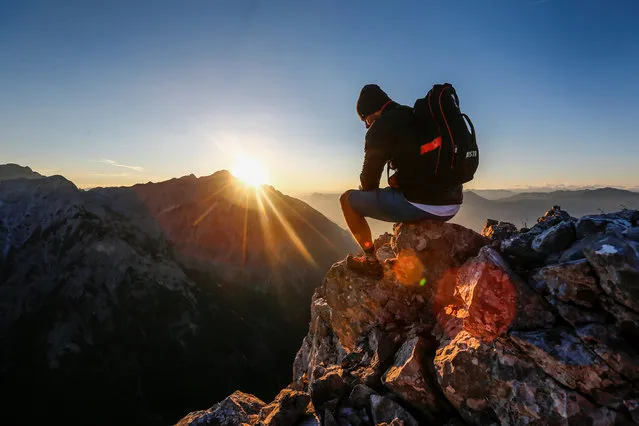
A man stands on a mountain summit as he looks over the Inntal valley in the western Austrian village of Gnadenwald, Austria on July 18, 2017. (Photo by Dominic Ebenbichler/Reuters)

A man stands on a mountain summit as he looks over the Inntal valley in the western Austrian village of Gnadenwald, Austria on July 18, 2017. (Photo by Dominic Ebenbichler/Reuters)
Details
17 Aug 2017 07:52:00
Drivers push cars to gas station during “oil crisis”, Roslindale, Boston, Massachusetts, 1973. (Photo by Spencer Grant/Getty Images)

Drivers push cars to gas station during “oil crisis”, Roslindale, Boston, Massachusetts, 1973. (Photo by Spencer Grant/Getty Images)
Details
18 Nov 2021 08:30:00
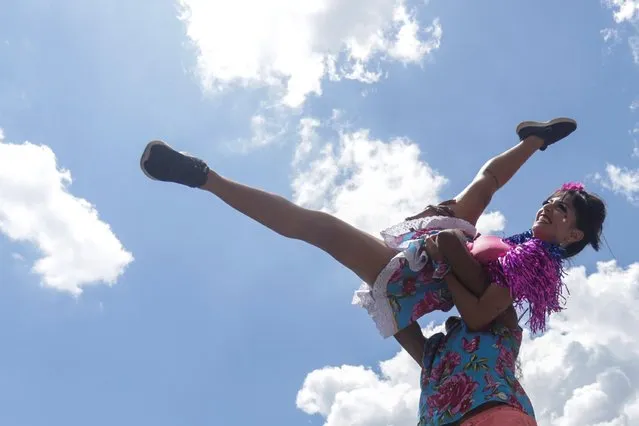
Revellers take part in the annual block party known as “Casa Comigo” (Marry Me), during carnival festivities in Sao Paulo, Brazil on February 15, 2020. (Photo by Rahel Patrasso/Reuters)

Revellers take part in the annual block party known as “Casa Comigo” (Marry Me), during carnival festivities in Sao Paulo, Brazil on February 15, 2020. (Photo by Rahel Patrasso/Reuters)
Details
24 Feb 2020 00:05:00
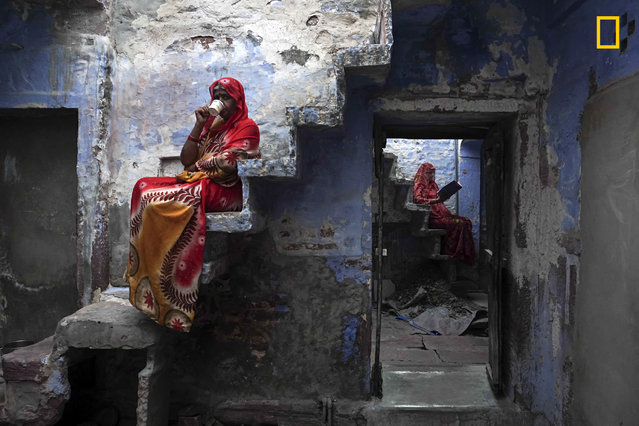
“These Rajasthani sisters were sitting on the staircase inside their house relaxing and enjoy a cup of masala chai”. (Photo by Firdaus Hadzri/National Geographic Travel Photographer of the Year Contest)

“These Rajasthani sisters were sitting on the staircase inside their house relaxing and enjoy a cup of masala chai”. (Photo by Firdaus Hadzri/National Geographic Travel Photographer of the Year Contest)
Details
13 Apr 2018 00:01:00
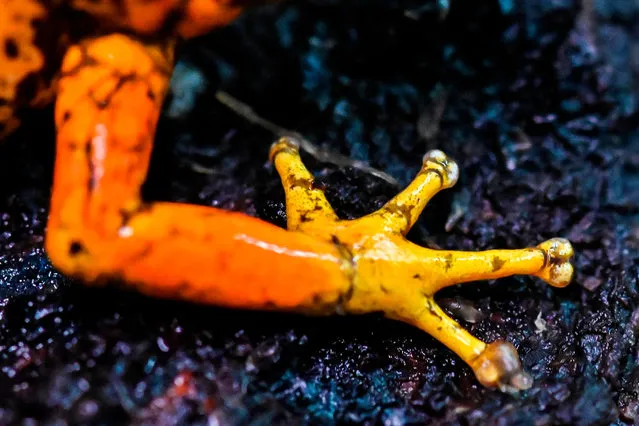
A leg of a “diablito” frog (Oophaga sylvatica) is photographed in a laboratory at a laboratory in the zoo of Cali, Colombia, on July 19, 2019. Colombia is the second country with the largest number of amphibians in the world after Brazil. More than 40% of amphibian species worldwide are in danger of extinction. (Photo by Luis Robayo/AFP Photo)

A leg of a “diablito” frog (Oophaga sylvatica) is photographed in a laboratory at a laboratory in the zoo of Cali, Colombia, on July 19, 2019. Colombia is the second country with the largest number of amphibians in the world after Brazil. More than 40% of amphibian species worldwide are in danger of extinction. (Photo by Luis Robayo/AFP Photo)
Details
28 Nov 2020 00:03:00
In this Monday, October 5, 2015 photo, a thick blanket of early morning fog partially shrouds the skyscrapers of the Marina and Jumeirah Lake Towers districts of Dubai, United Arab Emirates. Dubai's rapid transformation from a desert outpost into one of the world's most architecturally stunning cities is mapped out in the Marina. Where just 15 years ago there was empty, flat land, today a bustling neighborhood thrives centered around a canal and an impressive skyline that pierces through the clouds. (Photo by Kamran Jebreili/AP Photo)

In this Monday, October 5, 2015 photo, a thick blanket of early morning fog partially shrouds the skyscrapers of the Marina and Jumeirah Lake Towers districts of Dubai, United Arab Emirates. Dubai's rapid transformation from a desert outpost into one of the world's most architecturally stunning cities is mapped out in the Marina. Where just 15 years ago there was empty, flat land, today a bustling neighborhood thrives centered around a canal and an impressive skyline that pierces through the clouds. (Photo by Kamran Jebreili/AP Photo)
Details
10 Dec 2015 08:03:00
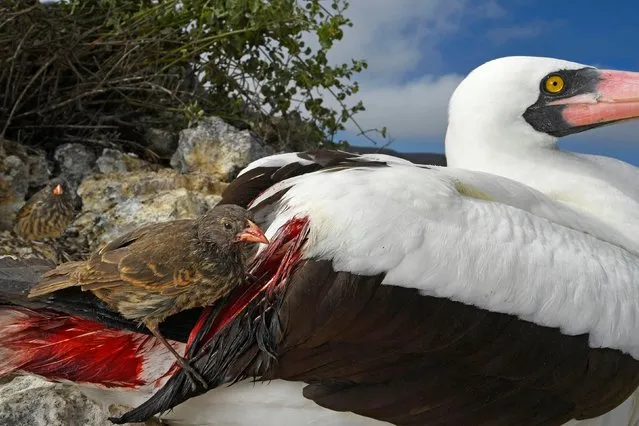
Bloodthirsty by Thomas P Peschak, Germany/South Africa — winner, Behaviour: birds. When rations run short on Wolf Island, in the remote northern Galápagos, the sharp-beaked ground finches become vampires. Their sitting targets are Nazca boobies and other large birds. The finches rely on a scant diet of seeds and insects, which regularly dries up, so they drink blood to survive. ‘I’ve seen more than half a dozen finches drinking from a single Nazca booby,’ says Tom. Rather than leave their nests the boobies tolerate the vampires, and the blood loss doesn’t seem to cause permanent harm. (Photo by Thomas P Peschak/2018 Wildlife Photographer of the Year)

Bloodthirsty by Thomas P. Peschak, Germany/South Africa — winner, Behaviour: birds. When rations run short on Wolf Island, in the remote northern Galápagos, the sharp-beaked ground finches become vampires. Their sitting targets are Nazca boobies and other large birds. The finches rely on a scant diet of seeds and insects, which regularly dries up, so they drink blood to survive. ‘I’ve seen more than half a dozen finches drinking from a single Nazca booby,’ says Tom. Rather than leave their nests the boobies tolerate the vampires, and the blood loss doesn’t seem to cause permanent harm. (Photo by Thomas P. Peschak/2018 Wildlife Photographer of the Year)
Details
19 Oct 2018 00:05:00
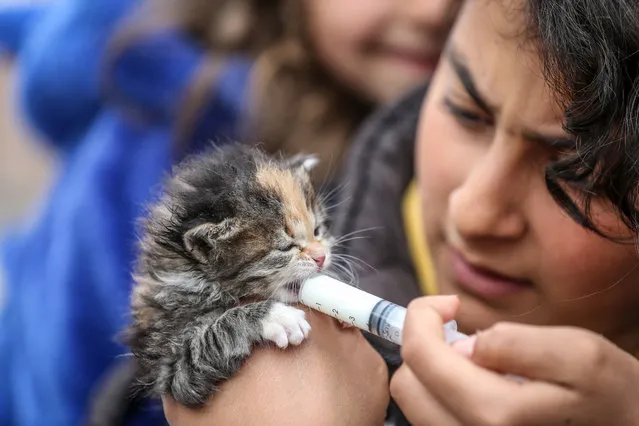
A girl feeds the new-born kitten as the family, living in tent city, adopted two kittens, found under the rubble, after 7.7 and 7.6 magnitude earthquakes hit in Hatay, Turkiye on March 15, 2023. (Photo by Sergen Sezgin/Anadolu Agency via Getty Images)

A girl feeds the new-born kitten as the family, living in tent city, adopted two kittens, found under the rubble, after 7.7 and 7.6 magnitude earthquakes hit in Hatay, Turkiye on March 15, 2023. (Photo by Sergen Sezgin/Anadolu Agency via Getty Images)
Details
30 Mar 2023 03:41:00