Loading...
Done
Tomotaka Takahashi

“Tomotaka Takahashi (born March 27, 1975), roboticist and founder of Kyoto University's ROBO-GARAGE since 1999, creates humanoid robots known for their smooth, fluid motions and sleek appearance. Creating a number of humanoid robots entirely by himself, from concept through to production, Takahashi's designs have been featured in art exhibitions celebrating the creation of Astroboy, Time Magazine's Coolest Inventions of 2004, and promotions for Bandai, Panasonic, and Pepsi”. – Wikipedia

Photo: One of Japan's leading robot creator's Tomotaka Takahashi holds Robo Garage's Chroino and FT during the Robo_Japan 2008 Press Preview at Pacifico Yokohama on October 10, 2008 in Yokohama, Kanagawa, Japan. (Photo by Junko Kimura/Getty Images)
Details
15 Oct 2011 11:12:00
1914: A Thorneycroft motor van as used during World War I

A Thorneycroft motor van as used during World War I. (Photo by Topical Press Agency/Getty Images). August 1914
Details
13 Dec 2011 11:49:00
Marc Berthod of Switzerland during the Audi FIS Alpine Ski World Cup Men's Super Combined

Marc Berthod of Switzerland during the Audi FIS Alpine Ski World Cup Men's Super Combined on February 12, 2012 in Sochi, Russia. (Photo by Vianney Thibaut/Agence Zoom/Getty Images)
Details
13 Feb 2012 13:02:00
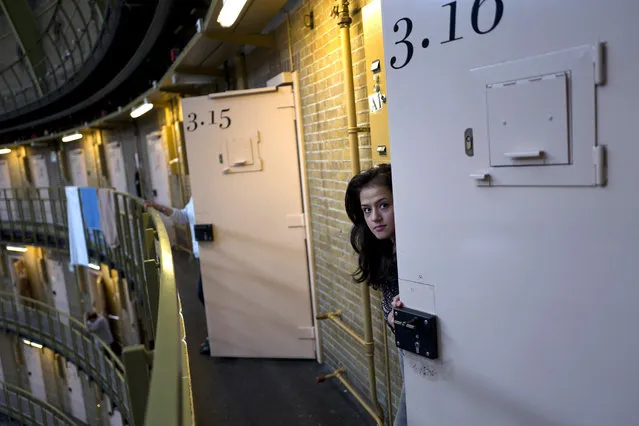
In this Saturday, May 7, 2016 photo, Afghan refugee Shazia Lutfi, 19, peeks through the door of her room at the former prison of De Koepel in Haarlem, Netherlands. The government has let Belgium and Norway put prisoners in its empty cells and now, amid the huge flow of migrants into Europe, several Dutch prisons have been temporarily pressed into service as asylum seeker centers. (Photo by Muhammed Muheisen/AP Photo)

In this Saturday, May 7, 2016 photo, Afghan refugee Shazia Lutfi, 19, peeks through the door of her room at the former prison of De Koepel in Haarlem, Netherlands. The government has let Belgium and Norway put prisoners in its empty cells and now, amid the huge flow of migrants into Europe, several Dutch prisons have been temporarily pressed into service as asylum seeker centers. (Photo by Muhammed Muheisen/AP Photo)
Details
18 May 2016 14:02:00
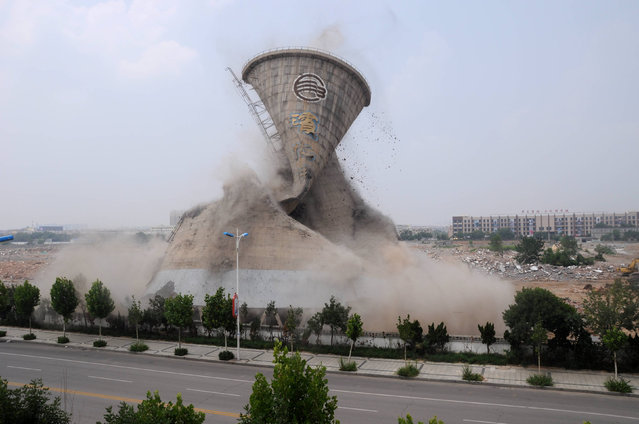
A cooling tower is seen under mechanical demolition in Binzhou, Shandong Province, China, July 13, 2016. (Photo by Reuters/China Daily)

A cooling tower is seen under mechanical demolition in Binzhou, Shandong Province, China, July 13, 2016. (Photo by Reuters/China Daily)
Details
15 Jul 2016 12:48:00
The top layer of muskeg and earth (L) is removed at the Syncrude tar sands operations near Fort McMurray, Alberta, September 17, 2014. Syncrude currently produces 350,000 barrels per day of high quality light, low sulphur crude oil according to company reports. (Photo by Todd Korol/Reuters)

The top layer of muskeg and earth (L) is removed at the Syncrude tar sands operations near Fort McMurray, Alberta, September 17, 2014. Syncrude currently produces 350,000 barrels per day of high quality light, low sulphur crude oil according to company reports. (Photo by Todd Korol/Reuters)
Details
21 Sep 2014 11:06:00
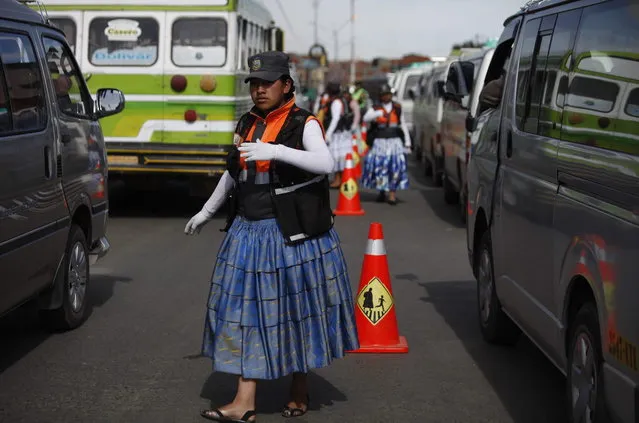
In this December 3, 2013 photo, an Aymara woman cops directs traffic on the streets of El Alto, Bolivia. The women wear the bright petticoats and shawls of indigenous women in the Andes, called cholitas in Bolivian slang, the main difference being that instead of bowler hats they wear khaki green police-style caps. Some don fluorescent traffic vests. (Photo by Juan Karita/AP Photo)

“This city in Bolivia's highlands has hired Aymara women dressed in traditional multilayered Andean skirts and brightly embroidered vests to work as traffic cops and bring order to its road chaos. About 20 of the “traffic cholitas” have been trained to direct cars and buses in El Alto, a teeming, impoverished sister city of La Paz in Bolivia's Andes mountains”. – El Alto via Associated Press. Photo: In this December 3, 2013 photo, an Aymara woman cops directs traffic on the streets of El Alto, Bolivia. The women wear the bright petticoats and shawls of indigenous women in the Andes, called cholitas in Bolivian slang, the main difference being that instead of bowler hats they wear khaki green police-style caps. Some don fluorescent traffic vests. (Photo by Juan Karita/AP Photo)
Details
25 Dec 2013 10:48:00
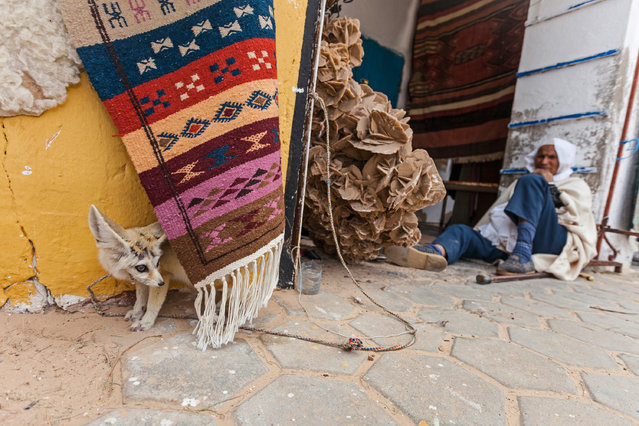
Sultan, a famous captive fennec that is displayed tied on a rope in front of a tourist shop, is the main attraction in the souk of Douz, a desert town in Tunisia. By the display of such a charismatic animal, tourists are often lured to buy things or pay for pictures. On inquiry, although Sultan has been caught as a pup in the wild, the owners of the shop reassure the foreigners stating that the animal is ‘domestic’. (Photo by Bruno D’Amicis/Fritz Pölking Prize/GDT EWPY 2015)

Sultan, a famous captive fennec that is displayed tied on a rope in front of a tourist shop, is the main attraction in the souk of Douz, a desert town in Tunisia. By the display of such a charismatic animal, tourists are often lured to buy things or pay for pictures. On inquiry, although Sultan has been caught as a pup in the wild, the owners of the shop reassure the foreigners stating that the animal is ‘domestic’. (Photo by Bruno D’Amicis/Fritz Pölking Prize/GDT EWPY 2015)
Details
23 Nov 2015 08:02:00