Loading...
Done
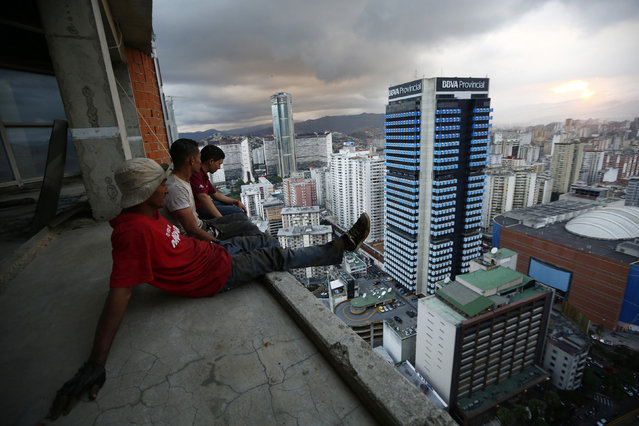
Men rest after salvaging metal on the 30th floor of the “Tower of David” skyscraper in Caracas February 3, 2014. A 45-storey skyscraper in the center of Venezuela's capital Caracas is a slum, probably the highest in the world. Dubbed the “Tower of David”, the building was intended to be a shining new financial center but was abandoned around 1994 after the death of its developer – banker and horse-breeder David Brillembourg – and the collapse of the financial sector. (Photo by Jorge Silva/Reuters)

Men rest after salvaging metal on the 30th floor of the “Tower of David” skyscraper in Caracas February 3, 2014. A 45-storey skyscraper in the center of Venezuela's capital Caracas is a slum, probably the highest in the world. Dubbed the “Tower of David”, the building was intended to be a shining new financial center but was abandoned around 1994 after the death of its developer – banker and horse-breeder David Brillembourg – and the collapse of the financial sector. (Photo by Jorge Silva/Reuters)
Details
03 Apr 2014 12:05:00
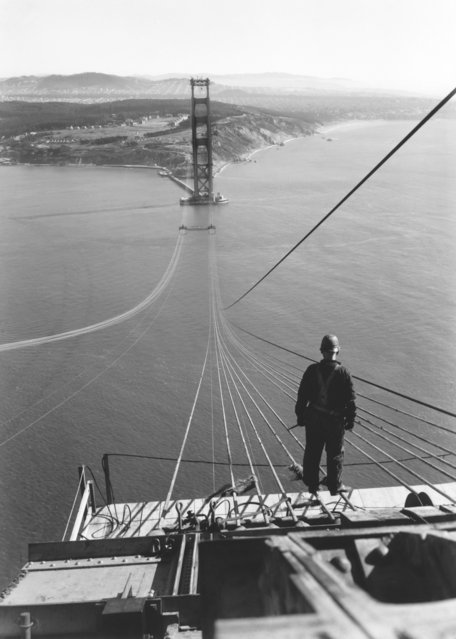
A man standing on the first cables during the construction of the Golden Gate Bridge with the Presidio and San Francisco in the background, San Francisco, California, 1935. (Photo by Underwood Archives/Getty Images)

A man standing on the first cables during the construction of the Golden Gate Bridge with the Presidio and San Francisco in the background, San Francisco, California, 1935. (Photo by Underwood Archives/Getty Images)
Details
01 Jul 2014 12:46:00
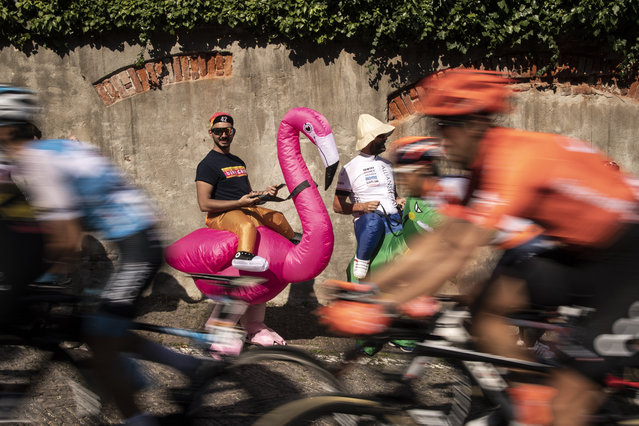
A supporter dressed as flamingo cheers on the riders during the 12th stage of the 102nd Giro d'Italia – Tour of Italy – cycle race, 158kms from Cuneo to Pinerolo on May 23, 2019. (Photo by Marco Bertorello/AFP Photo)

A supporter dressed as flamingo cheers on the riders during the 12th stage of the 102nd Giro d'Italia – Tour of Italy – cycle race, 158kms from Cuneo to Pinerolo on May 23, 2019. (Photo by Marco Bertorello/AFP Photo)
Details
27 May 2019 00:05:00
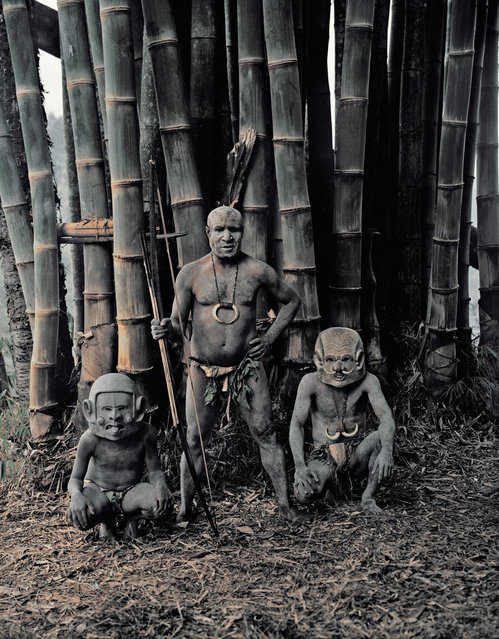
“Asaro from the Eastern Highlands”. The mudmen could not cover their faces with mud because the people of Papua New Guinea thought that the mud from the Asaro river was poisonous. So instead of covering their faces with this alleged poison, they made masks from pebbles that they heated and water from the waterfall, with unusual designs such as long or very short ears either going down to the chin or sticking up at the top, long joined eyebrows attached to the top of the ears, horns and sideways mouths. (Jimmy Nelson)

“Asaro from the Eastern Highlands”. The mudmen could not cover their faces with mud because the people of Papua New Guinea thought that the mud from the Asaro river was poisonous. So instead of covering their faces with this alleged poison, they made masks from pebbles that they heated and water from the waterfall, with unusual designs such as long or very short ears either going down to the chin or sticking up at the top, long joined eyebrows attached to the top of the ears, horns and sideways mouths. (Photo and caption by Jimmy Nelson)
Details
20 Oct 2013 08:54:00
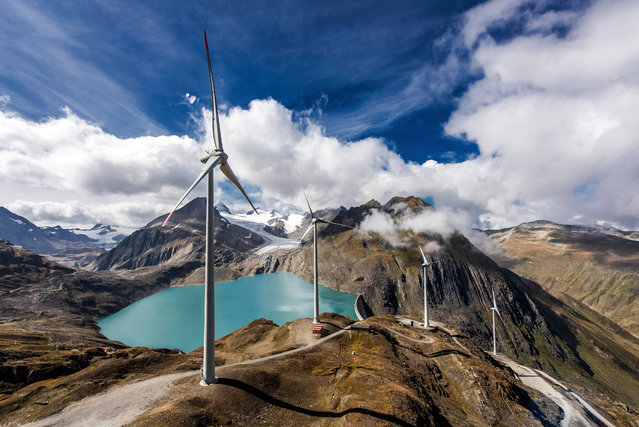
A photograph made available on 30 September 2016 showing wind turbines at the site of the highest wind park in Europe at the Griessee, near the Nufenenpass in the Swiss south Alpes, Valais, Switzerland, on 23 September 2016. The four wind turbines of this wind park were developed by the company SwissWinds GmbH and are inaugurated on, 30 September 2016. (Photo by Olivier Maire/EPA)

A photograph made available on 30 September 2016 showing wind turbines at the site of the highest wind park in Europe at the Griessee, near the Nufenenpass in the Swiss south Alpes, Valais, Switzerland, on 23 September 2016. The four wind turbines of this wind park were developed by the company SwissWinds GmbH and are inaugurated on, 30 September 2016. (Photo by Olivier Maire/EPA)
Details
28 Jan 2017 06:56:00
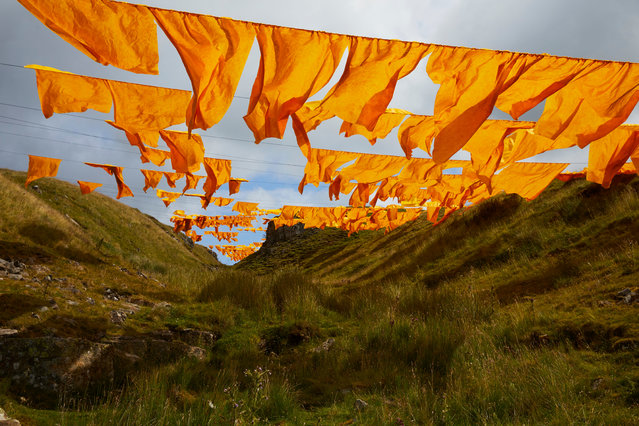
Monumental landscape artwork “Hush” by installation artist Steve Messam hangs in the moors of Teesdale on July 18, 2019 in Barnard Castle, England. The outdoor installation is inspired by the geology, mining history and landscape of the area. It hangs over Bales Hush, a deep gauge in the terrain created when miners flushed the area with water to reveal the geological riches below. Hundreds of metres of recyclable saffron yellow fabric blow in the wind. (Photo by Christopher Thomond/The Guardian)

Monumental landscape artwork “Hush” by installation artist Steve Messam hangs in the moors of Teesdale on July 18, 2019 in Barnard Castle, England. The outdoor installation is inspired by the geology, mining history and landscape of the area. It hangs over Bales Hush, a deep gauge in the terrain created when miners flushed the area with water to reveal the geological riches below. Hundreds of metres of recyclable saffron yellow fabric blow in the wind. (Photo by Christopher Thomond/The Guardian)
Details
20 Jul 2019 00:03:00
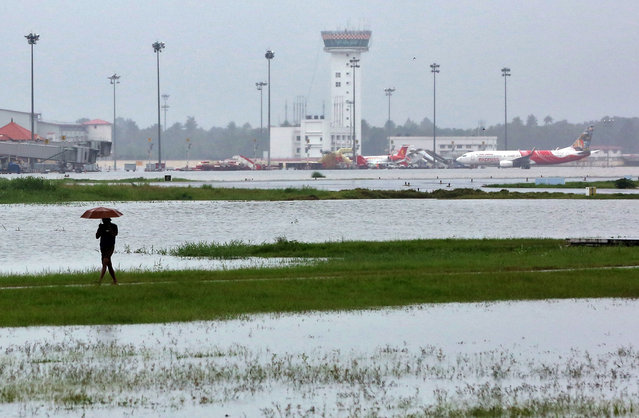
A man walks inside the flooded Cochin international airport after the opening of Idamalayar, Cheruthoni and Mullaperiyar dam shutters following heavy rain, on the outskirts of Kochi, India, August 15, 2018. (Photo by Sivaram V/Reuters)

A man walks inside the flooded Cochin international airport after the opening of Idamalayar, Cheruthoni and Mullaperiyar dam shutters following heavy rain, on the outskirts of Kochi, India, August 15, 2018. (Photo by Sivaram V/Reuters)
Details
20 Aug 2018 00:03:00
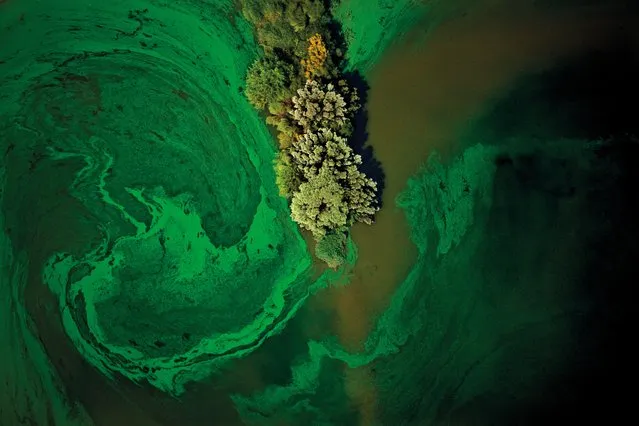
Luling, Louisiana US. New evidence contradicts previous claims of the relative safety of glyphosate, the world’s most widely used herbicide, which is manufactured here. It is often used in conjunction with seeds that have been genetically modified to tolerate its application, meaning that anyone consuming these crops is eating a genetically modified plant, and whatever residue of the pesticide that remains. (Photo by J. Henry Fair/Industrial Scars/Papadakis Publisher)

Luling, Louisiana, US. New evidence contradicts previous claims of the relative safety of glyphosate, the world’s most widely used herbicide, which is manufactured here. It is often used in conjunction with seeds that have been genetically modified to tolerate its application, meaning that anyone consuming these crops is eating a genetically modified plant, and whatever residue of the pesticide that remains. (Photo by J. Henry Fair/Industrial Scars/Papadakis Publisher)
Details
25 Oct 2016 10:40:00