Dancers from Kyiv and Dnipro preparing themselves in the wings for a performance at the Kyiv National Opera House on June 24, 2022. (Photo by Julian Simmonds/The Guardian)
Jiff with Playboy Playmates arrives at the Playboy Super Bowl XLIX Party on Friday, January 30, 2015 in Scottsdale, Ariz. (Photo by Omar Vega/Invision/AP Photo)
U.S. Corporal Stanley Suski, left, and Miss Tamako, a Geisha girl, whirl a bit of Jitterbug, in a bar, in Tokyo, Japan, on October 1, 1945. (Photo by AP Photo)
Anti-pollution protesters wearing traditional costumes and contemporary gas masks ride bicycles in the Qingming Grand river park in Kaifeng, Henan Province, China on January 1, 2017. The Beijing Municipal Environmental Protection Bureau extended an “orange alert” for heavy air pollution for three more days. (Photo by SIPA Asia/Rex Features/Shutterstock)
(L-R) Miss Universe 2015 Pia Wurtzbach, Miss USA 2015 Olivia Jordan and Miss Teen USA 2015 Katherine Haik attend the 2016 Miss USA pageant at T-Mobile Arena on June 5, 2016 in Las Vegas, Nevada. (Photo by Ethan Miller/Getty Images)
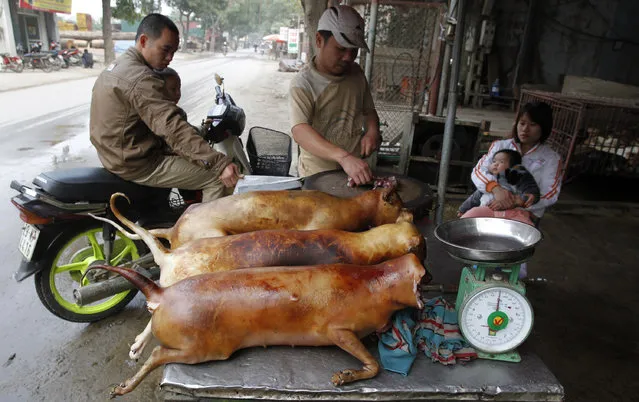
A vendor (C) cuts slaughtered dogs for sale at his roadside stall in Duong Noi village, outside Hanoi December 16, 2011. While animal rights activists have condemned eating dog meat as cruel treatment of the animals, it is still an accepted popular delicacy for some Vietnamese, as well in some other Asian countries. Duong Noi is well-known as a dog-meat village, where hundreds of dogs are killed each day for sale as popular traditional food. Dog-eating as a custom is rooted in Vietnam and was developed as a result of poverty. One kilogram of dog meat costs about 130,000 dongs ($6.2). (Photo by Reuters/Kham)
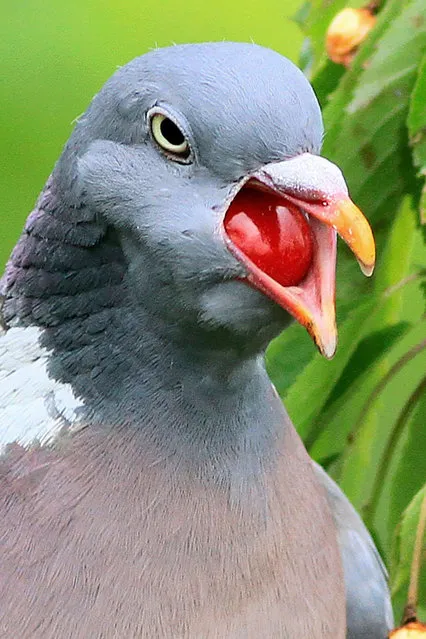
A pigeon eating cherries in Bydgoszcz, Poland on September 14, 2018. The pigeon was captured at dinnertime, as he was caught on camera with its mouth full of a cherry. (Photo by Piotr Grny/Caters News Agency)
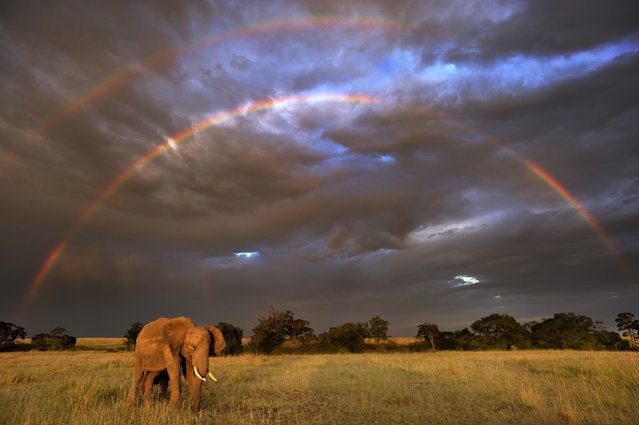
This photo provided by Netflix/naturepl.com and WWF-International shows an African Elephant (Loxodonta africana) in front of double rainbow, in Masai Mara, Kenya, included in the Netflix natural history series, “Our Planet”, in collaboration with Silverback Films and WWF. The eight-part series debuts in 2019. (Photo by Andy Rouse/Naturepl/WWF-International/Netflix via AP Photo)