Loading...
Done
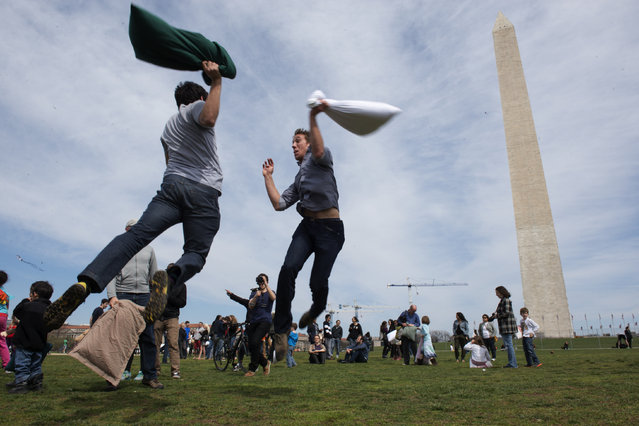
Alex Plunkett, left, and Sean Hart, both of Arlington, Va., join hundreds participating in the annual International Pillow Fight Day on April 5. Massive pillow fights broke out on the Mall in Washington and in cities around the world. (Photo by Marvin Joseph/The Washington Post)

Alex Plunkett, left, and Sean Hart, both of Arlington, Va., join hundreds participating in the annual International Pillow Fight Day on April 5. Massive pillow fights broke out on the Mall in Washington and in cities around the world. (Photo by Marvin Joseph/The Washington Post)
Details
28 Dec 2014 10:39:00
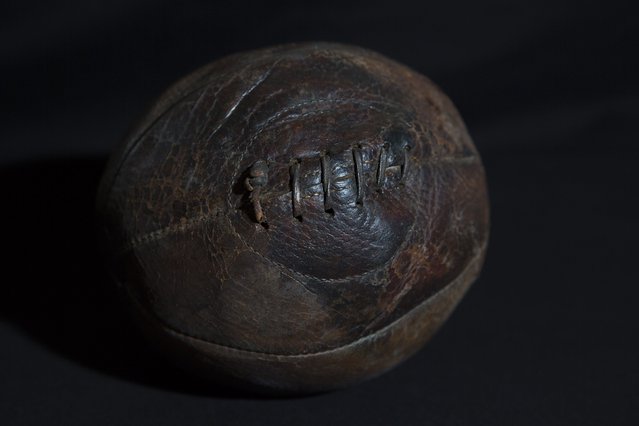
An original 1850 puntabout rugby football is displayed at Rugby School in central England, March 18, 2015. (Photo by Neil Hall/Reuters)

An original 1850 puntabout rugby football is displayed at Rugby School in central England, March 18, 2015. Rugby School is known as the spiritual home of rugby. According to a popular version of the game's origins, it was on the school's playing field that in 1823, in a game that could loosely be described as football but was more like a brawl, a pupil called William Webb Ellis caught the ball and, instead of kicking towards the goal, sprinted with it – breaking the code and laying the way for modern-day rugby. (Photo by Neil Hall/Reuters)
Details
23 Apr 2015 11:57:00
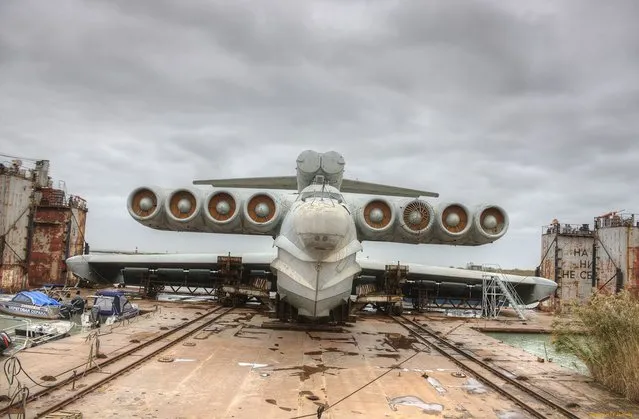
The Lun-class Ekranoplane was used by the Soviet Navy starting in 1987, and wasn't retired until the late 1990s, after the Soviet Union's fall. (Igor113)

“The Lun-class ekranoplan (NATO reporting name Duck) was a ground effect vehicle (GEV) designed by Rostislav Evgenievich Alexeev and used by the Soviet and Russian navies from 1987 until sometime in the late 1990s. It “flew” using the lift generated by the ground effect of its large wings when close to the surface of the water – about four metres or less. Although they might look similar and/or have related technical characteristics, ekranoplans like the Lun are not aircraft, seaplanes, hovercraft, or hydrofoils – ground effect is a separate technology altogether. The International Maritime Organization classifies these vehicles as maritime ships. The name Lun comes from the Russian for harrier”. – Wikipedia (Photo by Igor113)
Details
08 Aug 2014 10:51:00
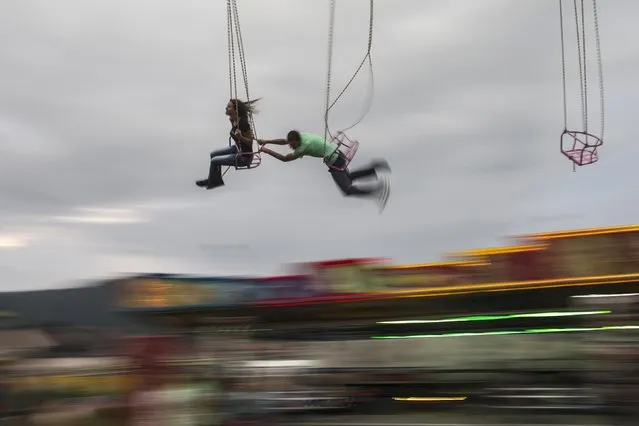
Revellers ride during the 54th annual brass band festival in the Serbian village of Guca August 7, 2014. Every year Guca is swamped by thousands of people taking part in the celebration of brass band music. (Photo by Marko Djurica/Reuters)

Revellers ride during the 54th annual brass band festival in the Serbian village of Guca August 7, 2014. Every year Guca is swamped by thousands of people taking part in the celebration of brass band music. (Photo by Marko Djurica/Reuters)
Details
10 Aug 2014 10:48:00
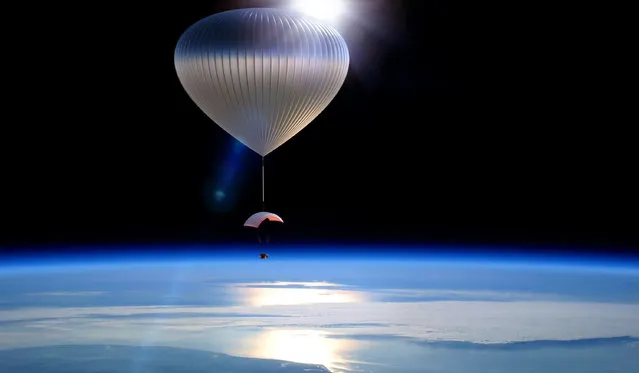
This undated image provided by World View shows World View capsule and balloon spacecraft that will rise to 100,000 feet above Earth for passengers to see the curvature of the planet and the blackness of space. (Photo by World View via AP Photo)

This undated image provided by World View shows World View capsule and balloon spacecraft that will rise to 100,000 feet above Earth for passengers to see the curvature of the planet and the blackness of space. Space tourism companies are employing designs including winged vehicles, vertical rockets with capsules and high-altitude balloons. While developers envision ultimately taking people to orbiting habitats, the moon or beyond, the immediate future involves short flights into or near the lowest reaches of space without going into orbit. (Photo by World View via AP Photo)
Details
15 Feb 2016 10:28:00
These are the stomach-churning pictures of the swing at the end of the world – a rickety wooden swing hanging over a precipice 2,660 metres above sea level – and not a seatbelt in sight. (Photo by Caters News)

These are the stomach-churning pictures of the swing at the end of the world – a rickety wooden swing hanging over a precipice 2,660 metres above sea level – and not a seatbelt in sight. (Photo by Caters News)
Details
18 May 2014 10:36:00
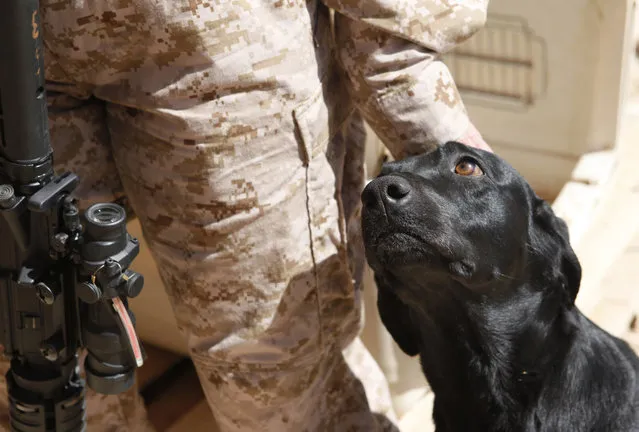
Afghanistan: Dogs of War Part 2

Throughout the course of the long war in Afghanistan, Coalition troops have relied on thousands of military working dogs to help keep them safe, and make their jobs easier. The dogs are trained to detect explosives, to find illegal drugs, to search for missing comrades, or target enemy combatants. Not only are they active on the front lines, but behind the lines they serve as therapy dogs, service dogs, and loyal companions. They also share the same risks as the ground troops, suffering injuries and sometimes death on the battlefields. Gathered here are images of these dogs and their handlers in Afghanistan and back home, from over the past several years, part of the ongoing series here on Afghanistan.

Details
05 Jun 2014 21:10:00
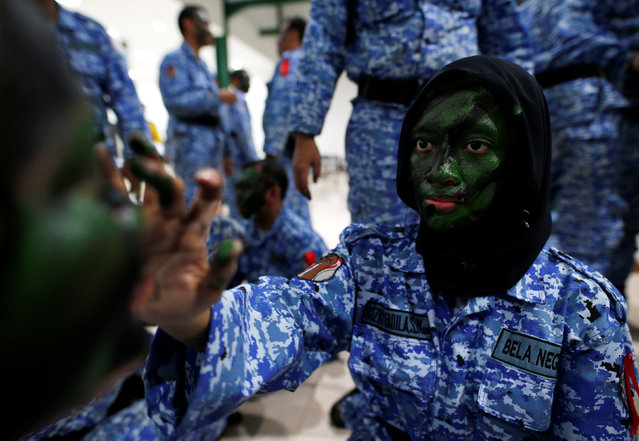
A female participant of the Bela Negara – “defend the nation” – programme applies camouflage face paint on another participant's face at a training centre in Rumpin, Bogor, West Java, Indonesia June 2, 2016. (Photo by Darren Whiteside/Reuters)

A female participant of the Bela Negara – “defend the nation” – programme applies camouflage face paint on another participant's face at a training centre in Rumpin, Bogor, West Java, Indonesia June 2, 2016. (Photo by Darren Whiteside/Reuters)
Details
08 Jun 2016 10:26:00