NEPAL: A devotee is smeared with a vermillion powder while celebrating the “Sindoor Jatra” vermillion powder festival at Thimi, in Bhaktapur, Nepal, April 14, 2016. (Photo by Navesh Chitrakar/Reuters)
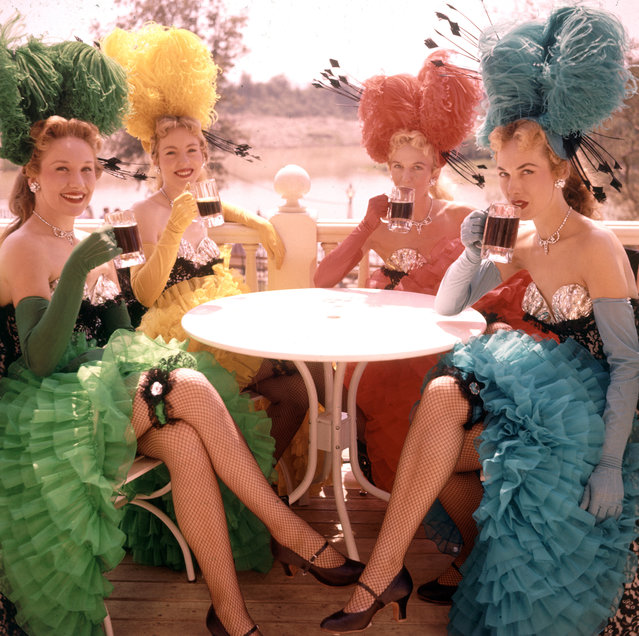
A quartet of showgirls in costume sit at an outdoor table and drink from mugs at Disneyland amusement park, Anaheim, California, 1955. (Photo by Loomis Dean/The LIFE Picture Collection/Getty Images)
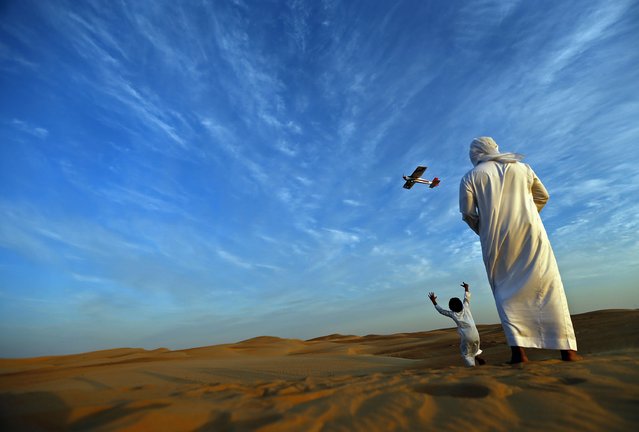
An Emirati child plays with an airplane model near the venue of the Mazayin Dhafra Camel Festival, on December 20, 2012 near the city of Madinat Zayed, 150 kms west of Abu Dhabi. The festival, which attracts participants from around the Gulf region, includes a camel beauty contest, a display of UAE handcrafts and other activities aimed at promoting the country's folklore. (Photo by Karim Sahib/AFP Photo)
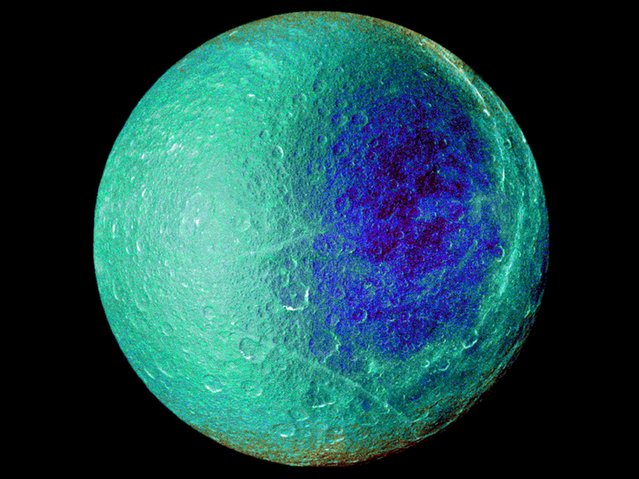
Hemispheric color differences on Saturn's moon Rhea are apparent in this false-color view from NASA's Cassini spacecraft in this March 2, 2010 file photo. (Photo by Reuters/NASA/JPL/SSI)
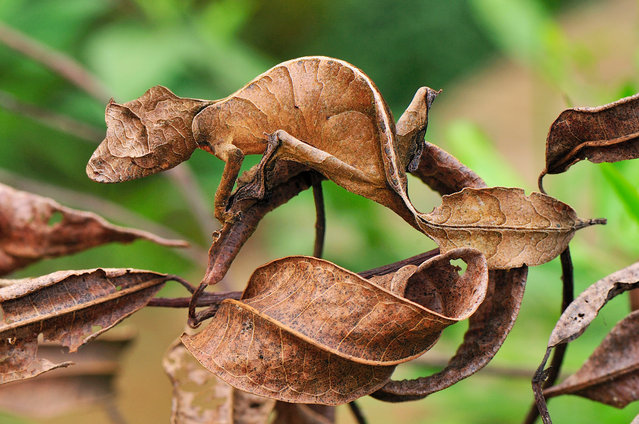
Is it a leaf? Is it tree bark? No, it’s the Satanic leaf-tailed gecko. Cleverly disguised as a rotting leaf, Madagascar’s camouflage king has red eyes, pointy horns and a taste for night hunting: it’s nature’s most devilish deceiver. The twisted body and veiny skin echo the detail of a dry leaf, which ensures the gecko blends in with its forest home. The mottled tail appears to have sections missing, as though it has withered over time. This mini-monster epitomises survival of the fittest, having adapted gradually to become today’s extraordinary leaf impersonator. (Photo by Thomas Marent/ARDEA)
A U.S. Army soldier with the 10th Special Forces Group and his military working dog jump off the ramp of a CH-47 Chinook helicopter from the 160th Special Operations Aviation Regiment during water training over the Gulf of Mexico as part of exercise Emerald Warrior 2011 on March 1, 2011. (Photo by Tech. Sgt. Manuel J. Martinez/U.S. Air Force)
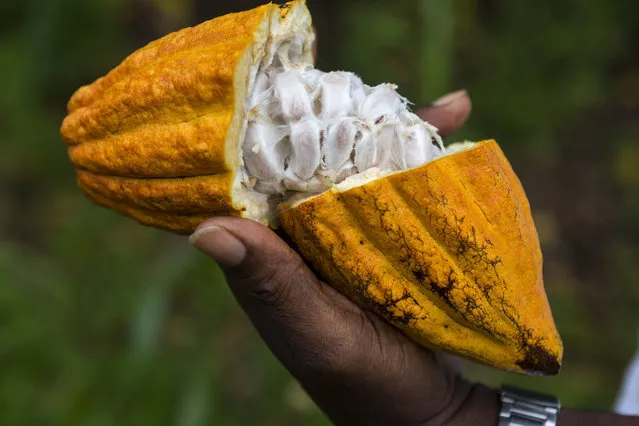
Chocolate is the greatest gift the Earth has given us. The dessert table would be a sad sight without it. It’s so beloved, so appreciated, that the Swedish scientist who named the cocoa plant that gives us chocolate called it Theobroma cacao, which means “food of the gods”. Here: Farmer holding a freshly cut cocoa bean pod, revealing the pulp and seed inside on a rainforest farm. (Photo by Doug McKinlay/Getty Images)