Loading...
Done
Performers at the opening ceremony of the 2018 FIFA World Cup at Luzhniki Stadium in Moscow, Russia on June 14, 2018. (Photo by Sergei Bobylev/TASS via Getty Images)

Dancers perform during the opening ceremony before the Russia 2018 World Cup Group A football match between Russia and Saudi Arabia at the Luzhniki Stadium in Moscow on June 14, 2018. (Photo by Sergei Bobylev/TASS via Getty Images)
Details
16 Jun 2018 00:01:00
Models, painted by bodypainting artist Alex Hansen from Brasil and Benoit Botella from Guadaloupe, pose for a picture at the 21st World Bodypainting Festival 2018 on July 14, 2018 in Klagenfurt, Austria. (Photo by Didier Messens/Getty Images)

Models, painted by bodypainting artist Alex Hansen from Brasil and Benoit Botella from Guadaloupe, pose for a picture at the 21st World Bodypainting Festival 2018 on July 14, 2018 in Klagenfurt, Austria. (Photo by Didier Messens/Getty Images)
Details
19 Jul 2018 00:05:00
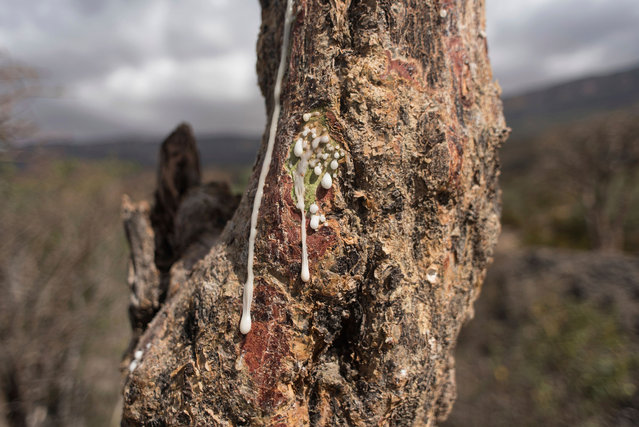
Sap runs out of a frankincense tree near Mader Moge, Somaliland, a breakaway region of Somalia on August 4, 2016. (Photo by Jason Patinkin/AP Photo)

Sap runs out of a frankincense tree near Mader Moge, Somaliland, a breakaway region of Somalia on August 4, 2016In a tradition dating to Biblical times, men rise at dawn in the rugged Cal Madow mountains of Somaliland in the Horn of Africa to scale rocky outcrops in search of the prized sap of wild frankincense trees. (Photo by Jason Patinkin/AP Photo)
Details
27 Dec 2016 08:06:00
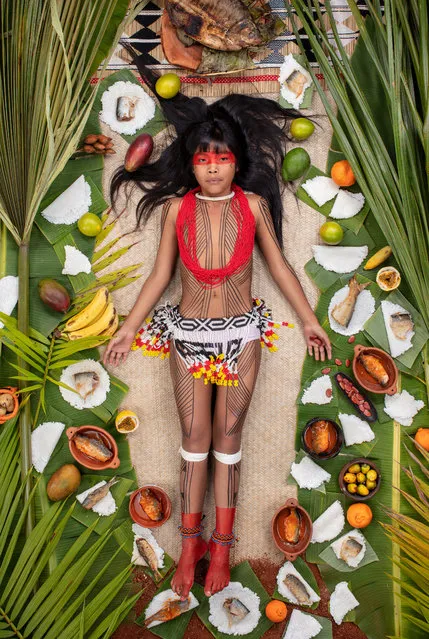
Kawakanih Yawalapiti, 9, Upper Xingu region of Mato Grosso, Brazil, 2018: Kawakanih lives with her tribe, the Yawalapiti, in Xingu national park, a preserve in the Amazon basin of Brazil. The Yawalapiti collect seeds to preserve species unique to their ecosystem, which lies between the rain forest and savannah. Kawakanih’s diet is simple, consisting mainly of fish, cassava, porridge, fruit and nuts. “It takes five minutes to catch dinner”, says Kawakanih. “When you’re hungry, you just go to the river with your net”. (Photo by Gregg Segal/The Guardian)

Photographer Gregg Segal travelled the world to document children and the food they eat in a week. Partly inspired by the increasing problems of childhood obesity, he tracked traditional regional diets as yet unaffected by globalisation, and ironically, found that the healthiest diets were often eaten by the least well off. (Photo by Gregg Segal/The Guardian)
Details
03 Jul 2019 00:03:00
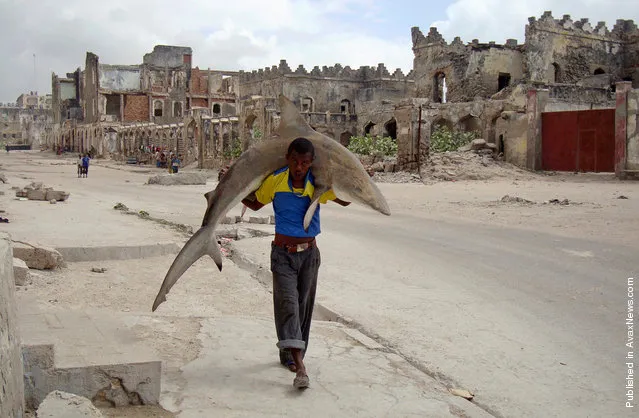
In this photo provided by World Press Photo, the 1st Prize Daily Life Single of the 2011 World Press Photo Contest by Omar Feisal, Somalia, Reuters, shows a man carrying a shark through the streets of Mogadishu, Somalia, Sept. 23, 2010

In this photo provided by World Press Photo, the 1st Prize Daily Life Single of the 2011 World Press Photo Contest by Omar Feisal, Somalia, Reuters, shows a man carrying a shark through the streets of Mogadishu, Somalia, September 23, 2010. (AP Photo/Omar Feisal/Reuters)
Details
08 Apr 2012 14:15:00
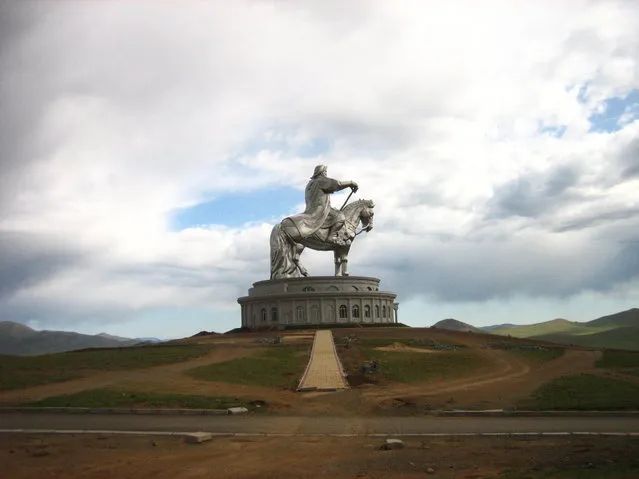
The world's largest statue of Chinggis Khaan (in Mongolia)

The Genghis Khan Statue is a 40-metre tall statue of Ghengis Khan (1162–1227) on horseback, on the bank of the Tuul River at Tsonjin Boldog (54 km east of the capital Ulan Bator), where according to legend, he found a golden whip.
Details
18 Jun 2012 11:19:00
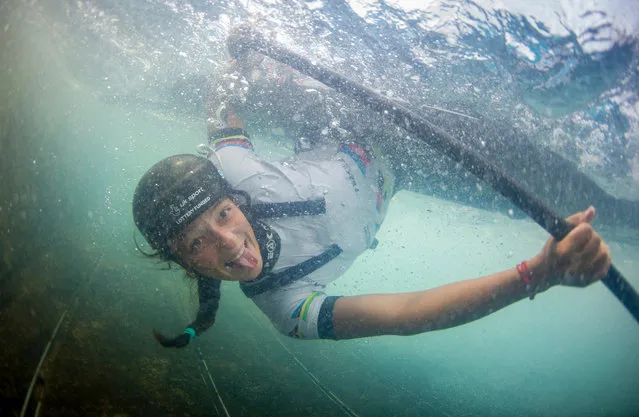
Special Merit Award. Mallory Franklin (2019). The British slalom canoeist has competed internationally since 2009 and won nine medals in total at the ICF Canoe Slalom World Championships with four golds, four silvers and a bronze. She has also won eleven medals at the European Championships. (Photo by Richard Pelham/World Sports Photography Awards 2021)

Special Merit Award. Mallory Franklin (2019). The British slalom canoeist has competed internationally since 2009 and won nine medals in total at the ICF Canoe Slalom World Championships with four golds, four silvers and a bronze. She has also won eleven medals at the European Championships. (Photo by Richard Pelham/World Sports Photography Awards 2021)
Details
05 Jun 2021 09:12:00
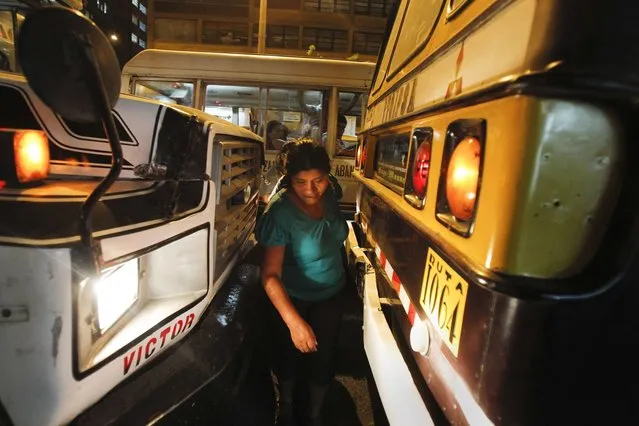
A woman squeezes between two public buses in downtown Lima, March 17, 2014. Bogota and two other Latin American capitals – Mexico City, and Lima in Peru – were named as the three capitals with the least safe transport systems for women in the Thomson Reuters Foundation poll of more than 6,550 women and gender and city planning experts. (Photo by Enrique Castro-Mendivil/Reuters)

A woman squeezes between two public buses in downtown Lima, March 17, 2014. Bogota and two other Latin American capitals – Mexico City, and Lima in Peru – were named as the three capitals with the least safe transport systems for women in the Thomson Reuters Foundation poll of more than 6,550 women and gender and city planning experts. Women in Latin America say they face a wide range of daily threats on public transport, and not enough is done to ensure their safety. (Photo by Enrique Castro-Mendivil/Reuters)
Details
04 Nov 2014 12:00:00