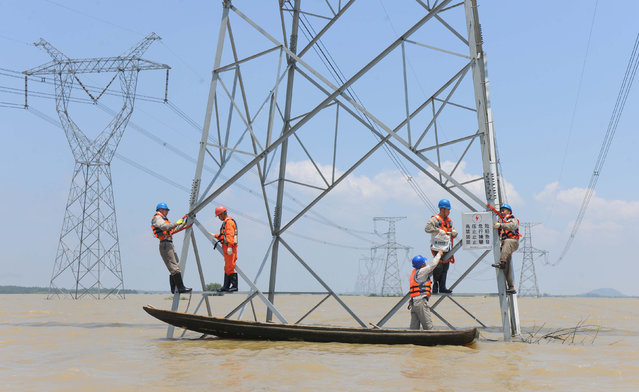
Workers reinforce the electric pylons at a flooded area as Typhoon Nepartak approaches in Xuancheng, Anhui Province, China, July 9, 2016. (Photo by Reuters/Stringer)
In this May 24, 2017, photo, DriveTanks.com customers drive on a tank course at Ox Ranch in Uvalde, Texas. The ranch is a free-roaming range filled with exotic animals, some to hunt, and home to DriveTanks.com, where tourists pay to transport themselves into another era and another life. (Photo by Michael Ciaglo/Houston Chronicle via AP Photo)
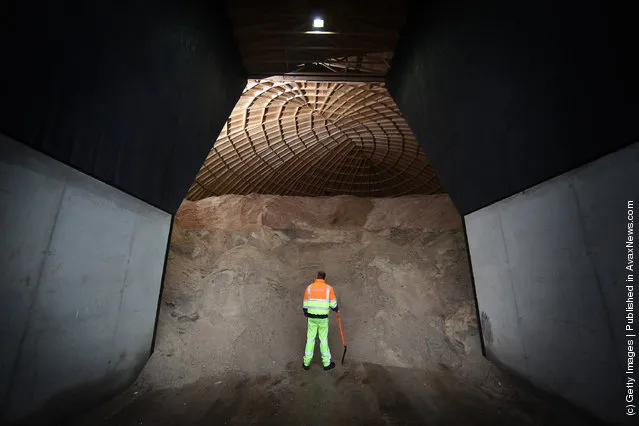
Route engineer Richard Winter stands in front of a pile of road salt at the Birchanger Depot on November 8, 2011 near Bishop's Stortford, England. (Photo by Peter Macdiarmid/Getty Images)
Participants take part in the annual Great Spitalfields Pancake Race in aid of London's Air Ambulance in London, Britain February 9, 2016. (Photo by Stefan Wermuth/Reuters)
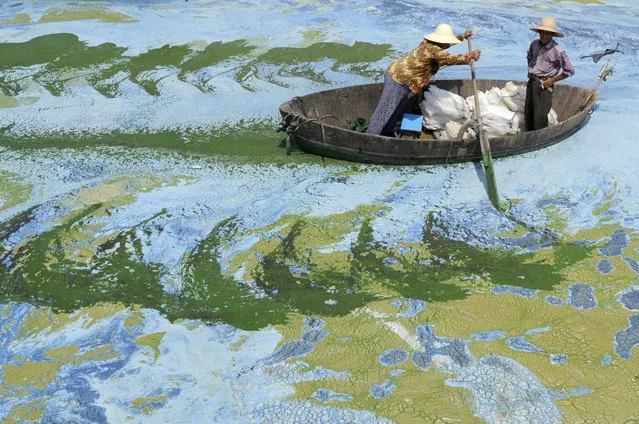
Growing cities, overuse of fertilizers and factory wastewater have degraded China's water supplies to the extent that half the nation's rivers and lakes are severely polluted. China aims to spend $850 billion to improve filthy water supplies over the next decade, but even such huge outlays may do little to reverse damage caused by decades of pollution and overuse in Beijing's push for rapid economic growth. Photo: Fishermen row a boat in the algae-filled Chaohu Lake in Hefei, Anhui province, June 19, 2009. (Photo by Jianan Yu/Reuters)
A Slovakian company has designed an egg-shaped and cozy micro-home that should work ideally for anybody who wants to “go off the grid” and “live off the land” – the Ecocapsule.