Loading...
Done
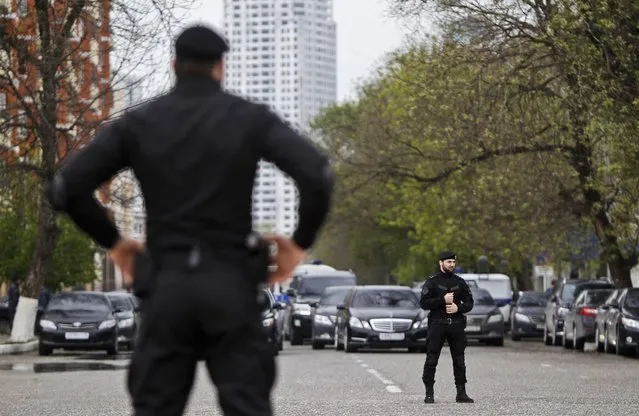
Special forces officers stand guard during a government-organised event marking Chechen language day in the centre of the Chechen capital Grozny April 25, 2013. (Photo by Maxim Shemetov/Reuters)

“What did I know about Chechnya before last week? For someone who grew up in the 1990s the very word Chechnya meant a string of grainy images on TV showing people in battered camouflage outfits, shooting at each other amid destruction and ruin. Fear, wahhabis, Shamil Basayev, terrorism, mountains: these were the words that used to spring to my mind when someone mentioned Chechnya”. – Maxim Shemetov. Photo: Special forces officers stand guard during a government-organised event marking Chechen language day in the centre of the Chechen capital Grozny April 25, 2013. (Photo by Maxim Shemetov/Reuters)
Details
14 May 2013 12:02:00
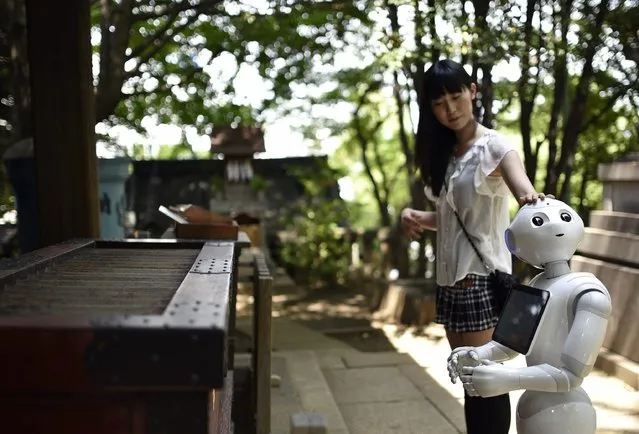
Tomomi Ota visits a local shrine with her humanoid robot Pepper in Tokyo, Japan, 26 June 2016. (Photo by Franck Robichon/EPA)

Tomomi Ota visits a local shrine with her humanoid robot Pepper in Tokyo, Japan, 26 June 2016. Reaching 120cm in height and 28 kilograms in weight, Pepper does not enter in the category of portable robot. But those characteristics dont stop Tomomi Ota to take Pepper in a cart to stroll in her neighborhood, go shopping or even take the subway... (Photo by Franck Robichon/EPA)
Details
08 Jul 2016 12:09:00
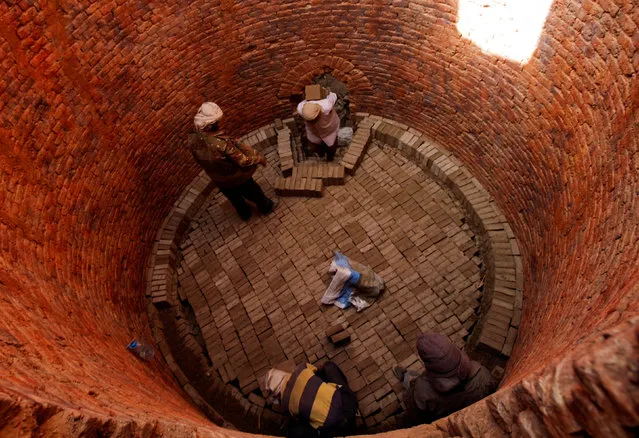
Labourers stack dried bricks inside a kiln, where they will be fired, at a brick factory on the outskirt of Sanaa, Yemen, June 1, 2016. (Photo by Mohamed al-Sayaghi/Reuters)

Labourers stack dried bricks inside a kiln, where they will be fired, at a brick factory on the outskirt of Sanaa, Yemen, June 1, 2016. Traditional mud brick tower houses have always been a source of pride to Yemenis, and over a year into a devastating civil war, they are also providing some much-needed jobs in the ancient capital Sanaa. (Photo by Mohamed al-Sayaghi/Reuters)
Details
27 Jul 2016 09:23:00
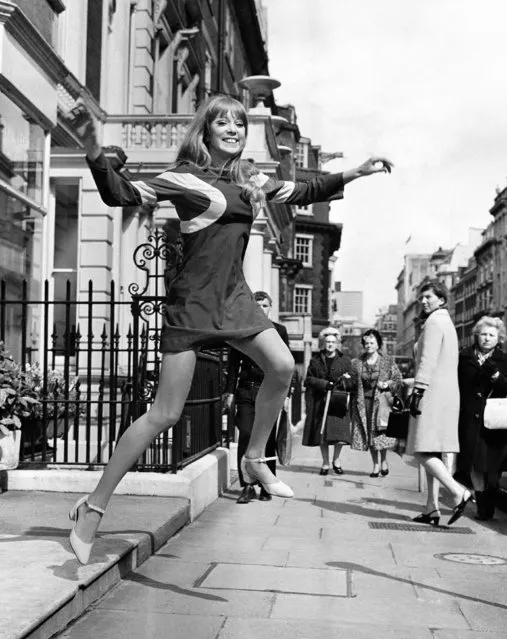
File photo dated 21/04/66 of Pattie Boyd in London's West End wearing a mini skirt, as the British designer Mary Quant, widely credited with popularising the mini skirt has recalled its “feeling of freedom and liberation” 50 years after she took the fashion world by storm. (Photo by PA Wire)

File photo dated 21/04/66 of Pattie Boyd in London's West End wearing a mini skirt, as the British designer Mary Quant, widely credited with popularising the mini skirt has recalled its “feeling of freedom and liberation” 50 years after she took the fashion world by storm. Quant, who named the skirt after her favourite make of car, said she “couldn't have imagined” in 1964 that it would become a staple of women's clothing, but added: “It seemed then to be obvious, and so right”. (Photo by PA Wire)
Details
29 Jan 2015 11:33:00
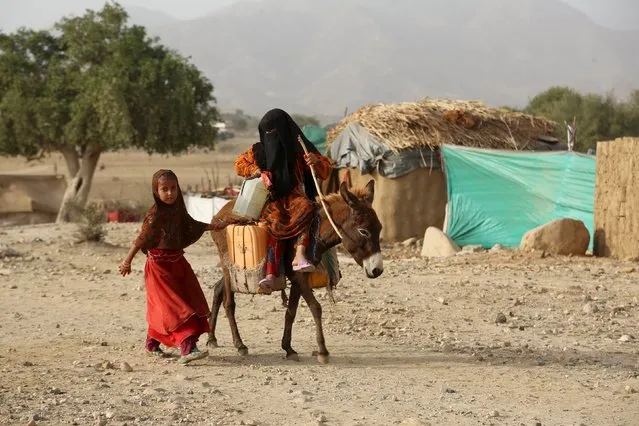
A girl rides a donkey as another walks by at the Shawqaba camp for internally displaced people who were forced to leave their villages by the war in Yemen's northwestern province of Hajjah March 12, 2016. In northwest Yemen, one of the poorest countries in the Middle East, about 400 families uprooted by the war have been stuck in the Shawqaba camp in Hajjah province for the past year. Residents live in poorly built huts that protect them neither from summer heat nor winter cold in a camp that lacks the most basic services. (Photo by Abduljabbar Zeyad/Reuters)

A girl rides a donkey as another walks by at the Shawqaba camp for internally displaced people who were forced to leave their villages by the war in Yemen's northwestern province of Hajjah March 12, 2016. In northwest Yemen, one of the poorest countries in the Middle East, about 400 families uprooted by the war have been stuck in the Shawqaba camp in Hajjah province for the past year. Residents live in poorly built huts that protect them neither from summer heat nor winter cold in a camp that lacks the most basic services. (Photo by Abduljabbar Zeyad/Reuters)
Details
09 Apr 2016 13:16:00
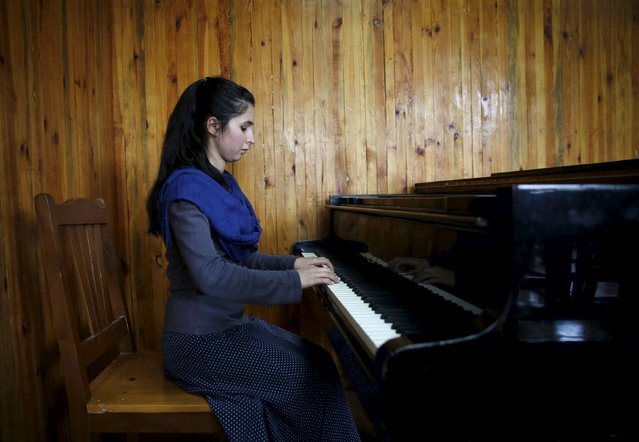
Negin Ekhpulwak, leader of the Zohra orchestra, an ensemble of 35 women, practises on a piano at Afghanistan's National Institute of Music, in Kabul, Afghanistan April 9, 2016. (Photo by Ahmad Masood/Reuters)

Negin Ekhpulwak, leader of the Zohra orchestra, an ensemble of 35 women, practises on a piano at Afghanistan's National Institute of Music, in Kabul, Afghanistan April 9, 2016. Playing instruments was banned under Taliban rule in Afghanistan, and even today, many conservative Muslims frown on most forms of music. Living in an orphanage in the capital, Kabul, 19-year-old Negin Ikhpolwak leads an ensemble of 35 women that plays both Western and Afghan musical instruments. In a country notorious internationally for harsh restrictions on women in most areas of life, Negin's story highlights a double challenge. (Photo by Ahmad Masood/Reuters)
Details
19 Apr 2016 13:47:00
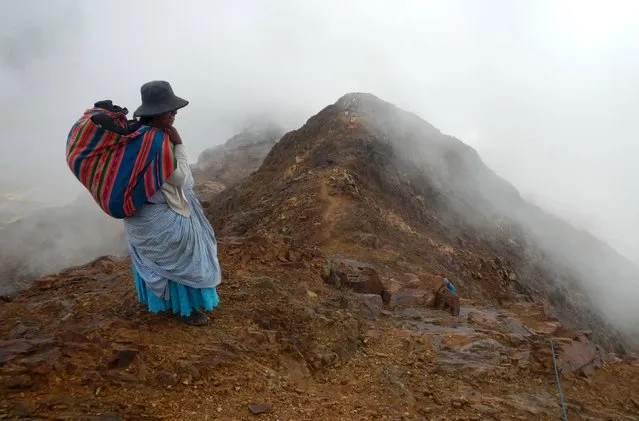
A porter stands at the bottom of the Illimani mountain, on the outskirts of La Paz, Bolivia, April 16, 2016. (Photo by David Mercado/Reuters)

A porter stands at the bottom of the Illimani mountain, on the outskirts of La Paz, Bolivia, April 16, 2016. For years, Lydia Huayllas, 48, has worked as a cook at base camps and mountain-climbing refuges on the steep, glacial slopes of Huayna Potosi, a 19,974-foot (6,088-meter) Andean peak outside of La Paz, Bolivia. But two years ago, she and 10 other Aymara indigenous women, ages 42 to 50, who also worked as porters and cooks for mountaineers, put on crampons – spikes fixed to a boot for climbing – under their wide traditional skirts and started to do their own climbing. (Photo by David Mercado/Reuters)
Details
22 Apr 2016 12:33:00
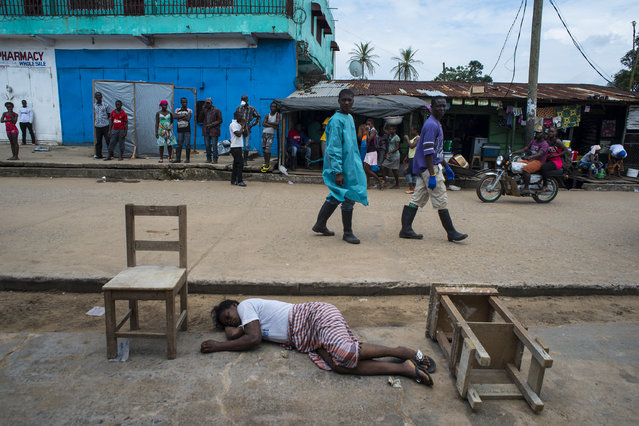
A woman lays dead outside the Redemption Hospital on Saturday September 20, 2014 in Monrovia, Liberia. Ebola patients come to the hospital, which has become a transfer and holding center to intake Ebola patients, but there is no space and some die while waiting outside. Redemption is located in one of the poorest neighborhoods of Monrovia that locals call "New Kru Town”. (Photo by Michel du Cille/The Washington Post)

A woman lays dead outside the Redemption Hospital on Saturday September 20, 2014 in Monrovia, Liberia. Ebola patients come to the hospital, which has become a transfer and holding center to intake Ebola patients, but there is no space and some die while waiting outside. Redemption is located in one of the poorest neighborhoods of Monrovia that locals call "New Kru Town”. Health workers are overwhelmed with a constant stream of new patients since the Ebola outbreak. (Photo by Michel du Cille/The Washington Post)
Details
16 Oct 2014 12:59:00