Loading...
Done
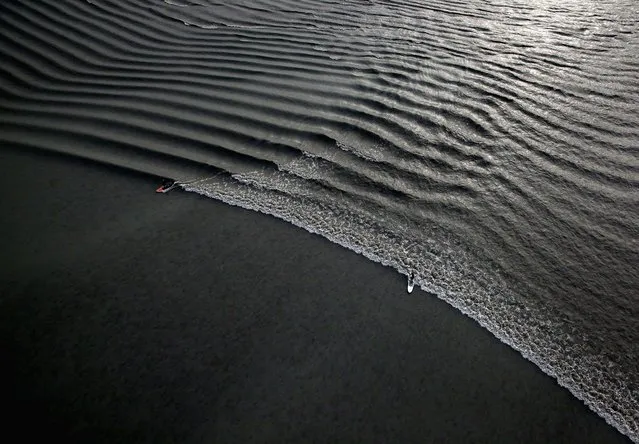
A group of surfers ride the Bore Tide at Turnagain Arm on July 15, 2014 in Anchorage, Alaska. Alaskas most famous Bore Tide, occurs in a spot on the outside of Anchorage in the lower arm of the Cook Inlet, Turnagain Arm, where wave heights can reach 6-10 feet tall, move at 10-15 mph and the water temperature stays around 40 degrees farenheit. This years Supermoon substantially increased the size of the normal wave and made it a destination for surfers. (Photo by Streeter Lecka/Getty Images)

A group of surfers ride the Bore Tide at Turnagain Arm on July 15, 2014 in Anchorage, Alaska. Alaskas most famous Bore Tide, occurs in a spot on the outside of Anchorage in the lower arm of the Cook Inlet, Turnagain Arm, where wave heights can reach 6-10 feet tall, move at 10-15 mph and the water temperature stays around 40 degrees farenheit. This years Supermoon substantially increased the size of the normal wave and made it a destination for surfers. (Photo by Streeter Lecka/Getty Images)
Details
05 Aug 2014 12:08:00
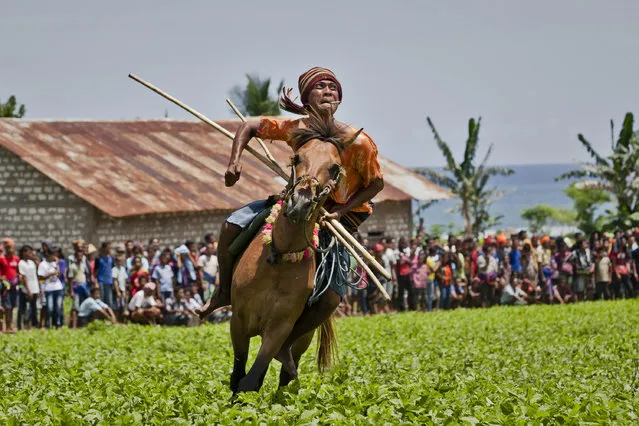
A Pasola rider reacts after throwing his spear during the Pasola war festival at Ratenggaro village on March 22, 2014 in Sumba Island, Indonesia. The Pasola Festival is an important annual event to welcome the new harvest season, which coincides with the arrival of  “Nyale” sea worms during February or March each year. Pasola, an ancient ritual fighting game, involves two teams of men on horseback charging towards each other while trying to hit their rivals with “pasol” javelins and avoid being hit themselves. (Photo by Ulet Ifansasti/Getty Images)

A Pasola rider reacts after throwing his spear during the Pasola war festival at Ratenggaro village on March 22, 2014 in Sumba Island, Indonesia. The Pasola Festival is an important annual event to welcome the new harvest season, which coincides with the arrival of “Nyale” sea worms during February or March each year. Pasola, an ancient ritual fighting game, involves two teams of men on horseback charging towards each other while trying to hit their rivals with “pasol” javelins and avoid being hit themselves. (Photo by Ulet Ifansasti/Getty Images)
Details
25 Mar 2014 07:54:00
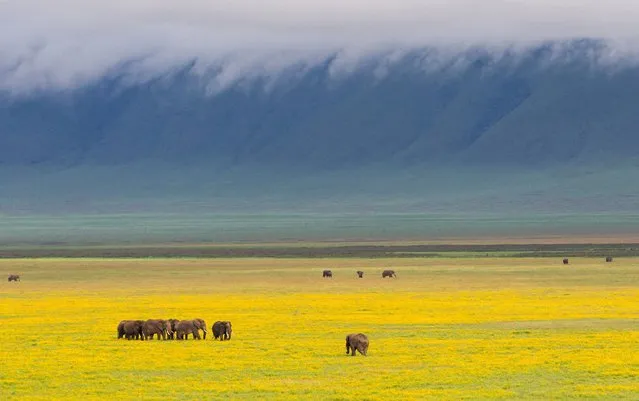
Ngorongoro Crater (Tanzania). At 610m deep and 260 sq km, this is the largest unflooded caldera in the world. A blue-green vision from above it's a haven for engangered wildlife and Maasai livestock. The crater was formed three million years ago when a giant volcano, which could have been as high as Kilimanjaro, exploded and collapsed. The caldera formed the concentric fractures in the crust cracked down to a magma reservoir deep underground. (Photo by John Bryant/Getty Images)

Ngorongoro Crater (Tanzania). At 610m deep and 260 sq km, this is the largest unflooded caldera in the world. A blue-green vision from above it's a haven for engangered wildlife and Maasai livestock. The crater was formed three million years ago when a giant volcano, which could have been as high as Kilimanjaro, exploded and collapsed. The caldera formed the concentric fractures in the crust cracked down to a magma reservoir deep underground. (Photo by John Bryant/Getty Images)
Details
28 Mar 2014 08:08:00
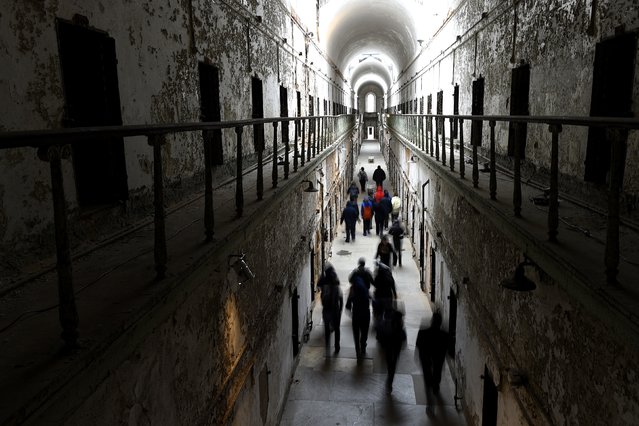
A tour group wanders through block 7 of Eastern State Penitentiary in Philadelphia, Pennsylvania April 30, 2014. Opened in 1829, with the original corrective system of “confinement in solitude with labor”, the penitentiary housed about 75,000 inmates in its 142 years of operation. At Eastern State reunions, former inmates, staff and guard gather to share memories and trade stories and get a chance to describe their experiences in question-and-answer sessions with the public. (Photo by Mark Makela/Reuters)

A tour group wanders through block 7 of Eastern State Penitentiary in Philadelphia, Pennsylvania April 30, 2014. Opened in 1829, with the original corrective system of “confinement in solitude with labor”, the penitentiary housed about 75,000 inmates in its 142 years of operation. At Eastern State reunions, former inmates, staff and guard gather to share memories and trade stories and get a chance to describe their experiences in question-and-answer sessions with the public. (Photo by Mark Makela/Reuters)
Details
07 May 2014 09:36:00
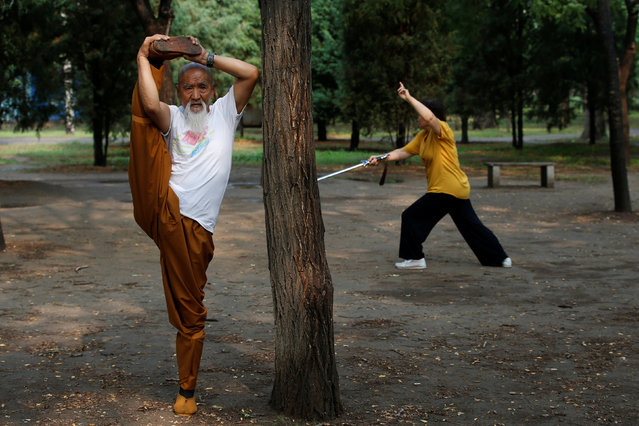
Kung Fu master Li Liangui practices 'Suogugong' Kung Fu and his wife Liang Xiaoyan (R) practices Qigong at a park in Beijing, China, June 30, 2016. (Photo by Kim Kyung-Hoon/Reuters)

Kung Fu master Li Liangui practices “Suogugong” Kung Fu and his wife Liang Xiaoyan (R) practices Qigong at a park in Beijing, China, June 30, 2016. For 50 years, kung fu master Li Liangui has been contorting his body into eye-watering positions while practising one of the more unusual and less popular Chinese martial art forms. The 70-year-old is an expert in suogugong, or body shrinking kung fu, where practitioners dislocate their bones to help them achieve unlikely positions and feats. (Photo by Kim Kyung-Hoon/Reuters)
Details
17 Sep 2016 10:27:00
More than 400 people stripped off and ran into freezing waters to celebrate the autumn equinox – and raise money for charity at Druridge Bay, Britain, September 25, 2016. It was the largest turnout the North East Skinny Dip has ever seen in its five-year history, and it was also the first time it has ever rained on the morning of the event. Revellers gathered from 5.30am on Sunday at Druridge Bay, in Northumberland, before baring all in the North Sea. (Photo by David Charlton Photography)

More than 400 people stripped off and ran into freezing waters to celebrate the autumn equinox – and raise money for charity at Druridge Bay, Britain, September 25, 2016. It was the largest turnout the North East Skinny Dip has ever seen in its five-year history, and it was also the first time it has ever rained on the morning of the event. Revellers gathered from 5.30am on Sunday at Druridge Bay, in Northumberland, before baring all in the North Sea. (Photo by David Charlton Photography)
Details
26 Sep 2016 07:09:00
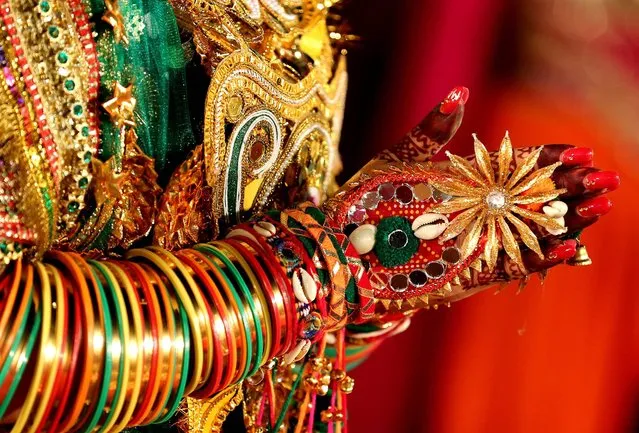
A photograph made available on 02 October 2016 showing Indian people dressed in traditional attire performing the Garba dance, a ritual performed to appease Goddess Durga, in a religious event named, “Abhivyakti 2016” during the nine-day long Navratri festival in Bhopal, India, 01 October 2016 Celebrated twice a year during the spring and the fall season, the Navratri festival is dedicated to the Hindu Goddess Durga. (Photo by Sanjeev Gupta/EPA)

A photograph made available on 02 October 2016 showing Indian people dressed in traditional attire performing the Garba dance, a ritual performed to appease Goddess Durga, in a religious event named, “Abhivyakti 2016” during the nine-day long Navratri festival in Bhopal, India, 01 October 2016 Celebrated twice a year during the spring and the fall season, the Navratri festival is dedicated to the Hindu Goddess Durga. (Photo by Sanjeev Gupta/EPA)
Details
07 Oct 2016 09:02:00
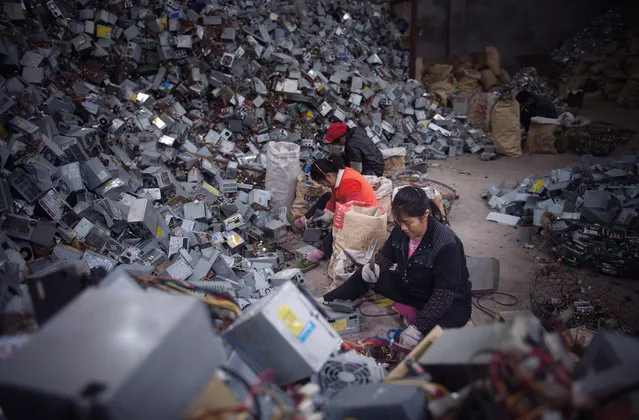
“The sustainable development goals cannot be met unless waste management is addressed as a priority”, says UK waste management charity Waste Aid. “E-waste is one of the fastest growing categories of the 7-10bn tonnes of waste produced globally every year”, adds director Mike Webster. “In our view, decent waste management is a basic right and we want governments around the world take this issue much more seriously – in 2012 only 0.2% of international aid went on improving solid waste management – it’s just not enough”. (Photo by Kai Loeffelbein/laif Agentur)

Sustainable development goal target 12.5 is to reduce waste. But with a planet increasingly dependent on technology, is that even possible? As of today, over 30m tonnes of electronic waste has been thrown out so far this year, according to the World Counts. Most e-waste is sent to landfills in Asia and Africa where it is recycled by hand, exposing the people who do it to environmental hazards. Kai Loeffelbein’s photographs of e-waste recycling in Guiyu, southern China show what happens to discarded computers. (Photo by Kai Loeffelbein/laif Agentur)
Details
19 Oct 2016 12:14:00