Loading...
Done
The Safe House By KWK PROMES

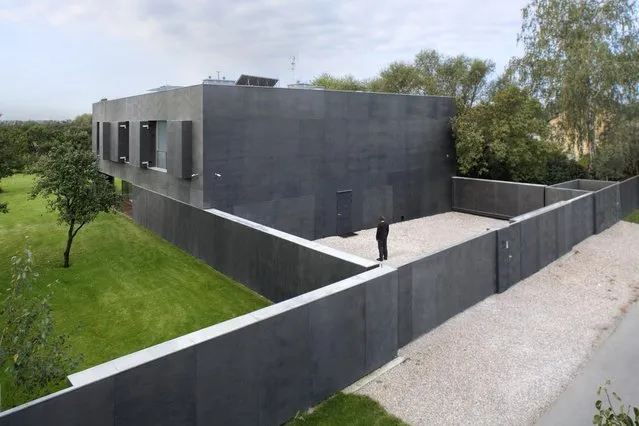
The Safe House by KWK PROMES is located in a small village on the outskirts of Warsaw, Poland. Surrounding the area, many of the buildings are “Polish cubes” from the 60s and old wooden barns. The house was designed so that the homeowners never feel unsafe or exposed. The result is something of a modern fortress with lots of movable parts and secret openings, complete with a working drawbridge.
Details
20 Dec 2012 12:42:00
Festival pumpkins

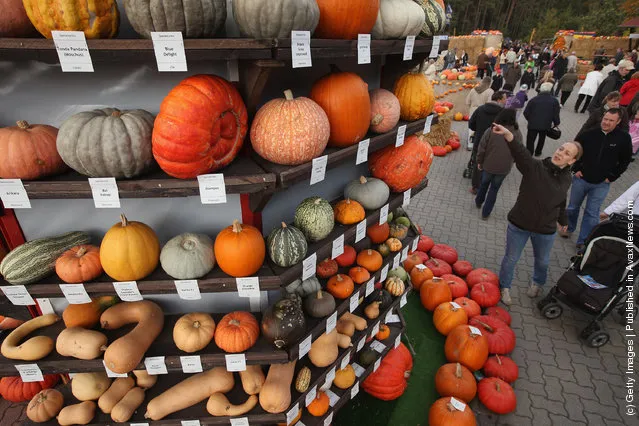
Visitors look at a tower exhibit of 429 different kinds of pumpkins and squash from all over the world at the Buschmann and Winkelmann pumpkin farm on October 9, 2011 in Beelitz, Germany. The farm, located in Brandenburg state near Berlin, harvests tens of thousands of pumpkins from approximately 40 different kinds between August and October and is known for its elaborate, theme-based pumpkin exhibits. (Photo by Sean Gallup/Getty Images)
Details
11 Oct 2011 08:00:00


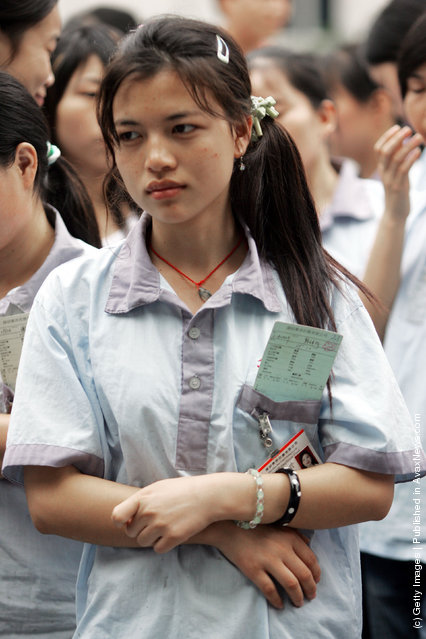
Workers demonstrate outside the factory of Hua Yang Printing Holdings Co Ltd on October 30, 2007 in Shenzhen of Guangdong Province, China. Over 1,000 workers of the company have blocked the 107 State Highway where the firm is located, to protest against their employer, who owed half a month's salary to the workers. (Photo by China Photos/Getty Images)
Details
17 Jun 2011 11:43:00
A woman leaves sauna during the sauna marathon in Otepaa, Estonia on February 2, 2019. (Photo by Ints Kalnins/Reuters)

A woman leaves sauna during the sauna marathon in Otepaa, Estonia on February 2, 2019. Participants have to track down, locate and visit designated saunas in the Otepaa area as fast as possible during the event. The team that completed all of the saunas in the shortest time wins. (Photo by Ints Kalnins/Reuters)
Details
06 Feb 2019 00:07:00
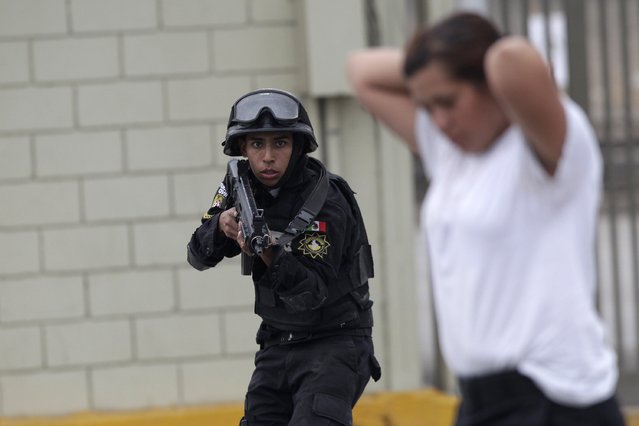
A member of the Fuerza Civil (Civil Force) police unit takes part in a simulated crime situation during a media presentation to show the police model that the federal government wants for the rest of the country, at the police academy in Monterrey December 17, 2014. Fuerza Civil, a tactical team of the police unit trained by the army, was created by the Nuevo Leon government in 2011 to curb down corruption and infiltration by drug gangs in the police corps, local media reported. (Photo by Daniel Becerril/Reuters)

A member of the Fuerza Civil (Civil Force) police unit takes part in a simulated crime situation during a media presentation to show the police model that the federal government wants for the rest of the country, at the police academy in Monterrey December 17, 2014. Fuerza Civil, a tactical team of the police unit trained by the army, was created by the Nuevo Leon government in 2011 to curb down corruption and infiltration by drug gangs in the police corps, local media reported. Promising a new law to stop the infiltration of local governments by organized crime, President Enrique Pena Nieto pledged to reform the penal system and send an proposal to Congress to unify multi-layered police forces in Mexico's 31 states. (Photo by Daniel Becerril/Reuters)
Details
19 Dec 2014 12:35:00
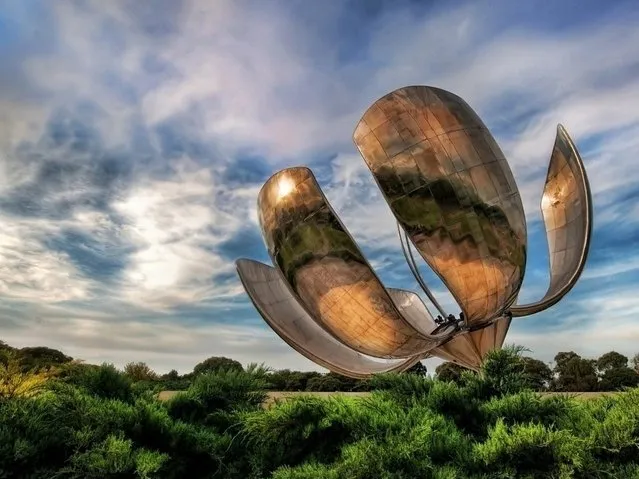
Floralis Generica - Buenos Aires

Floralis Genérica is a sculpture made of steel and aluminum located in Plaza de las Naciones Unidas, Avenida Figueroa Alcorta, Buenos Aires, a gift to the city by the Argentine architect Eduardo Catalano. Catalano once said that the flower "is a synthesis of all the flowers and is both a hope that is reborn every day to open." It was created in 2002. The sculpture moves closing its petals in the evening and opening them in the morning, although this mechanism is currently disabled. The sculpture is located in the center of a park of four acres of wooded boundaries, surrounded by paths that get closer and provide different perspectives of the monument, and placed above a reflecting pool, which apart from fulfilling its aesthetic function, protects it. It represents a large flower made of stainless steel with aluminum skeleton and reinforced concrete, which looks at the sky, extending to it its six petals. Weighs eighteen tons and is 23 meters high.
Details
20 Oct 2013 18:32:00
“Basunga”. Basunga (3 weeks-old newborn with albinism) is happily sleeping with his cousin. For now, he does not yet realize the difficulties he will face to integrate into the Congolese society as a PWA. The success of his integration will greatly depends of how he accepts himself and his skin condition a and how educated he will be. Photo location: Kinshasa, Congo RDC. (Photo and caption by Patricia Willocq/National Geographic Photo Contest)

“Basunga”. Basunga (3 weeks-old newborn with albinism) is happily sleeping with his cousin. For now, he does not yet realize the difficulties he will face to integrate into the Congolese society as a PWA. The success of his integration will greatly depends of how he accepts himself and his skin condition a and how educated he will be. Photo location: Kinshasa, Congo RDC. (Photo and caption by Patricia Willocq/National Geographic Photo Contest)
Details
09 Dec 2013 06:38:00
Dunnottar Castle In Scottish

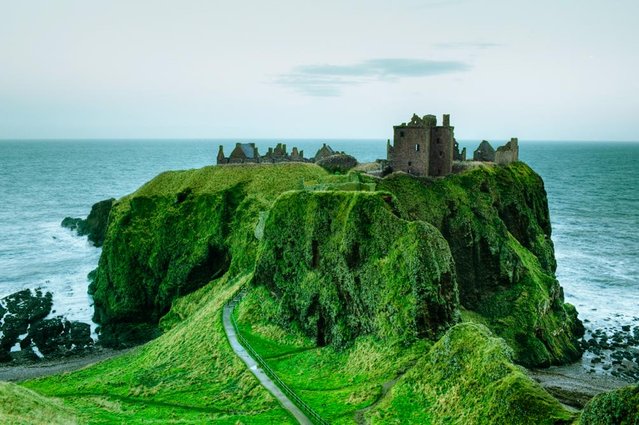
Dunnottar Castleis a ruined medieval fortress located upon a rocky headland on the north-east coast of Scotland, about 3 kilometres (1.9 mi) south of Stonehaven. The surviving buildings are largely of the 15th and 16th centuries, but the site is believed to have been fortified in the Early Middle Ages. Dunnottar has played a prominent role in the history of Scotland through to the 18th-century Jacobite risings because of its strategic location and the strength of its situation. Dunnottar is best known as the place where the Honours of Scotland, the Scottish crown jewels, were hidden from Oliver Cromwell's invading army in the 17th century. The property of the Keiths from the 14th century, and the seat of the Earl Marischal, Dunnottar declined after the last Earl forfeited his titles by taking part in the Jacobite rebellion of 1715. The castle was restored in the 20th century and is now open to the public.
Details
13 Jan 2014 11:31:00