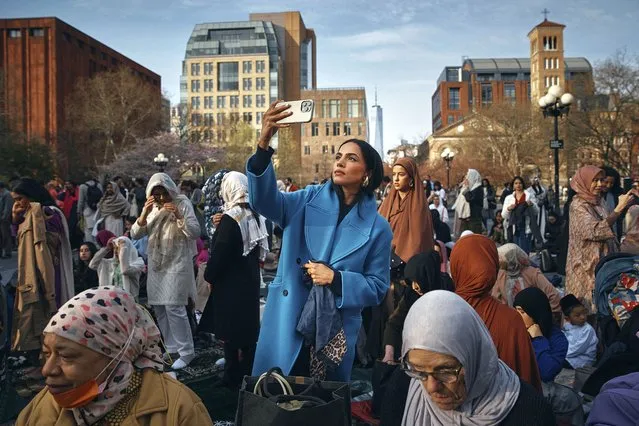
Muslims gather to perform an Eid al-Fitr prayer, marking the end of the fasting month of Ramadan at Washington Square Park on Wednesday, April 10, 2024, in New York. (Photo by Andres Kudacki/AP Photo)
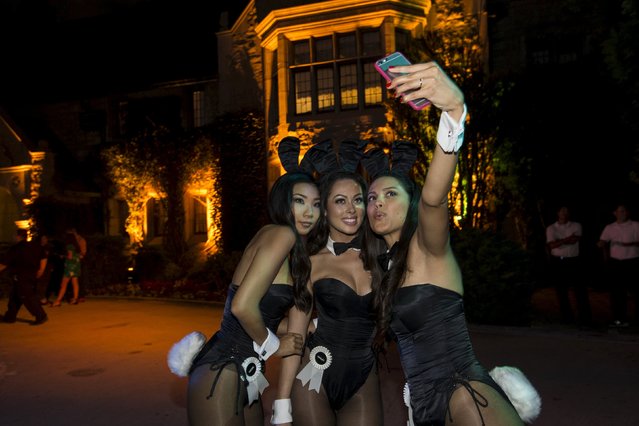
Playboy Bunnies pose for a selfie at the premiere of “The Transporter Refueled” at Playboy Mansion in Los Angeles, California August 25, 2015. The movie opens in the U.S. on September 4. (Photo by Mario Anzuoni/Reuters)
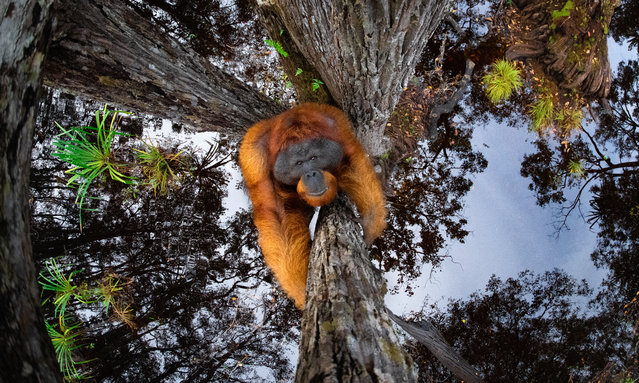
Bornean orangutan (Pongo pygmaeus). Tanjung Puting National Park, Borneo – winner of the gold and grand prizes in the 2020 world nature photography awards. (Photo by Thomas Vijayan/World Nature Photography Awards)
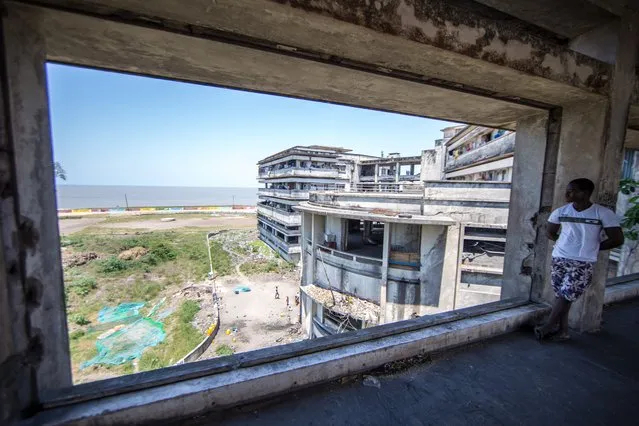
When it opened in 1955, the Grande Hotel in the Indian Ocean city of Beira was one of the most luxurious in Africa. Photojournalist Fellipe Abreu documents the lives of the 3,500 people who now fill this long-closed hotel to capacity. (Photo by Fellipe Abreu/The Guardian)
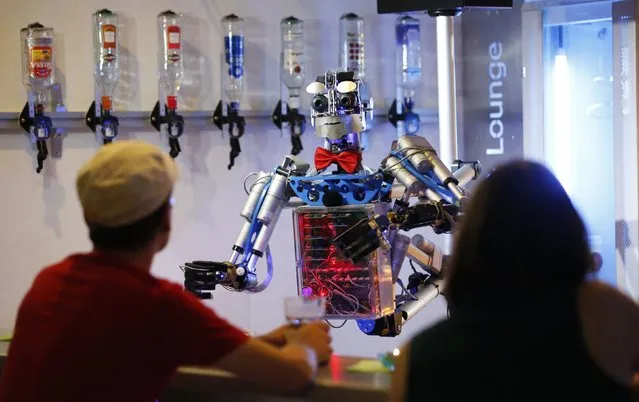
Humanoid robot bartender “Carl” interacts with guests at the Robots Bar and Lounge in the eastern German town of Ilmenau, July 26, 2013. “Carl”, developed and built by mechatronics engineer Ben Schaefer who runs a company for humanoid robots, prepares spirits for the mixing of cocktails and is able to interact with customers in small conversations. (Photo by Fabrizio Bensch/Reuters)
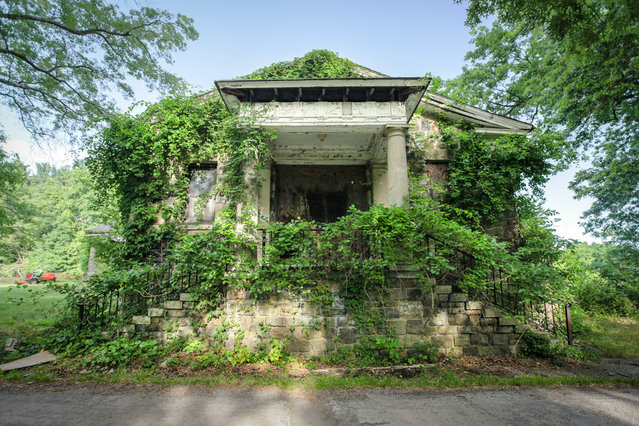
From Manhattan and Brooklyn's trendiest neighborhoods to the far-flung edges of theouter boroughs, Will Ellis has spent the last three years photographing and researching the lost and lonely corners of the United States' most populous city. His photo book Abandoned NYC is packed with 150 color images of sixteen of New York's most beautiful and mysterious abandoned spaces, paired with detailed essays on the fascinating history of these forgotten sites. Here: Letchworth Village is located just an hour's drive from NYC in Thiells, NY. It was founded in 1912 to house the city's developmentally disabled as a ”state institution for the epileptic and feeble-minded”. (Photo by Will Ellis)
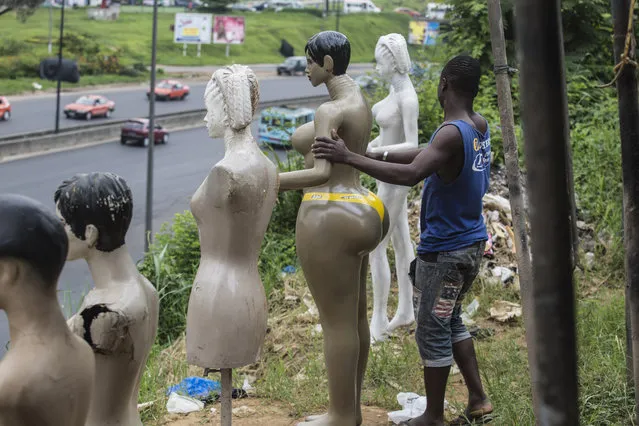
Photographer Joana Choumali’s latest project explores body image and beauty by documenting the men building Abidjan’s clothing models. The “Awoulaba” mannequin is a customised model designed with the African ideal of beauty in mind, curvier than the stick-thin examples usually seen in the west. They first appeared in 2011, and have since become a familiar sight outside the numerous clothing shops dotted throughout Ivory Coast’s capital, Abidjan. Here: An apprentice lines up his work on a roadside. (Photo by Joana Choumali)