Loading...
Done
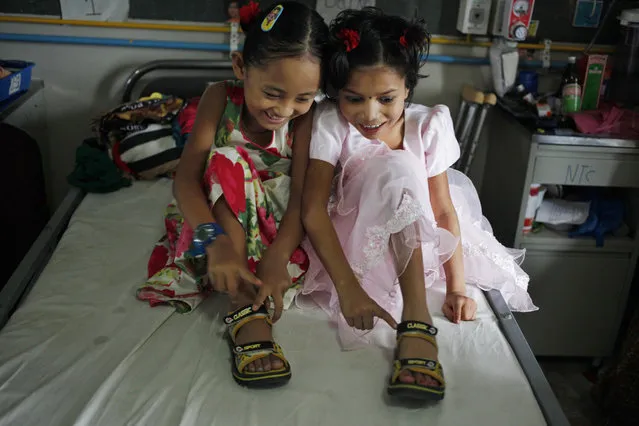
In this July 15, 2015 photo, Nepalese amputee victims Khendo Tamang, left, and Nirmala Pariyar, both 8, share a single pair of shoes at the Bir Trauma Center in Kathmandu, Nepal. After suffering serious leg wounds in Nepal's massive 2015 earthquake that killed and injured thousands, both girls were brought to the Bir Trauma Center in Kathmandu, to receive single leg amputations. Following their surgeries, Nirmala's relentless cheerfulness drew a still very depressed Khendo close and both found an inseparable friendship which has helped their emotional wounds heal. (Photo by Niranjan Shrestha/AP Photo)

In this July 15, 2015 photo, Nepalese amputee victims Khendo Tamang, left, and Nirmala Pariyar, both 8, share a single pair of shoes at the Bir Trauma Center in Kathmandu, Nepal. After suffering serious leg wounds in Nepal's massive 2015 earthquake that killed and injured thousands, both girls were brought to the Bir Trauma Center in Kathmandu, to receive single leg amputations. Following their surgeries, Nirmala's relentless cheerfulness drew a still very depressed Khendo close and both found an inseparable friendship which has helped their emotional wounds heal. (Photo by Niranjan Shrestha/AP Photo)
Details
23 Apr 2016 13:48:00
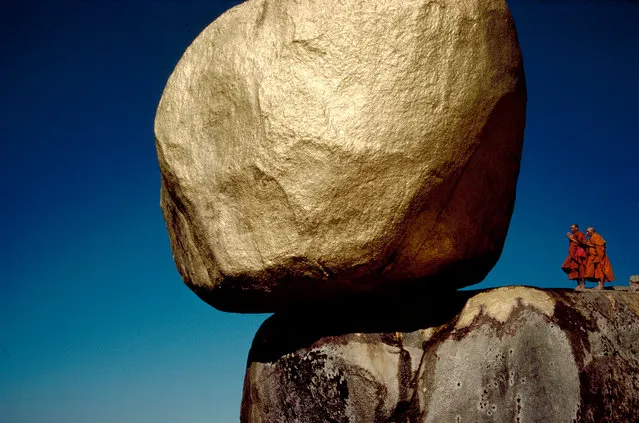
Kyaiktiyo, Burma, 1978. The Golden Rock at Shwe Pyi Daw (the Golden Country), the Buddhist holy place. Hiroji Kubota writes: “I was desperate to keep a distance from America for a while; luckily, I found Burma and its gentle and compassionate people. In the spring of 1978, on the top of the hill where I took this photo, I had two Leica bodies: the one with Tri-X and the other with Kodachrome 64. Soon after, I realised that the colour one looked very colourful and was more powerful. That was my decisive moment, to become a colour photographer”. (Photo by Hiroji Kubota/Magnum Photos)

Kyaiktiyo, Burma, 1978. The Golden Rock at Shwe Pyi Daw (the Golden Country), the Buddhist holy place. Hiroji Kubota writes: “I was desperate to keep a distance from America for a while; luckily, I found Burma and its gentle and compassionate people. In the spring of 1978, on the top of the hill where I took this photo, I had two Leica bodies: the one with Tri-X and the other with Kodachrome 64. Soon after, I realised that the colour one looked very colourful and was more powerful. That was my decisive moment, to become a colour photographer”. (Photo by Hiroji Kubota/Magnum Photos)
Details
10 Jun 2016 13:30:00
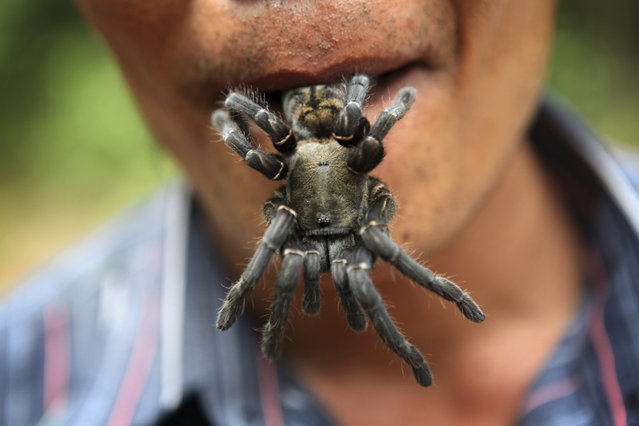
A Cambodian tuk tuk driver and guide with a tarantula in his mouth shortly after is was dug from the ground on June 7, 2010 in Skuon, Kampong Cham Province, Cambodia. The trade for spiders and other insects as food and for medicinal purposes has been in effect since the 1970's in Cambodia but only very recently have tourists been finding a way to see where the spiders are hunted in the nearby countryside. One guide, who can be found in Kampong Cham Town has started offering tours to tourists who can find him. (Photo by Tim Whitby/Getty Images)

A Cambodian tuk tuk driver and guide with a tarantula in his mouth shortly after is was dug from the ground on June 7, 2010 in Skuon, Kampong Cham Province, Cambodia. The trade for spiders and other insects as food and for medicinal purposes has been in effect since the 1970's in Cambodia but only very recently have tourists been finding a way to see where the spiders are hunted in the nearby countryside. One guide, who can be found in Kampong Cham Town has started offering tours to tourists who can find him. (Photo by Tim Whitby/Getty Images)
Details
04 Sep 2016 09:27:00
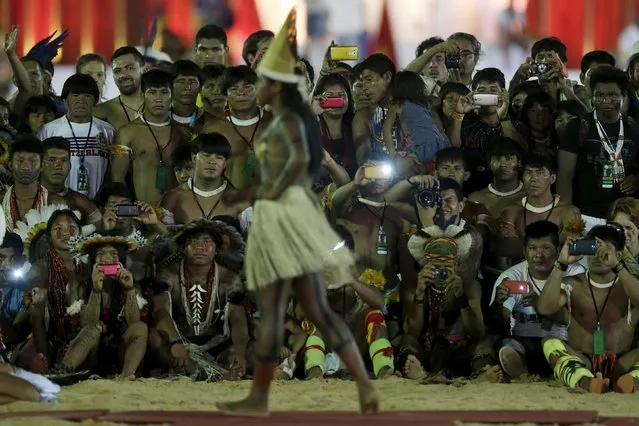
An indigenous woman participates in a parade called "International Indigenous Beauty" during the first World Games for Indigenous Peoples in Palmas, Brazil, October 24, 2015. (Photo by Ueslei Marcelino/Reuters)

An indigenous woman participates in a parade called "International Indigenous Beauty" during the first World Games for Indigenous Peoples in Palmas, Brazil, October 24, 2015. Billed as the indigenous Olympics, the games are expected to attract nearly 2,000 athletes from dozens of Brazilian ethnicities, as well as from such far-flung nations as Ethiopia and New Zealand. (Photo by Ueslei Marcelino/Reuters)
Details
28 Oct 2015 08:04:00
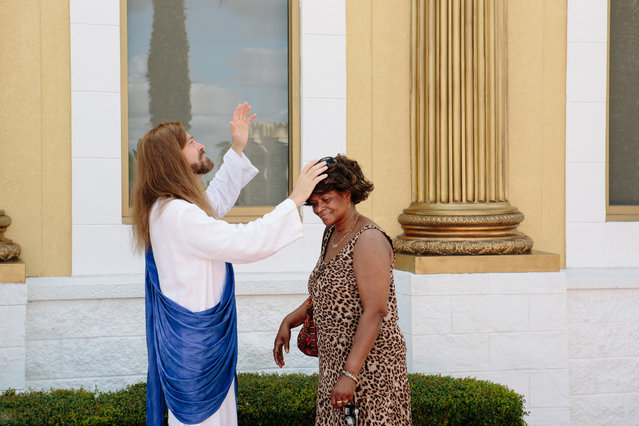
A woman asks the actor who plays Jesus for a blessing at The Holy Land Experience. (Photo by Daniel Cronin)

Every week, crowds bypass Orlando’s enticing theme parks and megamalls, opting instead to follow a blood-soaked Jesus impersonator as he heads for crucifixion on an immaculate Florida lawn. This ironic choice of amusement is what prompted photographer Daniel Cronin to pay a hefty entrance fee and document the Holy Land Theme Park Experience, a 1,200-square-foot replica of biblical Jerusalem a few miles from Disney World and other well-known theme parks. (Photo by Daniel Cronin)
Details
08 Sep 2014 11:05:00
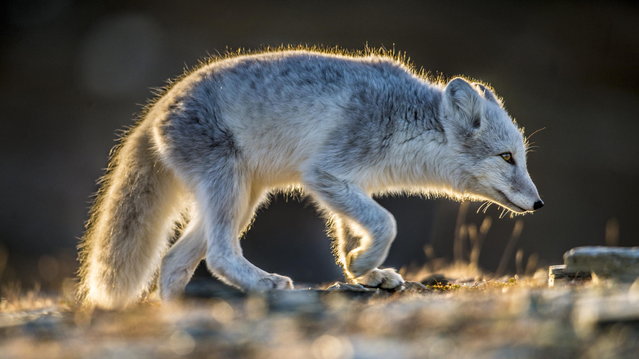
Arctic Fox. (Photo by Trond Eriksen)

“The arctic fox (Vulpes lagopus), also known as the white fox, polar fox, or snow fox, is a small fox native to the Arctic regions of the Northern Hemisphere and is common throughout the Arctic tundra biome. It is well adapted to living in cold environments. It has a deep thick fur which is brown in summer and white in winter. It averages in size at about 85.3 cm (33.6 in) in body length, with a generally rounded body shape to minimize the escape of body heat. – Wikipedia. (Photo by Trond Eriksen)
Details
26 May 2014 14:09:00
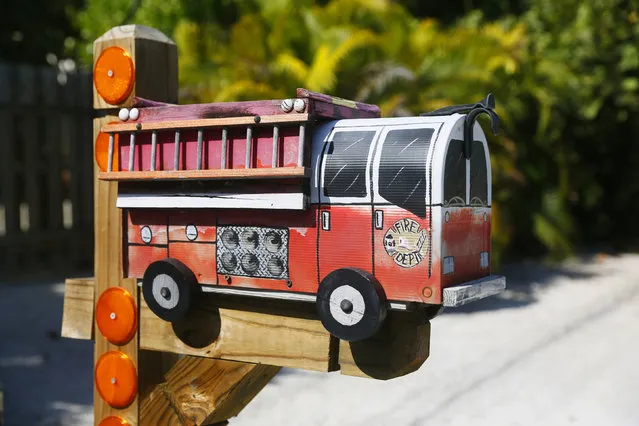
A mailbox in the shape of a fire truck is seen along the highway US-1 in the Lower Keys near Marathon in Florida, July 11, 2014. (Photo by Wolfgang Rattay/Reuters)

The Florida Keys are famous for their diving, but they are less well known for another quirky attraction: the mailboxes residents use to decorate their driveways. From a fiberglass manatee in lipstick to a small white church, Reuters photographer Wolfgang Rattay documented this unusual aspect of local culture as he drove along the Ocean Highway that connects the islands. Photo: A mailbox in the shape of a fire truck is seen along the highway US-1 in the Lower Keys near Marathon in Florida, July 11, 2014. (Photo by Wolfgang Rattay/Reuters)
Details
03 Aug 2014 07:25:00
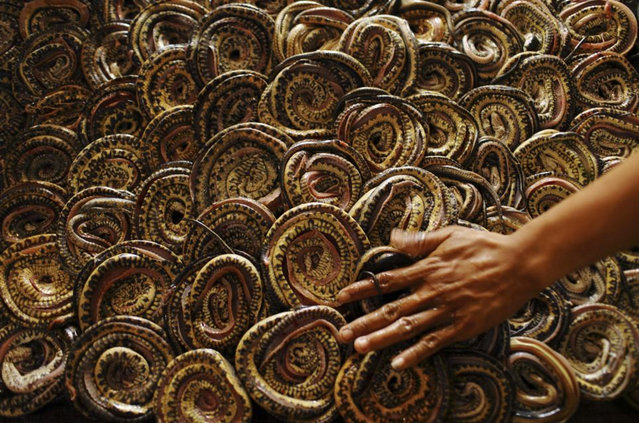
How Snakeskin Handbags Are Made

Images from a snake slaughterhouse at Kapetakan village in Indonesia’s West Java province. Wakira, who is known as “Boss Cobra”, owns the slaughterhouse that produces snake meat and skin. Snake meat is believed by some to be a remedy for skin diseases and asthma, as well as an aid to increase virility. The snake skins, measuring in the hundreds of metres, are sold to bag factories in the West and Central Java provinces on a monthly basis. The price of a bag made from snake skin costs between 150,000 rupiah ($ 15.60) and 300,000 rupiah ($31.20), depending on its size. That snakeskin handbag you’ll buy is costing a hell of a lot more.
Details
20 Feb 2013 12:00:00