Loading...
Done
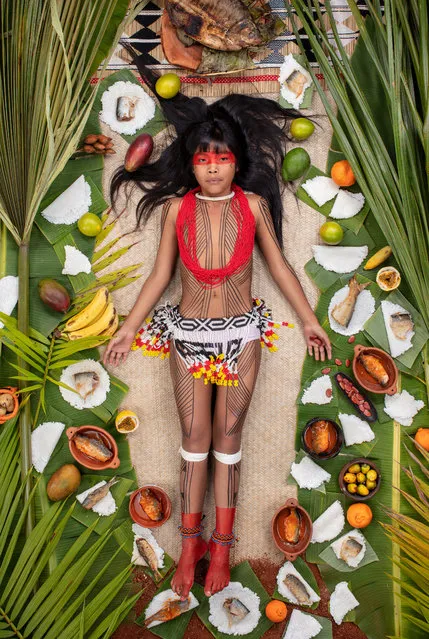
Kawakanih Yawalapiti, 9, Upper Xingu region of Mato Grosso, Brazil, 2018: Kawakanih lives with her tribe, the Yawalapiti, in Xingu national park, a preserve in the Amazon basin of Brazil. The Yawalapiti collect seeds to preserve species unique to their ecosystem, which lies between the rain forest and savannah. Kawakanih’s diet is simple, consisting mainly of fish, cassava, porridge, fruit and nuts. “It takes five minutes to catch dinner”, says Kawakanih. “When you’re hungry, you just go to the river with your net”. (Photo by Gregg Segal/The Guardian)

Photographer Gregg Segal travelled the world to document children and the food they eat in a week. Partly inspired by the increasing problems of childhood obesity, he tracked traditional regional diets as yet unaffected by globalisation, and ironically, found that the healthiest diets were often eaten by the least well off. (Photo by Gregg Segal/The Guardian)
Details
03 Jul 2019 00:03:00
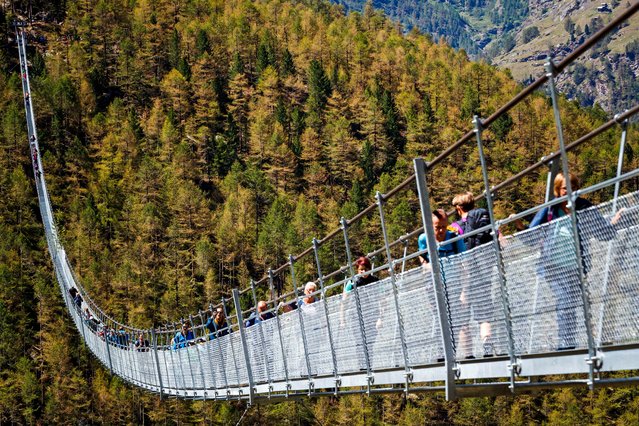
People walk on the “Europabruecke” bridge, the world's longest pedestrian suspension bridge with a length of 494m, after the official inauguration of the construction in Randa, Switzerland, 29 July 2017. (Photo by Valentin Flauraud/EPA)

People walk on the “Europabruecke” bridge, the world's longest pedestrian suspension bridge with a length of 494m, after the official inauguration of the construction in Randa, Switzerland, 29 July 2017. The bridge is situated on the Europaweg that connects the villages of Zermatt and Graechen. (Photo by Valentin Flauraud/EPA)
Details
30 Jul 2017 05:41:00
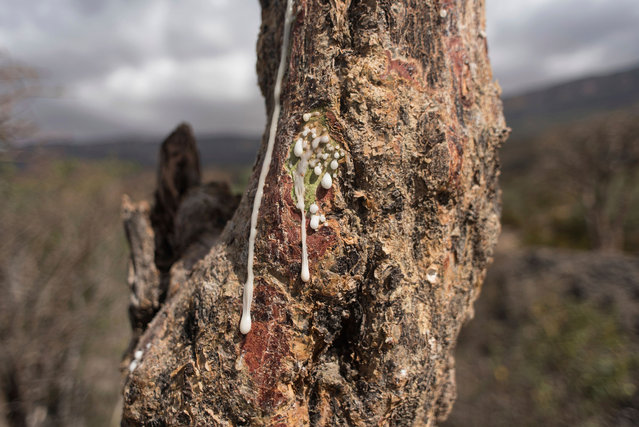
Sap runs out of a frankincense tree near Mader Moge, Somaliland, a breakaway region of Somalia on August 4, 2016. (Photo by Jason Patinkin/AP Photo)

Sap runs out of a frankincense tree near Mader Moge, Somaliland, a breakaway region of Somalia on August 4, 2016In a tradition dating to Biblical times, men rise at dawn in the rugged Cal Madow mountains of Somaliland in the Horn of Africa to scale rocky outcrops in search of the prized sap of wild frankincense trees. (Photo by Jason Patinkin/AP Photo)
Details
27 Dec 2016 08:06:00


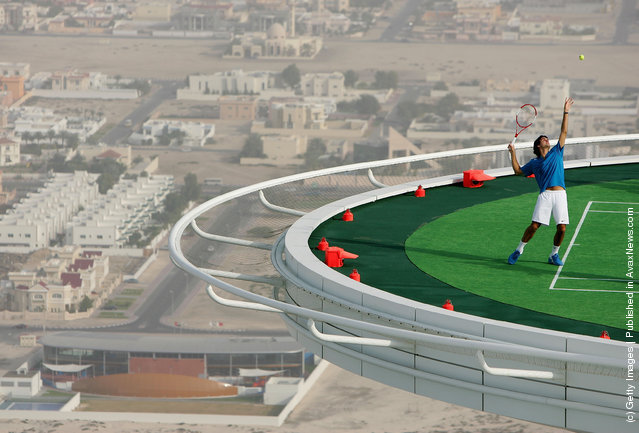
In preparation for the Dubai Duty Free Men's Open, Andre Agassi and Roger Federer of Switzerland, couldn't resist the temptation to have a friendly “hit” on the world's most unique tennis court, the Helipad of the Burj Al Arab, the world's most luxurious hotel. Standing 321 metres high on a man made island, the majestic Burj Al Arab is without doubt the most recognizable hotel in the world. The hotel's helipad, which is situated 211 metres high covers a surface area of 415 square metres. The pictures were taken on February 22, 2005, in Dubai, United Arab Emirates. (Photo by Getty Images for Dubai Duty Free)
Details
18 Jul 2011 13:40:00


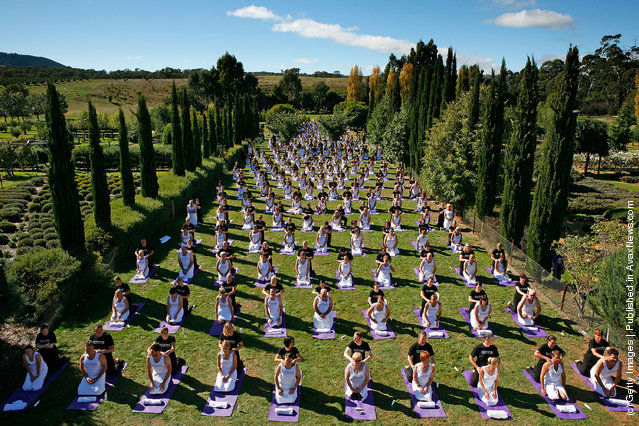
Volunteers receive a professional massage from qualified therapists as they break a world record for the largest ever simultaneous massage during Massage en Masse at Lavandula Lavender Farm on March 30, 2010 in Daylesford, Australia. Two hundred and sixty three massage therapists each massaged a volunteer, breaking the former world record of 167, set in 2009 in Washington DC. (Photo by Scott Barbour/Getty Images)
Details
30 Jul 2011 13:18:00
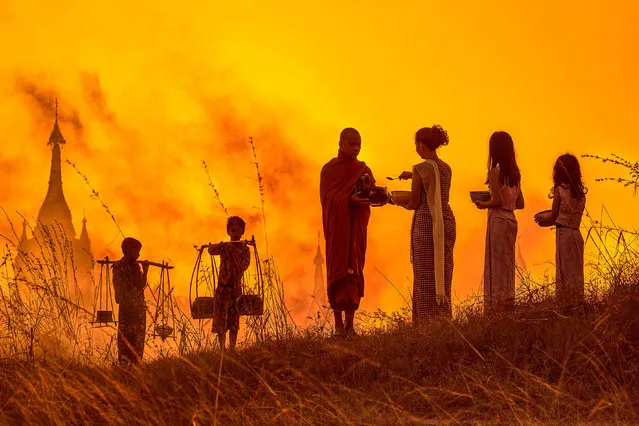
Family Donation by Si Thu Ye Myint (Myanmar, Winner). Myin Twin village in upper Myanmar. (Photo by Si Thu Ye Myint/Sony World Photography)

Family Donation by Si Thu Ye Myint (Myanmar, Winner). Myin Twin village in upper Myanmar. (Photo by Si Thu Ye Myint/Sony World Photography)
Details
28 Feb 2023 04:53:00
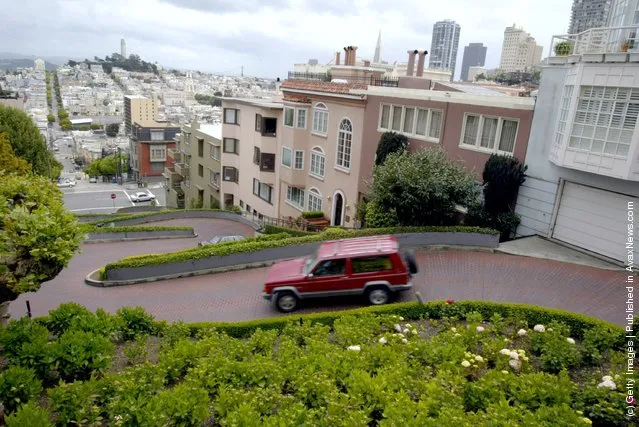
Lombard Street: The Crookedest Street In The World

“Lombard Street is an east-west street in San Francisco, California. Lombard Street is best known for the one-way section on Russian Hill between Hyde and Leavenworth Streets, in which the roadway has eight sharp turns (or switchbacks) that have earned the street the distinction of being the crookedest street in the world”. – Wikipedia

Photo: A single car drives down a typically crowded Lombard Street, San Francisco's crooked street, April 29, 2003 in San Francisco. (Photo by Justin Sullivan/Getty Images)
Details
07 Oct 2011 09:58:00


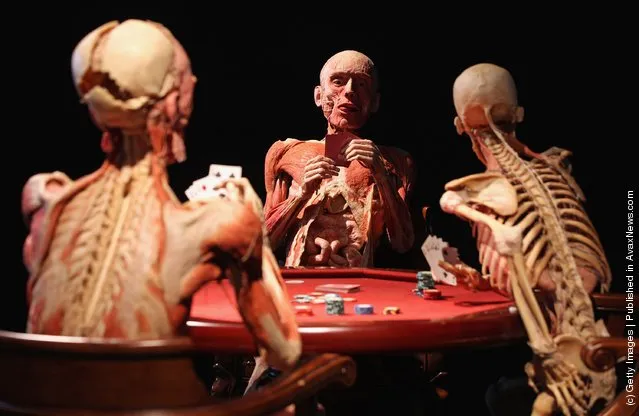
Plastinated human corpses posed to look like poker players stand on display at the Body Worlds exhibition on April 27, 2011 in Berlin, Germany. The exhibition, which features human and animal corpses plastinated by Gunther von Hagens, focuses on the role of the heart. It will be open to the public at the Postbahnhof from April 27 to August 14. (Photo by Sean Gallup/Getty Images)
Details
27 Apr 2011 08:15:00