Loading...
Done
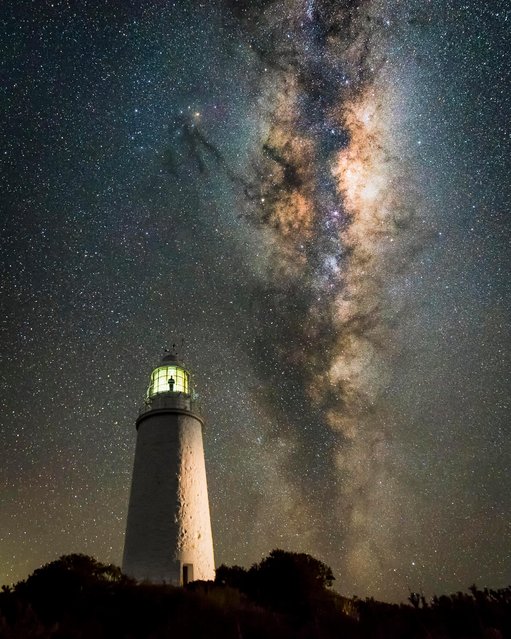
The Milky Way rises above an isolated lighthouse in Tasmania. Shot by James Stone of Australia. (Photo by James Stone/Astronomy Photographer of the Year 2018)

The competition is run by Royal Observatory Greenwich sponsored by Insight Investment and in association with BBC Sky at Night Magazine. This year astrophotographers from 91 countries sent in more than 4,200 spectacular entries. Here: The Milky Way rises above an isolated lighthouse in Tasmania. Shot by James Stone of Australia. (Photo by James Stone/Astronomy Photographer of the Year 2018)
Details
20 Jul 2018 00:05:00
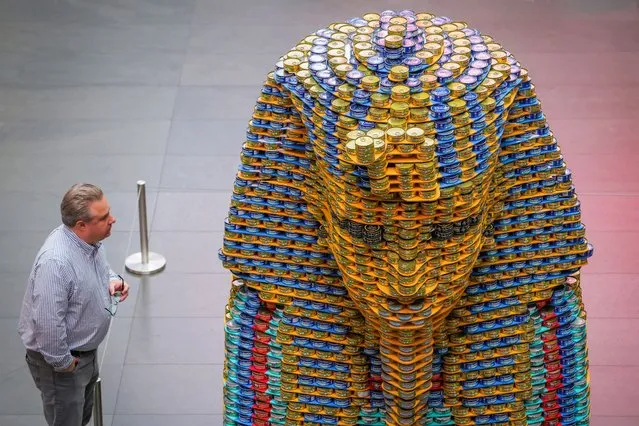
A person looks at a giant sculpture depicting the funerary mask of the pharaoh Tutankhamun, titled “A Meal Fit for a King” and created by Microdesk, Inc. made out of 8,300 cans of tuna which will be donated to local food banks as part of the Canstruction exhibition in Manhattan, New York City, U.S., November 11, 2022. (Photo by Andrew Kelly/Reuters)

A person looks at a giant sculpture depicting the funerary mask of the pharaoh Tutankhamun, titled “A Meal Fit for a King” and created by Microdesk, Inc. made out of 8,300 cans of tuna which will be donated to local food banks as part of the Canstruction exhibition in Manhattan, New York City, U.S., November 11, 2022. (Photo by Andrew Kelly/Reuters)
Details
21 Nov 2022 06:26:00
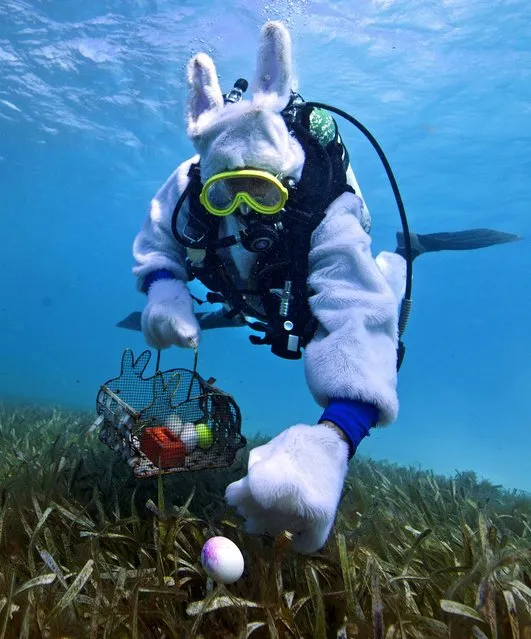
Spencer Slate, costumed as a scuba-diving Easter bunny, is shown in this handout photo provided by the Florida Keys News Bureau as he hides eggs amid eel grass, in the Florida Keys National Marine Sanctuary off Key Largo, Florida March 31, 2013. About 80 adults and children participated in an Underwater Easter Egg Hunt, seeking real hard-boiled eggs painted with non-toxic food coloring to avoid adverse effects on the marine ecosystem. (Photo by Bob Care/Reuters/Florida Keys News Bureau)

Spencer Slate, costumed as a scuba-diving Easter bunny, is shown in this handout photo provided by the Florida Keys News Bureau as he hides eggs amid eel grass, in the Florida Keys National Marine Sanctuary off Key Largo, Florida March 31, 2013. About 80 adults and children participated in an Underwater Easter Egg Hunt, seeking real hard-boiled eggs painted with non-toxic food coloring to avoid adverse effects on the marine ecosystem. (Photo by Bob Care/Reuters/Florida Keys News Bureau)
Details
02 Apr 2013 12:33:00
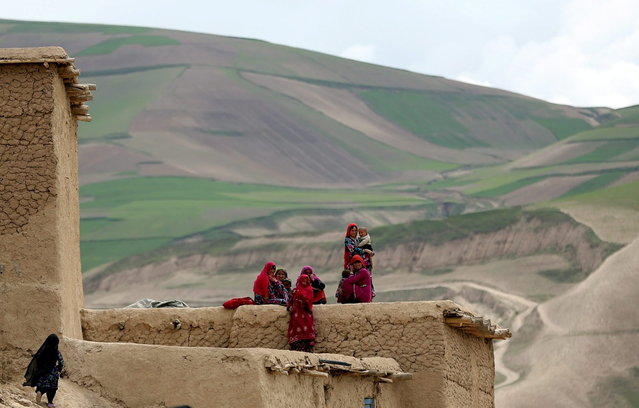
In this Sunday, May 4, 2014 photo, Survivors sit with their possessions near the site of Friday's landslide that buried Abi-Barik village in Badakhshan province, northeastern Afghanistan. Stranded and with no homes, many of the families have struggled to get aid. Some have gone to nearby villages to stay with relatives or friends, while others have slept in tents provided by aid groups. The unlucky ones have slept outside. (Photo by Massoud Hossaini/AP Photo)

In this Sunday, May 4, 2014 photo, Survivors sit with their possessions near the site of Friday's landslide that buried Abi-Barik village in Badakhshan province, northeastern Afghanistan. Stranded and with no homes, many of the families have struggled to get aid. Some have gone to nearby villages to stay with relatives or friends, while others have slept in tents provided by aid groups. The unlucky ones have slept outside. (Photo by Massoud Hossaini/AP Photo)
Details
09 May 2014 10:01:00
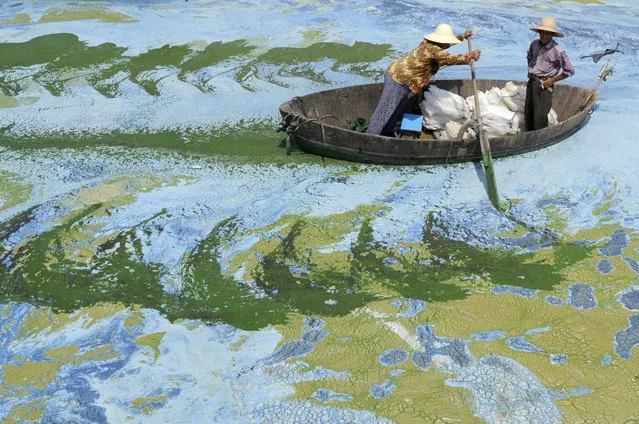
Fishermen row a boat in the algae-filled Chaohu Lake in Hefei, Anhui province, June 19, 2009. The country has invested 51 billion yuan ($7.4 billion) towards the construction of 2,712 projects for the treatment of eight rivers and lakes including Huaihe River, Haihe River, Liaohe River, Chaohu Lake, Dianchi Lake, Songhua River, the Three Gorges region of the Yangtze River and its upstream area, Xinhua News Agency reported. (Photo by Jianan Yu/Reuters)

Growing cities, overuse of fertilizers and factory wastewater have degraded China's water supplies to the extent that half the nation's rivers and lakes are severely polluted. China aims to spend $850 billion to improve filthy water supplies over the next decade, but even such huge outlays may do little to reverse damage caused by decades of pollution and overuse in Beijing's push for rapid economic growth. Photo: Fishermen row a boat in the algae-filled Chaohu Lake in Hefei, Anhui province, June 19, 2009. (Photo by Jianan Yu/Reuters)
Details
03 Aug 2014 08:01:00
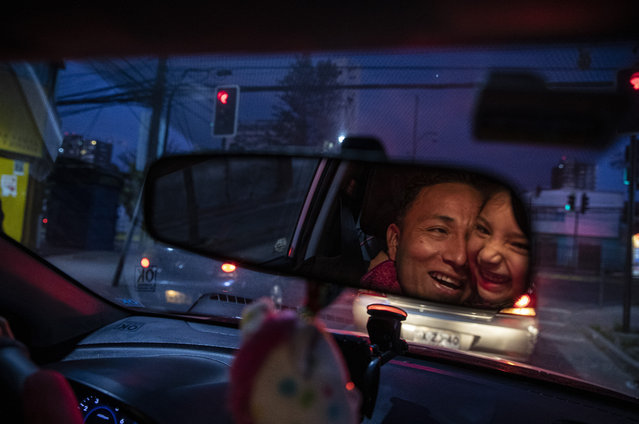
Reflected in the rearview mirror, Jose Collantes gets a hug from daughter Kehity while they're stopped at a red light, as Jose drives his five-year-old home from a playdate in Santiago, Chile, Sunday, September 6, 2020, three months after they lost his wife, her mother, to COVID-19. Their case highlights how COVID-19 deaths the world over are often the beginning of a new personal journey for those affected. (Photo by Esteban Felix/AP Photo)

Reflected in the rearview mirror, Jose Collantes gets a hug from daughter Kehity while they're stopped at a red light, as Jose drives his five-year-old home from a playdate in Santiago, Chile, Sunday, September 6, 2020, three months after they lost his wife, her mother, to COVID-19. Their case highlights how COVID-19 deaths the world over are often the beginning of a new personal journey for those affected. (Photo by Esteban Felix/AP Photo)
Details
15 Oct 2020 00:05:00
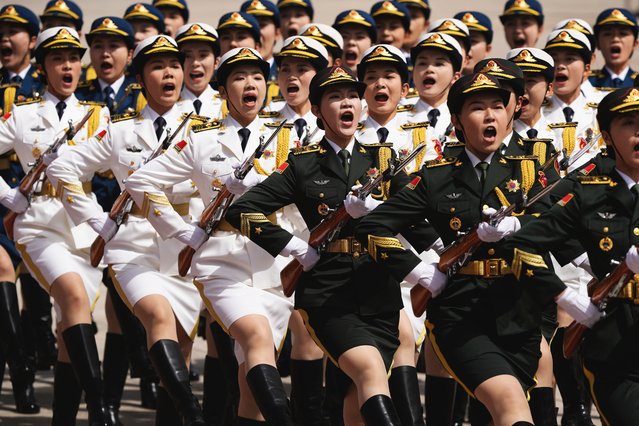
Chinese honor guards march after the arrival ceremony attended by Chinese President Xi Jinping and Azerbaijan President Ilham Aliyev at The Great Hall of The People in Beijing, China, 23 April 2025. (Photo by Iori Sagisawa/EPA/EFE)

Chinese honor guards march after the arrival ceremony attended by Chinese President Xi Jinping and Azerbaijan President Ilham Aliyev at The Great Hall of The People in Beijing, China, 23 April 2025. (Photo by Iori Sagisawa/EPA/EFE)
Details
09 May 2025 03:57:00
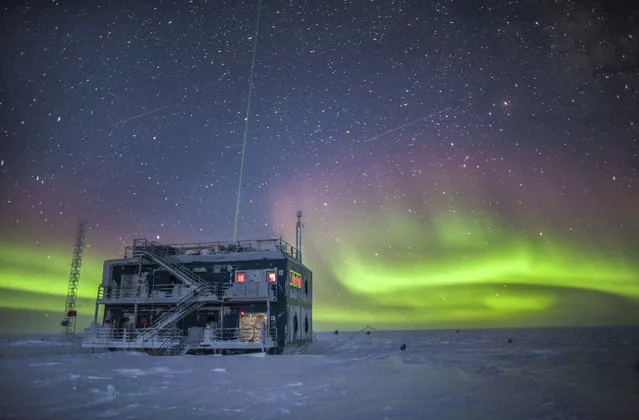
This undated photo provided by NOAA in May 2018 shows aurora australis near the South Pole Atmospheric Research Observatory in Antarctica. When a hole in the ozone formed over Antarctica, countries around the world in 1987 agreed to phase out several types of ozone-depleting chemicals called chlorofluorocarbons (CFCs). Production was banned, emissions fell and the hole shriveled. But according to a study released on Wednesday, May 16, 2018, scientists say since 2013, there’s more of a banned CFC going into the atmosphere. (Photo by Patrick Cullis/NOAA via AP Photo)

This undated photo provided by NOAA in May 2018 shows aurora australis near the South Pole Atmospheric Research Observatory in Antarctica. When a hole in the ozone formed over Antarctica, countries around the world in 1987 agreed to phase out several types of ozone-depleting chemicals called chlorofluorocarbons (CFCs). Production was banned, emissions fell and the hole shriveled. But according to a study released on Wednesday, May 16, 2018, scientists say since 2013, there’s more of a banned CFC going into the atmosphere. (Photo by Patrick Cullis/NOAA via AP Photo)
Details
15 Aug 2018 00:05:00