Loading...
Done
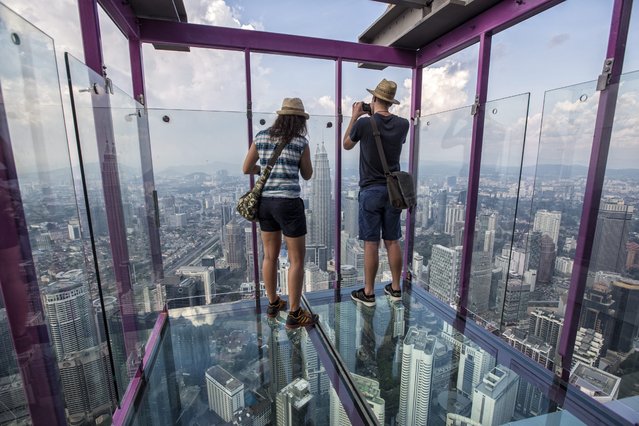
Tourists take a panoramic view of Kuala Lumpur from a skybox during a media preview at Kuala Lumpur Tower in Kuala Lumpur, Malaysia, 05 May 2016. Skybox, 421 metres above ground level will be the latest tourists attraction at Kuala Lumpur Tower, the 7th tallest freestanding tower in the world. (Photo by Ahmad Yusni/EPA)

Tourists take a panoramic view of Kuala Lumpur from a skybox during a media preview at Kuala Lumpur Tower in Kuala Lumpur, Malaysia, 05 May 2016. Skybox, 421 metres above ground level will be the latest tourists attraction at Kuala Lumpur Tower, the 7th tallest freestanding tower in the world. (Photo by Ahmad Yusni/EPA)
Details
06 May 2016 14:01:00
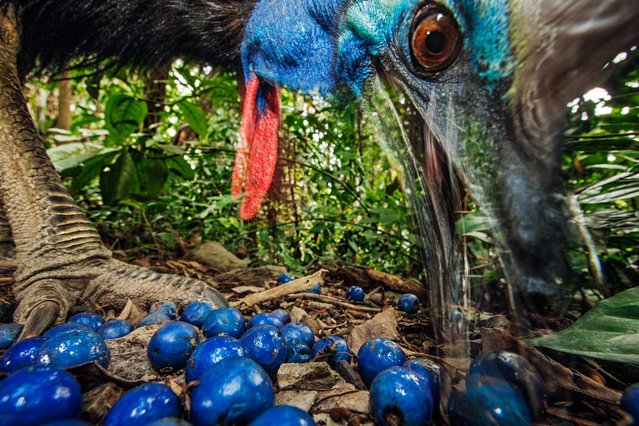
“Cassowaries are large, flightless birds related to emus and (more distantly) to ostriches, rheas, and kiwis”, writes Olivia Judson in the September issue of National Geographic magazine. (Photo by Christian Ziegler/National Geographic)

“Cassowaries are large, flightless birds related to emus and (more distantly) to ostriches, rheas, and kiwis”, writes Olivia Judson in the September issue of National Geographic magazine. How large? People-size: Adult males stand well over five foot five and top 110 pounds. Females are even taller, and can weigh more than 160 pounds. Dangerous when roused, they’re shy and peaceable when left alone. But even birds this big and tough are prey to habitat loss. The dense New Guinea and Australia rain forests where they live have dwindled. Today cassowaries might number 1,500 to 2,000. And because they help shape those same forests – by moving seeds from one place to another – “if they vanish”, Judson writes, “the structure of the forest would gradually change” too. (Photo by Christian Ziegler/National Geographic)

Details
06 Jan 2014 12:21:00
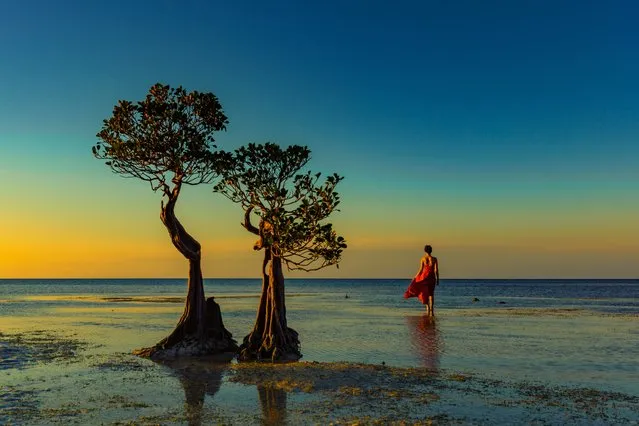
Sunset at Walakiri Beach, Sumba in East Nusantenggara, Indonesia in 2019. (Photo by Aries Hendrick Apriyanto/Rex Features/Shutterstock)

Sunset at Walakiri Beach, Sumba in East Nusantenggara, Indonesia in 2019. (Photo by Aries Hendrick Apriyanto/Rex Features/Shutterstock)
Details
05 Feb 2022 06:40:00
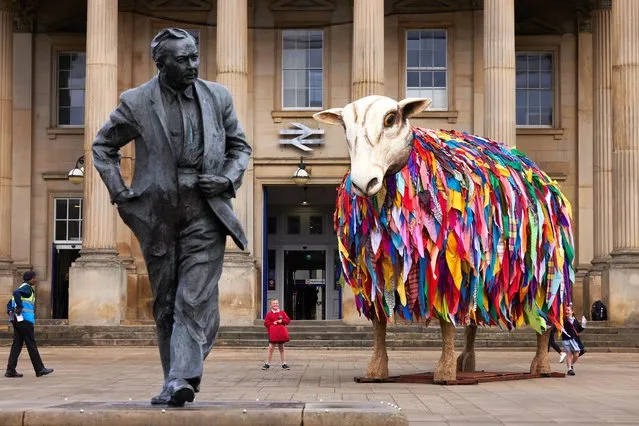
Aina the mother sheep, a 4.5-metre musical sculpture installed in the first decade of July 2023 outside Huddersfield railway station in England as part of Artichoke’s latest project, Herd. She is one of 23 giant handcrafted musical sheep that will appear all over Kirklees this week before joining Aina for a grand finale in Huddersfield on 16 July. (Photo by Christopher Thomond/The Guardian)

Aina the mother sheep, a 4.5-metre musical sculpture installed in the first decade of July 2023 outside Huddersfield railway station in England as part of Artichoke’s latest project, Herd. She is one of 23 giant handcrafted musical sheep that will appear all over Kirklees this week before joining Aina for a grand finale in Huddersfield on 16 July. (Photo by Christopher Thomond/The Guardian)
Details
10 Aug 2023 04:18:00
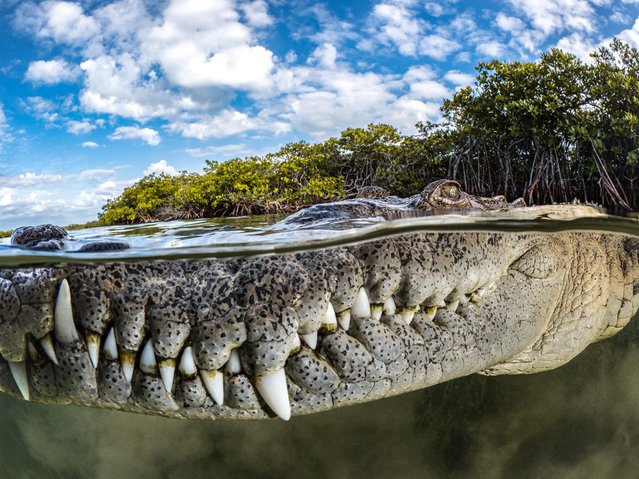
Guardian of the Mangroves – Overall Winner. Tanya Houppermans, Cuba. A curious American crocodile (Crocodylus acutus) swims right up to Tanya, at Gardens of the Queen (Jardines De La Reina), an archipelago off the coast of Cuba. It has been strictly protected since 1996, and is one of the most untouched marine ecosystems in the world. ‍ “The healthy population of American crocodiles is down to the pristine condition of the mangroves and I wanted to capture close ups of this gentle giant in its natural habitat. I hope this image can illustrate that protecting areas like this is so critical”. (Photo by Tanya Griffin Houppermans/Mangrove Photographer of the Year)

Guardian of the Mangroves – Overall Winner. Tanya Houppermans, Cuba. A curious American crocodile (Crocodylus acutus) swims right up to Tanya, at Gardens of the Queen (Jardines De La Reina), an archipelago off the coast of Cuba. It has been strictly protected since 1996, and is one of the most untouched marine ecosystems in the world. ‍ “The healthy population of American crocodiles is down to the pristine condition of the mangroves and I wanted to capture close ups of this gentle giant in its natural habitat. I hope this image can illustrate that protecting areas like this is so critical”. (Photo by Tanya Griffin Houppermans/Mangrove Photographer of the Year)
Details
05 Nov 2022 04:24:00
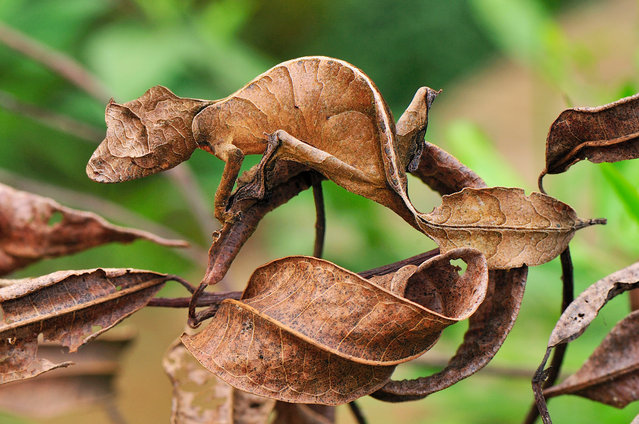
Is it a leaf? Is it tree bark? No, it’s the Satanic leaf-tailed gecko. Cleverly disguised as a rotting leaf, Madagascar’s camouflage king has red eyes, pointy horns and a taste for night hunting: it’s nature’s most devilish deceiver. (Photo by Thomas Marent/ARDEA)

Is it a leaf? Is it tree bark? No, it’s the Satanic leaf-tailed gecko. Cleverly disguised as a rotting leaf, Madagascar’s camouflage king has red eyes, pointy horns and a taste for night hunting: it’s nature’s most devilish deceiver. The twisted body and veiny skin echo the detail of a dry leaf, which ensures the gecko blends in with its forest home. The mottled tail appears to have sections missing, as though it has withered over time. This mini-monster epitomises survival of the fittest, having adapted gradually to become today’s extraordinary leaf impersonator. (Photo by Thomas Marent/ARDEA)
Details
20 Nov 2015 08:03:00
A woman holds her dog to be blessed by a priest at the Cathedral San Bernardino de Siena during the ceremony commemorating the Feast of San Antonio Abad, the patron saint of domestic animals, in Xochimilco on the outskirts of Mexico City, Mexico on January 17, 2024. (Photo by Raquel Cunha/Reuters)

A woman holds her dog to be blessed by a priest at the Cathedral San Bernardino de Siena during the ceremony commemorating the Feast of San Antonio Abad, the patron saint of domestic animals, in Xochimilco on the outskirts of Mexico City, Mexico on January 17, 2024. (Photo by Raquel Cunha/Reuters)
Details
23 Apr 2025 03:38:00
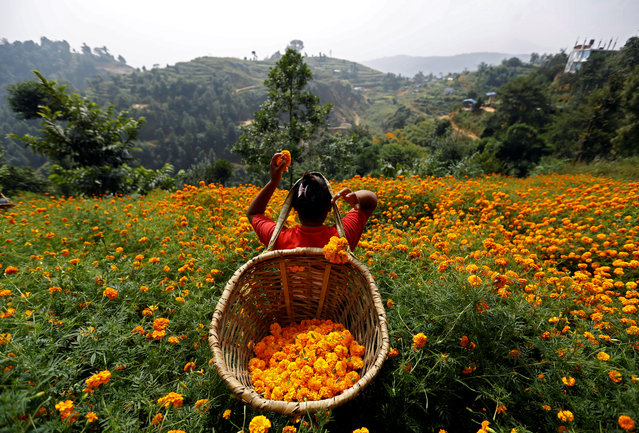
A woman picks marigold flowers used to make garlands and offer prayers, before selling them to the market for the Tihar festival, also called Diwali, in Kathmandu, Nepal October 17, 2017. (Photo by Navesh Chitrakar/Reuters)

A woman picks marigold flowers used to make garlands and offer prayers, before selling them to the market for the Tihar festival, also called Diwali, in Kathmandu, Nepal on October 17, 2017. (Photo by Navesh Chitrakar/Reuters)
Details
18 Oct 2017 09:07:00