Loading...
Done
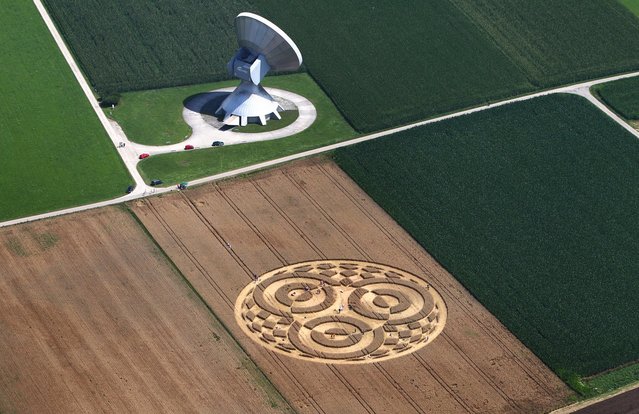
People walk through crop circles in a cornfield near Raisting, Germany, on July 28, 2014. (Photo by Karl-Josef Hildenbrand/DPA)

People walk through crop circles in a cornfield near Raisting, Germany, on July 28, 2014. According to media reports, a balloonist had discovered the circle some days ago. Since then, hundreds of people came to the field to watch it, however it is unclear who did create the pattern. (Photo by Karl-Josef Hildenbrand/DPA)
Details
02 Aug 2014 14:29:00
The Daily Life Of Darth Vader By Pawel Kadysz

If you want to be Dart Vader, you will have to deal with his everyday problems, too. That’s what Paweł Kadysz is doing with his new photo project. He aims to take a picture every day for a year – and each one of them should show the Dark Lord of the Sith tackling everyday life. Washing dishes, ironing clothes, eating breakfast – all those little things that heroes do off screen.
Details
25 Nov 2015 10:06:00
Lindsay Heimbach goes airborne while sledding down a hill on Mt. Lemmon Dec. 27, 2008. Scores of others had the same idea as traffic lined up to take advantage of the snow which was estimated to be between 27-36 inches deep at Ski Valley, which opened for the first day

Lindsay Heimbach goes airborne while sledding down a hill on Mt. Lemmon December 27, 2008. (Photo by James Gregg/Arizona Daily Star)
Details
17 Apr 2012 12:56:00
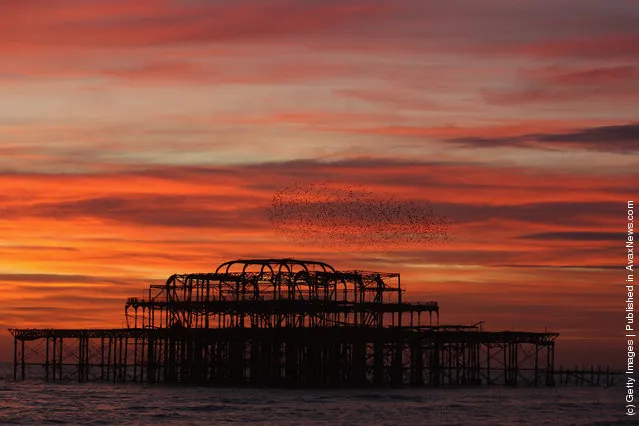
Starlings come home to roost on Brighton's Old Pier as the sun sets in Brighton, England

Starlings come home to roost on Brighton's Old Pier as the sun sets on December 21, 2011 in Brighton, England. December 21 marks the winter solstice, the shortest day of the year. (Photo by Dan Kitwood/Getty Images)
Details
22 Dec 2011 11:40:00
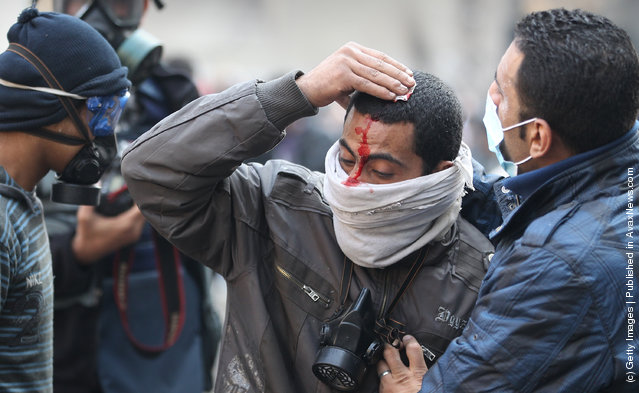
An injured protestor  is led away during clashes with police near Tahrir Square

An injured protestor is led away during clashes with police near Tahrir Square on November 23, 2011 in Cairo, Egypt. Thousands of Egyptians are continuing to occupy Tahrir Square after four days of clashes with security forces despite a promise from military leaders to bring forward Presidential elections. (Photo by Peter Macdiarmid/Getty Images)
Details
23 Nov 2011 12:35:00
People view Singpoli Group's inaugural Rose Parade float as it undergoes its finishing touches in Pasadena, California December 30, 2014. (Photo by Jonathan Alcorn/Reuters)

People view Singpoli Group's inaugural Rose Parade float as it undergoes its finishing touches in Pasadena, California December 30, 2014. The 126th Rose Parade will take place on New Years Day in Pasadena. (Photo by Jonathan Alcorn/Reuters)
Details
01 Jan 2015 13:23:00
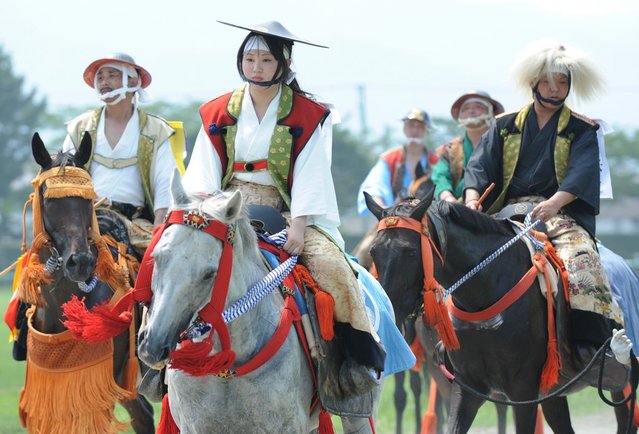
A young woman (C) clad in samurai costume leads other local poeple as she rides her horse during a parade at the annual Soma Nomaoi festival in Minamisoma, Fukushima Prefecture, on July 28, 2012.  The traditional full-scale festival kicked off for the first time after the accident of the Fukushima Dai-ichi Nuclear Power Plant following the massive earthquake and the tsunami on March 11, 2011. (Photo by Toru Yamanaka/AFP Photo)

Soma-Nomaoi is a festival that recreates a battle scene from more than 1,000 years ago. It is annually held for 4 days from July 22 to 25 in Haramachi City, Fukushima Prefecture, in the eastern part of Japan. In this historical event, 600 mounted samurai in traditional Japanese armor, with long swords at their side and ancestral flagstaffs streaming from their backs, ride across open fields. Soma-Nomaoi has been designated an Important Intangible Folk Cultural Property.

Photo: A young woman (C) clad in samurai costume leads other local poeple as she rides her horse during a parade at the annual Soma Nomaoi festival in Minamisoma, Fukushima Prefecture, on July 28, 2012. The traditional full-scale festival kicked off for the first time after the accident of the Fukushima Dai-ichi Nuclear Power Plant following the massive earthquake and the tsunami on March 11, 2011. (Photo by Toru Yamanaka/AFP Photo)

Details
02 Aug 2012 12:59:00
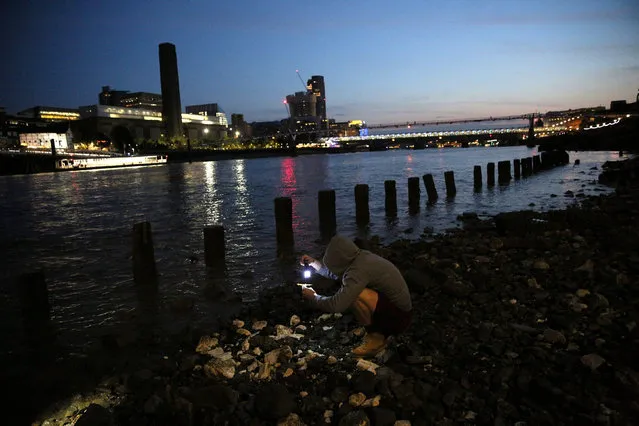
A mudlark uses a torch to look for items on the bank of the River Thames in London, Britain June 06, 2016. Mudlarking is believed to trace its origins to the 18th and 19th century, when scavengers searched the Thames' shores for items to sell. These days, history and archaeology fans are the ones hoping to find old relics such as coins, ceramics, artifacts or everyday items from across centuries. They wait for the low tide and then scour specific areas of exposed shores. "If you're in a field you could be out all day long, with the river you're restricted to about two or three hours," mudlark Nick Stevens said. While many just use the naked eye for their searches, others rely on metal detectors for which a permit from the Port of London Authority is needed. Digging also requires consent. (Photo by Neil Hall/Reuters)

A mudlark uses a torch to look for items on the bank of the River Thames in London, Britain June 06, 2016. Mudlarking is believed to trace its origins to the 18th and 19th century, when scavengers searched the Thames' shores for items to sell. These days, history and archaeology fans are the ones hoping to find old relics such as coins, ceramics, artifacts or everyday items from across centuries. their finds with the Portable Antiquities Scheme. Any item over 300 years old must be recorded. (Photo by Neil Hall/Reuters)
Details
27 Aug 2016 10:43:00