Loading...
Done
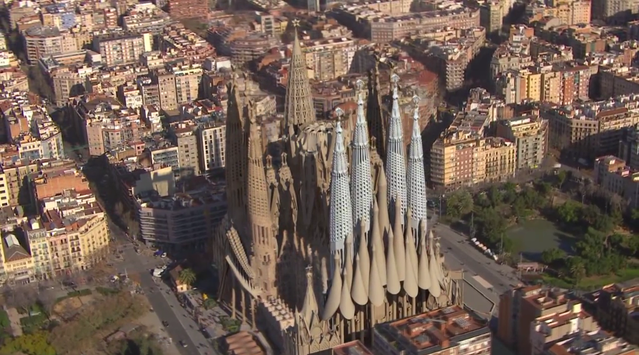
We Build Tomorrow – Sagrada Familia 2026 ( VIDEO )

For more than a century, the Barcelona skyline has been graced (or marred, depending on who’s talking) by the spectacle of the Basilica designed by Anton Gaudi, first started in 1882. If you want to know what it’ll look like when finished, don’t fret — 2026 is right around the corner. Or you can watch this video, released last week on YouTube by Basílica de la Sagrada Família and titled simply “2026 We Build Tomorrow,” a 3-D artists’ rendering of the building stages through completion.
(If 144 years sounds like a long time to finish a cathedral, keep in mind that there were decades that they didn’t work on it — and that Notre Dame de Paris took 182 years, although the 13th century Parisians didn’t have diesel-powered industrial cranes.) Now, if only the video could show us what the admission and hours will be in 2026 (and how to avoid the inevitable long lines).
Details
11 Jan 2014 10:59:00
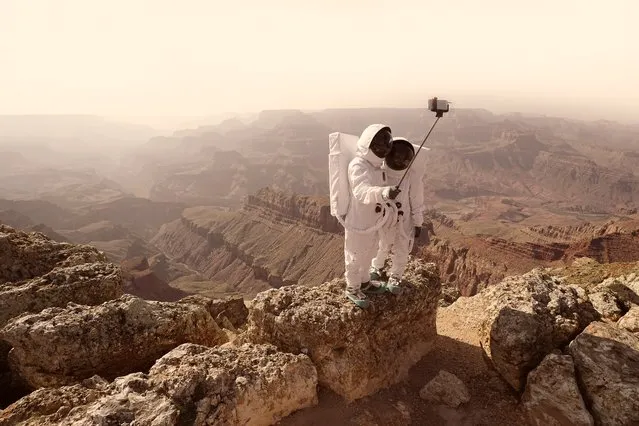
Professional conceptual category winner. Greetings from Mars, by Julien Mauve, France. Mauve says: “I have always wondered what it would be like to discover a totally different world ... and to photograph it for the first time as if I was Ansel Adams. So I came up with this project, which is about space exploration and discovery. But it’s also about our behavior in front of landscapes and how we create pictures that will share our personal story with the world”. (Photo by Julien Mauve)

Professional conceptual category winner. Greetings from Mars, by Julien Mauve, France. Mauve says: “I have always wondered what it would be like to discover a totally different world ... and to photograph it for the first time as if I was Ansel Adams. So I came up with this project, which is about space exploration and discovery. But it’s also about our behavior in front of landscapes and how we create pictures that will share our personal story with the world”. (Photo by Julien Mauve)
Details
23 Apr 2016 13:57:00
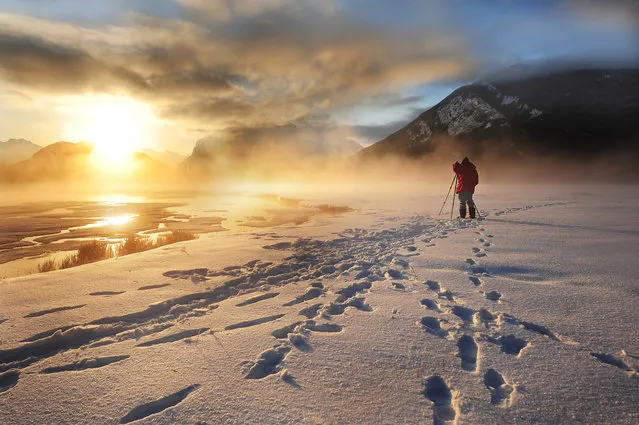
“Artist of the light”. While shooting sunrise in the Vermilion lakes area of Banff national park, Canada, I met a fellow photographer on the scene. Most of the time, we tried not to get in each other's way, however, just by accident, I snapped a picture with him in it working on his tripod settings, and it turned out to be a great photo compared to my sunrise shots. (Photo and caption by Victor Liu/National Geographic Traveler Photo Contest)

“Artist of the light”. While shooting sunrise in the Vermilion lakes area of Banff national park, Canada, I met a fellow photographer on the scene. Most of the time, we tried not to get in each other's way, however, just by accident, I snapped a picture with him in it working on his tripod settings, and it turned out to be a great photo compared to my sunrise shots. (Photo and caption by Victor Liu/National Geographic Traveler Photo Contest)

ATTENTION! All pictures are presented in high resolution. To see Hi-Res images – just TWICE click on any picture. In other words, click small picture – opens the BIG picture. Click BIG picture – opens VERY BIG picture.
Details
27 Jun 2013 13:11:00
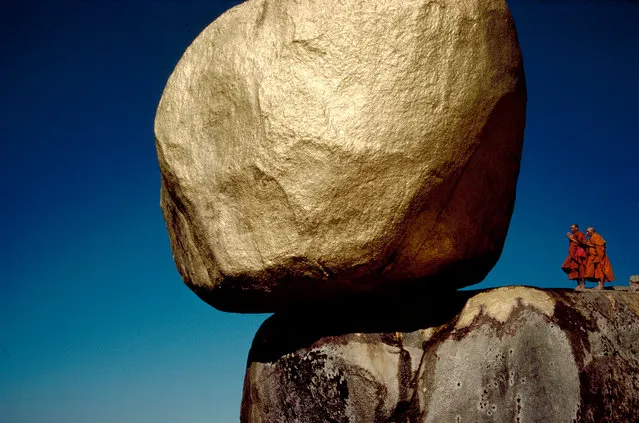
Kyaiktiyo, Burma, 1978. The Golden Rock at Shwe Pyi Daw (the Golden Country), the Buddhist holy place. Hiroji Kubota writes: “I was desperate to keep a distance from America for a while; luckily, I found Burma and its gentle and compassionate people. In the spring of 1978, on the top of the hill where I took this photo, I had two Leica bodies: the one with Tri-X and the other with Kodachrome 64. Soon after, I realised that the colour one looked very colourful and was more powerful. That was my decisive moment, to become a colour photographer”. (Photo by Hiroji Kubota/Magnum Photos)

Kyaiktiyo, Burma, 1978. The Golden Rock at Shwe Pyi Daw (the Golden Country), the Buddhist holy place. Hiroji Kubota writes: “I was desperate to keep a distance from America for a while; luckily, I found Burma and its gentle and compassionate people. In the spring of 1978, on the top of the hill where I took this photo, I had two Leica bodies: the one with Tri-X and the other with Kodachrome 64. Soon after, I realised that the colour one looked very colourful and was more powerful. That was my decisive moment, to become a colour photographer”. (Photo by Hiroji Kubota/Magnum Photos)
Details
10 Jun 2016 13:30:00
Victoria, 12, at her home in Mangueira. (Photo by Tariq Zaidi/The Guardian)

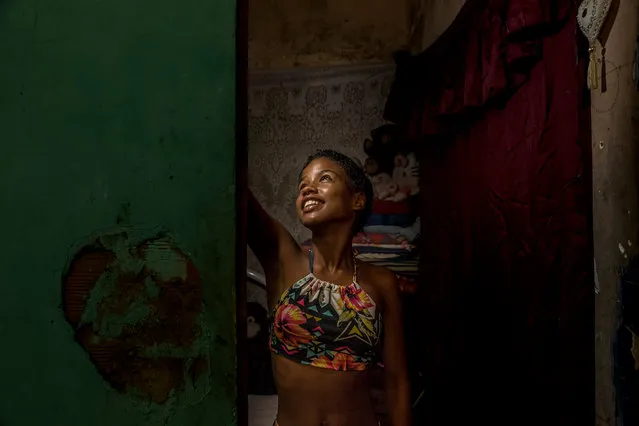
Planned improvements to Rio’s favelas have meant increases in rent, forcing the poorest families into squatting in unoccupied buildings. Photographer Tariq Zaidi visits the Mangueira community favela, less than 1km from the showpiece Maracanã stadium, to see what life is like for the women living there. Here: Victoria, 12, at her home in Mangueira. (Photo by Tariq Zaidi/The Guardian)
Details
29 Jun 2017 08:08:00
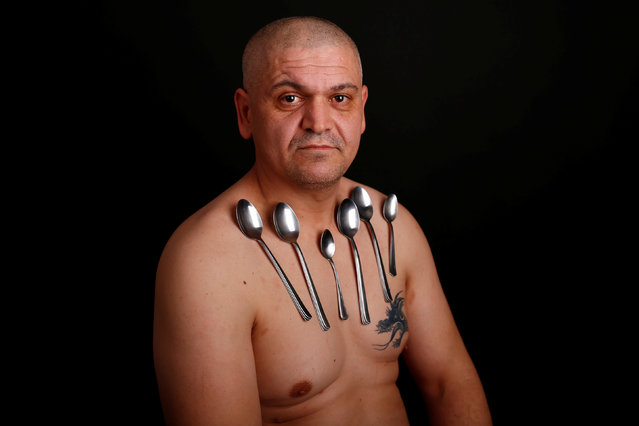
Nermin Halilagic, 38, poses with kitchen utensils in Bihac, Bosnia and Herzegovina, January 23, 2017. (Photo by Dado Ruvic/Reuters)

Nermin Halilagic, 38, poses with kitchen utensils in Bihac, Bosnia and Herzegovina, January 23, 2017. Halilagic discovered earlier this year that he had the unusual ability to attach items to his body using what he says is a special energy radiated from his body. (Photo by Dado Ruvic/Reuters)
Details
26 Jan 2017 12:52:00
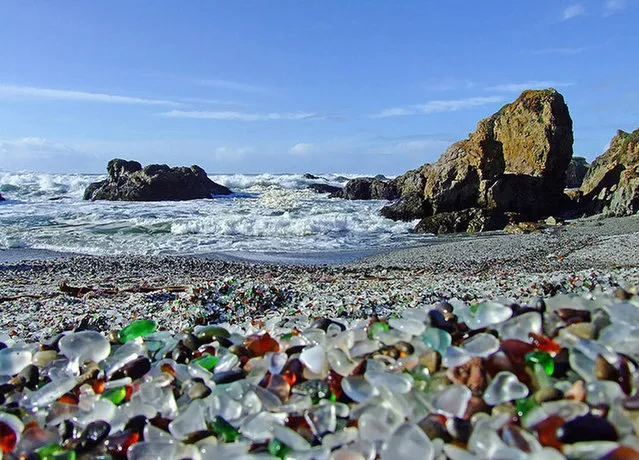
Glass Beach Fort Bragg California

In the early 20th century, Fort Bragg residents threw their household garbage over the cliffs above what is now Glass Beach. They discarded glass, appliances, and even cars. The land was owned at that time by the Union Lumber Company, and locals referred to it as "The Dumps." Sometimes fires were lit to reduce the size of the trash pile.
Details
06 Nov 2012 10:00:00
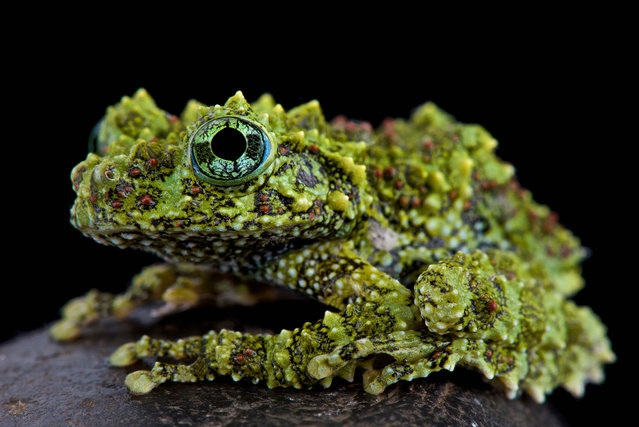
Mossy frog (Theloderma corticale). (Photo by Matthijs Kuijpers/The Guardian)

Renowned amphibian and reptile photographer Matthijs Kuijpers has released his first book, “Cold Instinct”. Kuijpers says the aim of the work is “for the viewer to abandon the fear and negative thoughts that often surround these animals”. What’s left is the bizarre beauty of these creatures in their simplest form – no backgrounds and no distractions. Here: Mossy frog (Theloderma corticale). (Photo by Matthijs Kuijpers/The Guardian)
Details
10 May 2019 00:03:00