Loading...
Done
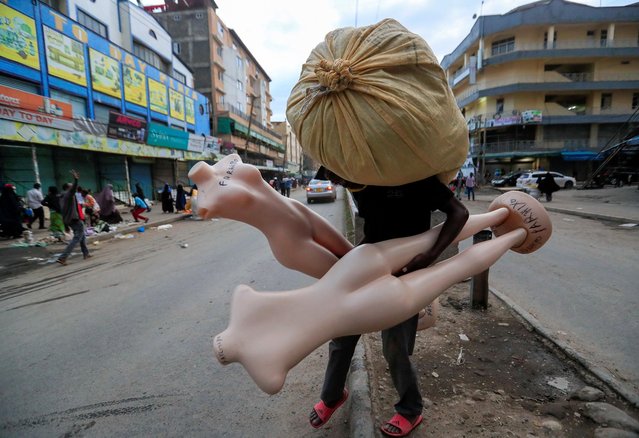
A trader carries his mannequins as he closes his business ahead of the lockdown restrictions set by the government to prevent the spread of the coronavirus disease (COVID-19), in Eastleigh district of Nairobi, Kenya on May 6, 2020. (Photo by Thomas Mukoya/Reuters)

A trader carries his mannequins as he closes his business ahead of the lockdown restrictions set by the government to prevent the spread of the coronavirus disease (COVID-19), in Eastleigh district of Nairobi, Kenya on May 6, 2020. (Photo by Thomas Mukoya/Reuters)
Details
29 May 2020 00:05:00
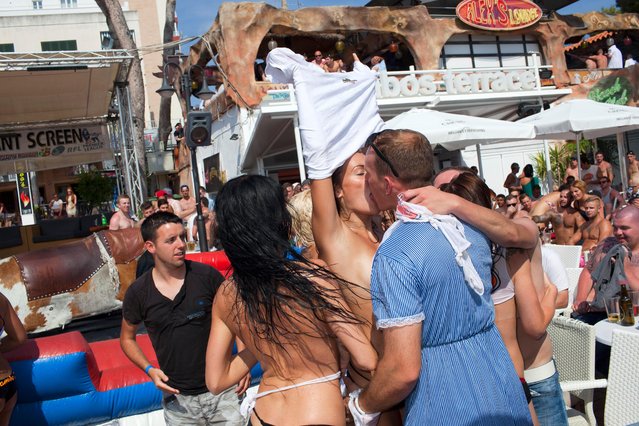
Rob, a British man in his late 20's in Magaluf, Majorca on his stag party, kisses a participant in a wet t-shirt competition hosted at Mambo's Terrace on June 28, 2013. (Photo by Peter Dench/Getty Images Reportage)

Rob, a British man in his late 20's in Magaluf, Majorca on his stag party, kisses a participant in a wet t-shirt competition hosted at Mambo's Terrace on June 28, 2013. (Photo by Peter Dench/Getty Images Reportage)
Details
31 Jan 2018 05:53:00
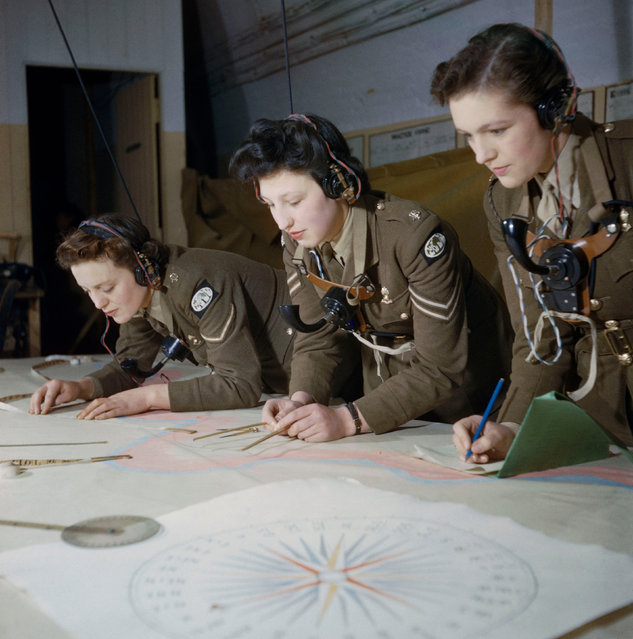
Auxiliary Territorial Service (ATS) plotters at work at Coastal Artillery Headquarters in Dover, December 1942. (Photo by Ted Dearberg/IWM/PA Wire)

Auxiliary Territorial Service (ATS) plotters at work at Coastal Artillery Headquarters in Dover, December 1942. The Auxiliary Territorial Service was the women's branch of the British Army during the Second World War. It was formed on 9 September 1938, initially as a women's voluntary service, and existed until 1 February 1949, when it was merged into the Women's Royal Army Corps. The ATS had its roots in the Women's Auxiliary Army Corps (WAAC), which was formed in 1917 as a voluntary service. During the First World War its members served in a number of jobs including clerks, cooks, telephonists and waitresses. The WAAC was disbanded after four years in 1921. (Photo by Ted Dearberg/IWM/PA Wire)
Details
13 Jul 2017 07:52:00
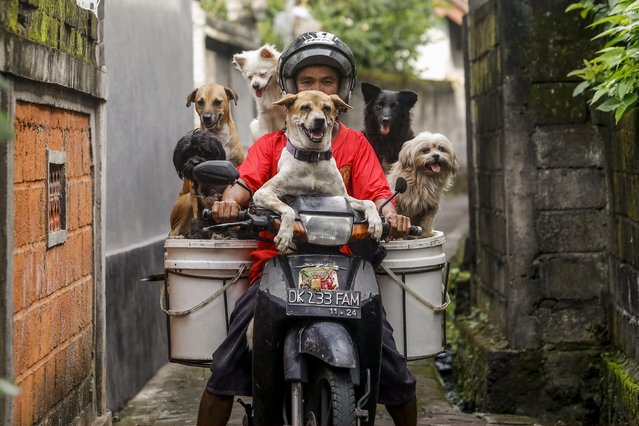
Balinese I Ketut Widanta or known as Lelut rides to collect fodder with his dogs sits on his motorbike in Canggu, Bali, Indonesia on November 05, 2021. Lelut becomes famous for his attractive style of carrying six of his rescued dogs with a modified motorbike while collecting food waste from restaurants. Currently, he takes care of twenty rescued dogs which some of them were dumped by the owners on the street due to the Covid-19 pandemic. Often he receives dog food donations from dog lovers since the collapse of Bali tourism affects his income. (Photo by Johannes P. Christo/Anadolu Agency via Getty Images)

Balinese I Ketut Widanta or known as Lelut rides to collect fodder with his dogs sits on his motorbike in Canggu, Bali, Indonesia on November 05, 2021. Lelut becomes famous for his attractive style of carrying six of his rescued dogs with a modified motorbike while collecting food waste from restaurants. Currently, he takes care of twenty rescued dogs which some of them were dumped by the owners on the street due to the Covid-19 pandemic. Often he receives dog food donations from dog lovers since the collapse of Bali tourism affects his income. (Photo by Johannes P. Christo/Anadolu Agency via Getty Images)
Details
01 Dec 2021 08:57:00
Steampunk World By Vadim Voitekhovitch

Vadim Voitekhovitch was born in a small town of Mozyr, Belarus. He spent most of his life Belarus and he graduated from Bobruisk Art College. From 2004 he lives and works in Germany. His style is quite diverse, but he dedicates most of his time to watercolor and oil. Voitekhovitch likes to draw pictures on history subjects and especially subjects coming from XVIII-XIX centuries.
Details
15 Jul 2013 11:45:00
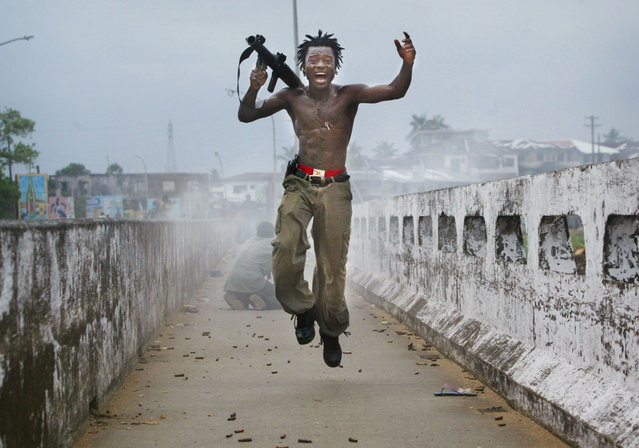
Chris Hondros Retrospective Part1

Chris Hondros, a Getty Images photographer, was fatally wounded on April 20, 2011, in a mortar attack by government forces while covering the civil war in Libya. Hondros' work is woven in our history as he covered everything from politics to marathons. A new film will focus on his life as told through his images. Here's a look at some of his finest and final work. Some of these images are graphic in nature
Details
23 Aug 2013 12:18:00
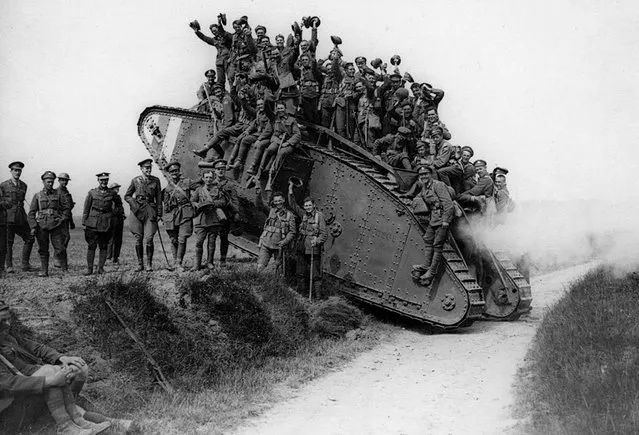
These black-and-white photos are taken from the new book “Armoured Warfare in the First World War 1916 – 1918” by Anthony Tucker-Jones and published by Pen & Sword Military. “Interestingly the British, French and Germans took completely different approaches with varying results”. The British military produced “Little Willie” in Autumn 1915 weighing 18 tonnes, which had a crew of two plus four gunners. “Inspired by a tracked artillery tractor “Little Willie” was referred to as a water tank – hence the name tank – to ensure secrecy”, said Anthony. “This led to the strange looking Mark I with its peculiar rhomboid shape, designed to cross trenches with guns in sponsons on either side. The Germans saw the tank as unchivalrous and were slow to grasp its utility. They favoured the Stormtrooper (specialist soldiers used to infiltrate enemy trenches) and artillery, not the tank”, said Anthony. “However, they didn’t hesitate to make use of captured British tanks. Although the tank helped secure victory and German soldiers dubbed it “Germany’s Downfall” the country was ultimately brought to its knees by the Allies blockade”. Here: British troops hitch a ride on a Mark IV after the massed tank fleet spearheading attack at Cambrai on November 20, 1917. (Photo by Anthony Tucker-Jones/Mediadrumworld.com)

These black-and-white photos are taken from the new book “Armoured Warfare in the First World War 1916 – 1918” by Anthony Tucker-Jones and published by Pen & Sword Military. Here: British troops hitch a ride on a Mark IV after the massed tank fleet spearheading attack at Cambrai on November 20, 1917. (Photo by Anthony Tucker-Jones/Mediadrumworld.com)
Details
23 Feb 2017 00:02:00
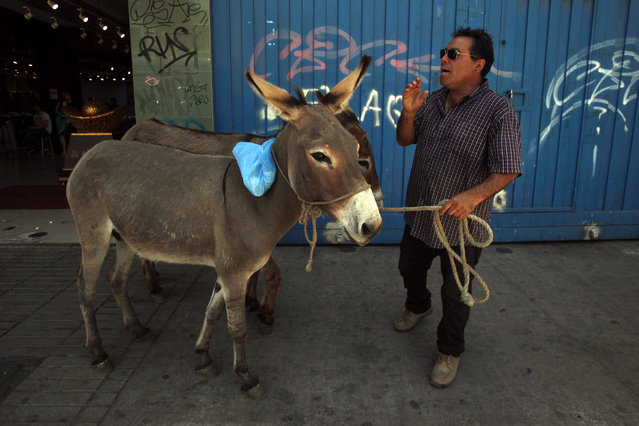
In this December 13, 2014 photo, Ricardo Alegria holds his donkeys by a leash as he yells to sell their milk in the streets of Santiago, Chile. Alegria, along with his brother Marco, has been selling fresh donkey milk for the past 25 years, and says it's recommended as a vitamin boost. Shot glass size cups of the drink sell for about $2 dollars. Half a liter, which is the most he says his donkeys can give in one day, sells for about $20 dollars. (Photo by Luis Hidalgo/AP Photo)

In this December 13, 2014 photo, Ricardo Alegria holds his donkeys by a leash as he yells to sell their milk in the streets of Santiago, Chile. Alegria, along with his brother Marco, has been selling fresh donkey milk for the past 25 years, and says it's recommended as a vitamin boost. Shot glass size cups of the drink sell for about $2 dollars. Half a liter, which is the most he says his donkeys can give in one day, sells for about $20 dollars. (Photo by Luis Hidalgo/AP Photo)
Details
26 Dec 2014 15:01:00