Loading...
Done
A racegoers walks into a rubbish bin following 2016 Melbourne Cup Day at Flemington Racecourse on November 1, 2016 in Melbourne, Australia. (Photo by Scott Barbour/Getty Images)

A racegoers walks into a rubbish bin following 2016 Melbourne Cup Day at Flemington Racecourse on November 1, 2016 in Melbourne, Australia. (Photo by Scott Barbour/Getty Images)
Details
02 Nov 2016 12:42:00
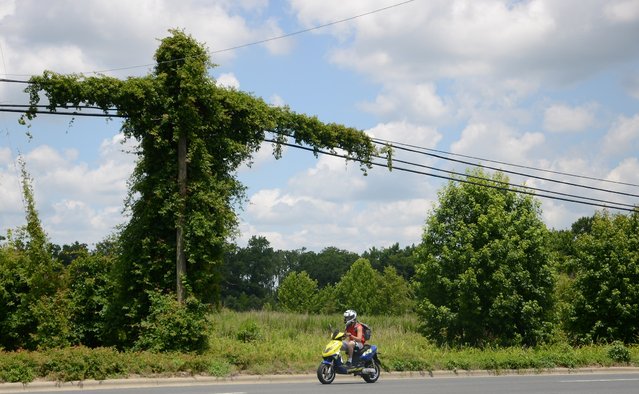
Large trumpet vines spread across electrical lines next to a highway in Kinston, N.C., on June 23, 2014. (Photo by Janet S. Carter/Kinston Free Press via AP Photo)

Large trumpet vines spread across electrical lines next to a highway in Kinston, N.C., on June 23, 2014. (Photo by Janet S. Carter/Kinston Free Press via AP Photo)
Details
28 Jun 2014 13:44:00
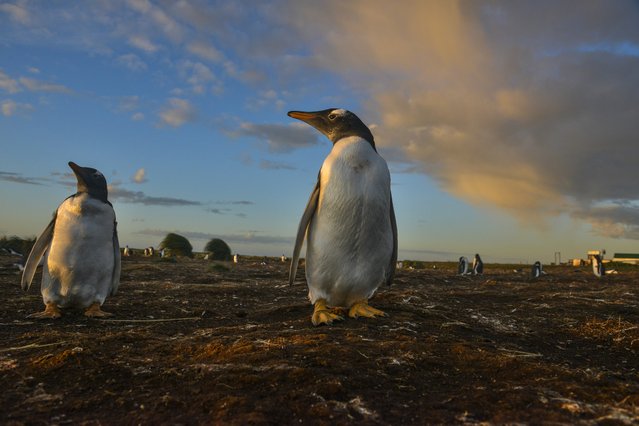
As the sun rises, Gentoo penguins start their day on Wednesday, February 17, 2016, on Sea Lion Island, Falkland Islands. Sea Lion Island, which lies about 10 miles to the south of mainland East Falkland, is the southern most human-inhabited island of the more than 750 islands and islets of the Falkland Islands. (Photo by Jahi Chikwendiu/The Washington Post)

As the sun rises, Gentoo penguins start their day on Wednesday, February 17, 2016, on Sea Lion Island, Falkland Islands. Sea Lion Island, which lies about 10 miles to the south of mainland East Falkland, is the southern most human-inhabited island of the more than 750 islands and islets of the Falkland Islands. (Photo by Jahi Chikwendiu/The Washington Post)
Details
02 Sep 2016 13:05:00
A woman sits as she gets a tattoo on her leg during the annual Panama City Ink Fest in Panama City August 16, 2015. (Photo by Carlos Jasso/Reuters)

A woman sits as she gets a tattoo on her leg during the annual Panama City Ink Fest in Panama City August 16, 2015. (Photo by Carlos Jasso/Reuters)
Details
18 Aug 2015 14:40:00
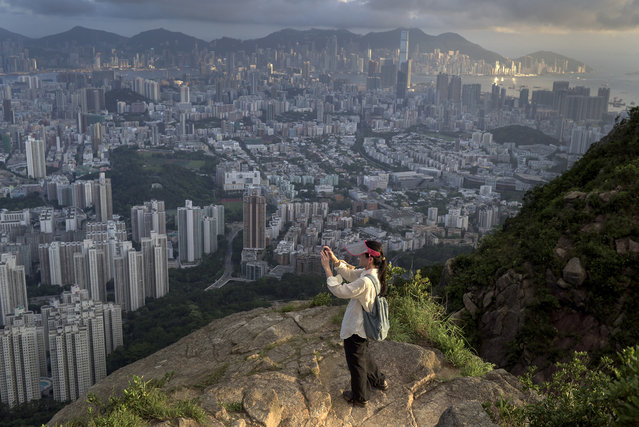
In this photograph taken on June 28, 2015, a hiker in Hong Kong takes a picture of the city from a walking trail. The southern Chinese territory is crisscrossed by more than 180 miles of designated hiking trails. (Photo by Alex Ogle/AFP Photo)

In this photograph taken on June 28, 2015, a hiker in Hong Kong takes a picture of the city from a walking trail. The southern Chinese territory is crisscrossed by more than 180 miles of designated hiking trails. (Photo by Alex Ogle/AFP Photo)
Details
30 Jun 2015 12:47:00
A man carries his wife on his back as they make their way with their luggage along a flooded tunnel to catch their train, after heavy rainfall hit Jinhua, Zhejiang province, China, July 21, 2015. (Photo by Reuters/China Daily)

A man carries his wife on his back as they make their way with their luggage along a flooded tunnel to catch their train, after heavy rainfall hit Jinhua, Zhejiang province, China, July 21, 2015. (Photo by Reuters/China Daily)
Details
23 Jul 2015 11:10:00
Norma Galicia aka “Pirulina” takes part in a demonstration during the commemoration of the International Day for the Elimination of Violence Against Women, in Guatemala City on November 25, 2013. So far this year, 696 women have died due to violent events in Guatemala. (Photo by Johan Ordonez/AFP Photo)

Norma Galicia aka “Pirulina” takes part in a demonstration during the commemoration of the International Day for the Elimination of Violence Against Women, in Guatemala City on November 25, 2013. So far this year, 696 women have died due to violent events in Guatemala. (Photo by Johan Ordonez/AFP Photo)
Details
30 Nov 2013 13:39:00
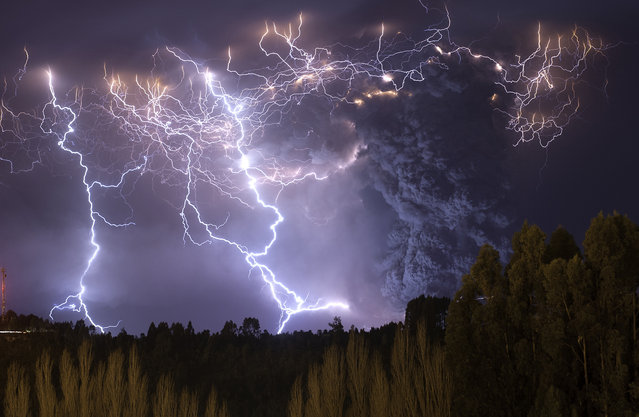
The eruption of Cordon Caulle began on June 4, 2011, located in the Region of Los Rios in Chile. For about 12 months, people and animals became accustomed to living with the daily fall of ash, which also caused problems in the air traffic in South America. The explosions and lightning during first days of the eruption could be seen from hundreds of miles around. This photograph was taken on the second night of eruption from the town of Lago Ranco. (Photo and caption by Francisco Negroni/National Geographic Traveler Photo Contest)

The eruption of Cordon Caulle began on June 4, 2011, located in the Region of Los Rios in Chile. For about 12 months, people and animals became accustomed to living with the daily fall of ash, which also caused problems in the air traffic in South America. The explosions and lightning during first days of the eruption could be seen from hundreds of miles around. This photograph was taken on the second night of eruption from the town of Lago Ranco. (Photo and caption by Francisco Negroni/National Geographic Traveler Photo Contest)

ATTENTION! All pictures are presented in high resolution. To see Hi-Res images – just TWICE click on any picture. In other words, click small picture – opens the BIG picture. Click BIG picture – opens VERY BIG picture.

Details
23 Jun 2013 11:24:00