Loading...
Done
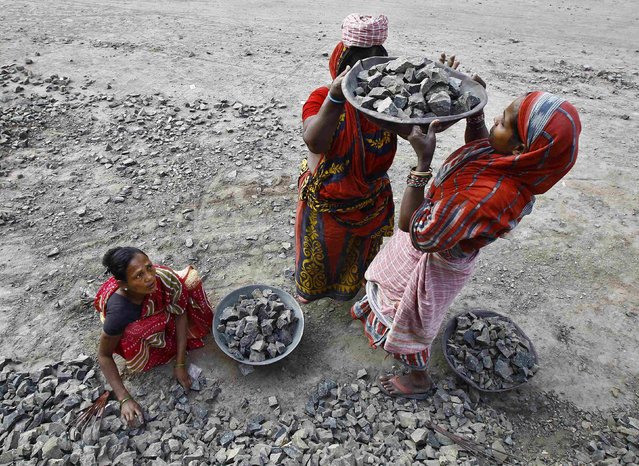
Women labourers work at the construction site of a road in Kolkata January 8, 2015. Across towns and cities in India, it is not uncommon to see women cleaning building sites, carrying bricks and or shoveling gravel - helping construct the infrastructure necessary for the country's economic and social development. (Photo by Rupak De Chowdhuri/Reuters)

Women labourers work at the construction site of a road in Kolkata January 8, 2015. Across towns and cities in India, it is not uncommon to see women cleaning building sites, carrying bricks and or shoveling gravel – helping construct the infrastructure necessary for the country's economic and social development. They help build roads, railway tracks, airports, and offices. They lay pipes for clean water supplies, cables for telecommunications, and dig the drains for sewage systems. But although women make up at least 20 percent of India's 40 million construction workers, they are less recognized than male workers with lower pay and often prone to safety hazards and sexual harassment. They are often unaware of their rights or scared to complain, say activists now trying to campaign for better treatment of women in the construction industry. (Photo by Rupak De Chowdhuri/Reuters)
Details
15 Jan 2015 13:47:00
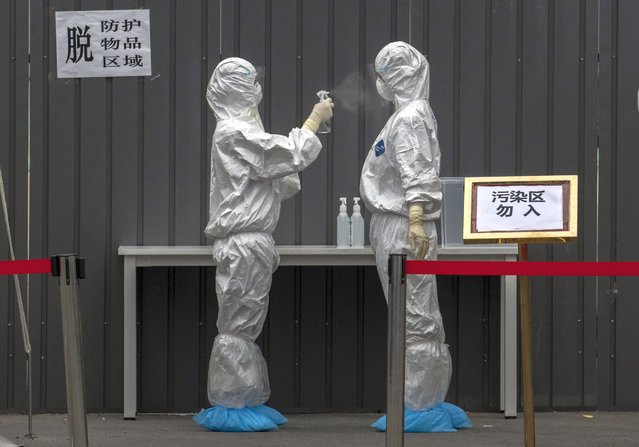
Chinese epidemic control workers wear protective suits as they disinfect each other after performing nucleic acid swab test for COVID-19 on citizens at a government testing site in Xicheng District during an organized tour on June 24, 2020 in Beijing, China. While Chinese government medical officials have said they believe they have controlled the spread, authorities are trying to contain the outbreak linked to the Xinfadi wholesale food market, Beijing's biggest supplier of produce and meat. More than 2.5 million people have undergone nucleic acid tests for COVID-19 at dozens of sites across the city in recent days, with officials using contact tracing to target high and middle risk areas and people who may have had contact with the market or food that came from there. Several neighborhoods have been locked down and a number of other food markets have been closed, The outbreak has triggered fears of a second wave of infection after 56 straight days with no domestically transmitted cases in the capital. (Photo by Kevin Frayer/Getty Images)

Chinese epidemic control workers wear protective suits as they disinfect each other after performing nucleic acid swab test for COVID-19 on citizens at a government testing site in Xicheng District during an organized tour on June 24, 2020 in Beijing, China. While Chinese government medical officials have said they believe they have controlled the spread, authorities are trying to contain the outbreak linked to the Xinfadi wholesale food market, Beijing's biggest supplier of produce and meat. (Photo by Kevin Frayer/Getty Images)
Details
26 Jun 2020 00:01:00


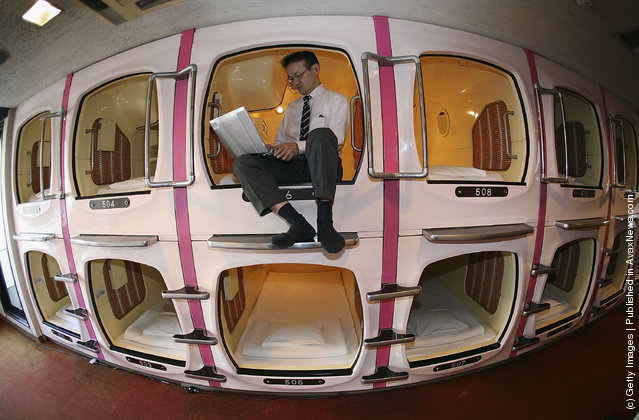
A visitor relaxes in a sleeping module at Tokyo's tube Hotel “Capsule Inn Akihabara” on February 6, 2007 in Tokyo, Japan. The two-square-meter sleep modules are equipped with a TV, Radio and Wireless LAN and are priced at 3500 yen per night. Uptil recently it has mainly been the office workers who stay at such tube hotels when they cannot go home, but recently they are attracting many foreign travellers due to their Japanese style. (Photo by Koichi Kamoshida/Getty Images)
Details
20 May 2011 08:50:00
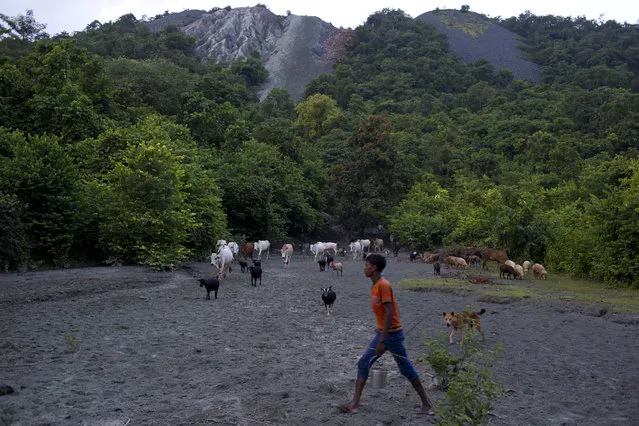
In this September 11, 2014 photo, villagers climb down the side of a hill used earlier as a dumping ground of asbestos waste on Roro hills in Roro, India. (Photo by Saurabh Das/AP Photo)

In this September 11, 2014 photo, villagers climb down the side of a hill used earlier as a dumping ground of asbestos waste on Roro hills in Roro, India. An asbestos mine, abandoned nearly three decades ago still affects the people around it and 18 along with Jema were diagnosed with asbestosis in 2012. Tens of thousands more, some former mine workers, remain untested and at risk. (Photo by Saurabh Das/AP Photo)
Details
26 Dec 2014 14:44:00
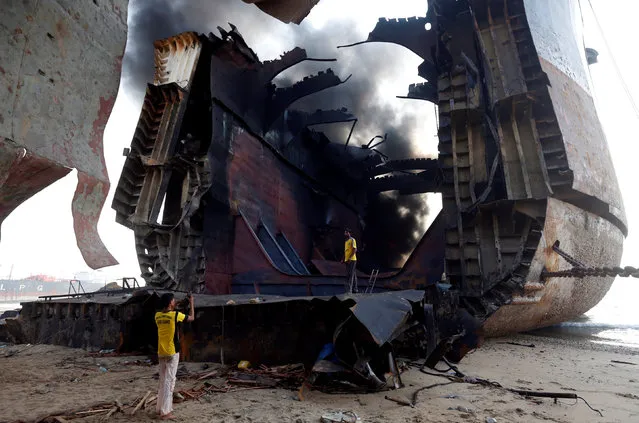
A man takes photo of his colleague with a mobile phone on the burning oil tanker at the ship-breaking yard in Gaddani, Pakistan, November 2, 2016. (Photo by Akhtar Soomro/Reuters)

A man takes photo of his colleague with a mobile phone on the burning oil tanker at the ship-breaking yard in Gaddani, Pakistan, November 2, 2016. Reports state that at least eighteen workers were killed and more than 100 were wounded in a blast at Gaddani ship breaking yard near Karachi on 01 November. Initial reports suggest the blast occurred when a gas cylinder exploded inside an oil tanker being broken up for scrap. (Photo by Akhtar Soomro/Reuters)
Details
04 Nov 2016 12:44:00
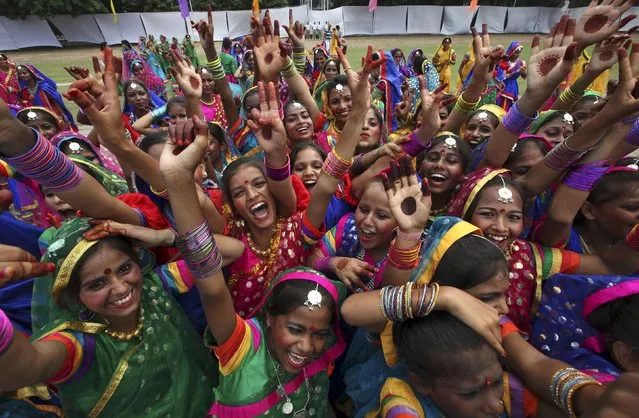
School children celebrate after being rewarded for their dance performance during India's Independence Day celebrations in Chandigarh, India, August 15, 2015. (Photo by Ajay Verma/Reuters)

School children celebrate after being rewarded for their dance performance during India's Independence Day celebrations in Chandigarh, India, August 15, 2015. Indian Prime Minister Narendra Modi's independence day speech focused on measures his “Team India” had rolled out to include millions of poor Indians in the banking and insurance systems, policies for workers and farmers and successes in the fights against inflation and corruption. (Photo by Ajay Verma/Reuters)
Details
16 Aug 2015 13:02:00
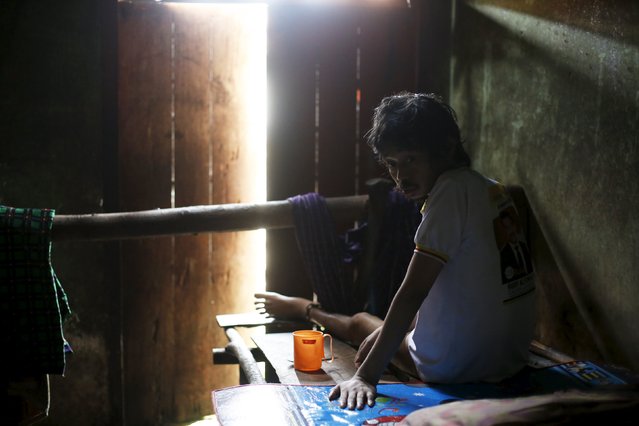
A man suffering from mental illness sits chained on a bed in his room inside his family home in Curug Sulanjana village in Serang, Banten province, Indonesia March 23, 2016. (Photo by Reuters/Beawiharta)

A man suffering from mental illness sits chained on a bed in his room inside his family home in Curug Sulanjana village in Serang, Banten province, Indonesia March 23, 2016. In a programme launched this year, Indonesia sends teams of workers into often-remote hamlets to help free patients kept in chains and ensure they get the medical treatment they need. (Photo by Reuters/Beawiharta)
Details
31 Mar 2016 11:29:00
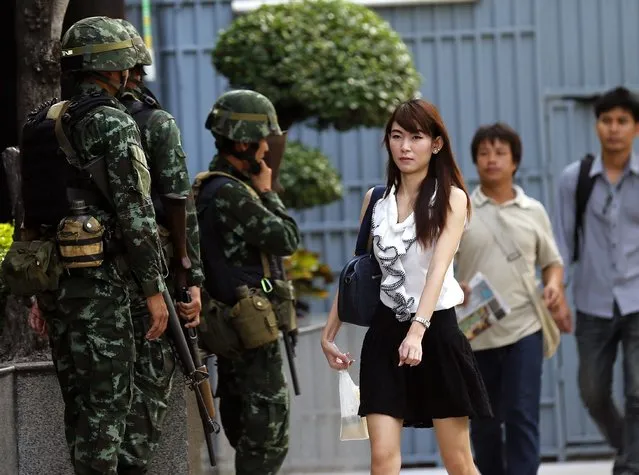
Thai office workers walk past armed soldiers standing guard outside the Shinawatra Tower Two in Bangkok, Thailand, 20 May 2014. Thai army Chief Prayuth Chan-ocha early on 20 May 2014, declared martial law giving the military full control to prevent further protest-related violence in the country. (Photo by Narong Sangnak/EPA)

Thai office workers walk past armed soldiers standing guard outside the Shinawatra Tower Two in Bangkok, Thailand, 20 May 2014. Thai army Chief Prayuth Chan-ocha early on 20 May 2014, declared martial law giving the military full control to prevent further protest-related violence in the country. The statement was issued about 3 am on 20 May (2000 GMT), according to local media reports. Prayuth has the authority to declare martial law without the consent of the government, which has had caretaker status since 09 December 2013. Thailand has been wracked by six months of non-stop protests seeking to topple the government. At least 25 people have died in political-related violence and more than 700 injured. (Photo by Narong Sangnak/EPA)
Details
21 May 2014 10:09:00