Loading...
Done
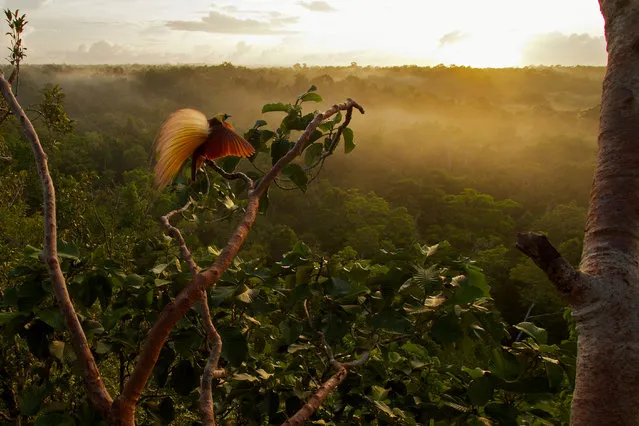
A greater bird of paradise (Paradisaea apoda) displaying in Badigaki Forest, Wokam Island (Aru Islands, Indonesia). Found here in Aru and on adjacent New Guinea, the greater bird of paradise represents about 40 different species of birds of paradise that depend on intact rainforest across the New Guinea region spanning eastern Indonesia and Papua New Guinea. With more than 80% of forest cover still intact, this region represents the largest remaining block of rainforest in the entire Asia-Pacific. (Photo by Tim Laman/naturepl.com/LDY Agency)

A greater bird of paradise (Paradisaea apoda) displaying in Badigaki Forest, Wokam Island (Aru Islands, Indonesia). Found here in Aru and on adjacent New Guinea, the greater bird of paradise represents about 40 different species of birds of paradise that depend on intact rainforest across the New Guinea region spanning eastern Indonesia and Papua New Guinea. With more than 80% of forest cover still intact, this region represents the largest remaining block of rainforest in the entire Asia-Pacific. (Photo by Tim Laman/naturepl.com/LDY Agency)
Details
14 Nov 2021 05:57:00
This photo released Saturday March 22, 2014 by Stichting Ambulance Wens or Ambulance Wish Foundation shows a giraffe at Blijdorp Zoo in Rotterdam giving a lick to terminally ill Mario Eijs on Wednesday March 19, 2014. The Stichting Ambulancewens “Ambulance Wish Foundation” offers transport for terminally ill patients who cannot walk to help fulfill a last wish, in Eijs' case to be taken to the Blijdorp Zoo in Rotterdam where he worked doing odd jobs for 25 years. (Photo by AP Photo/Stichting Ambulance Wens)

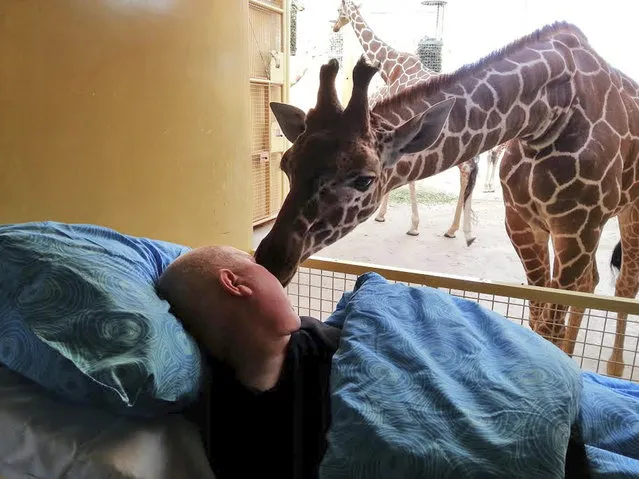
This photo released Saturday March 22, 2014 by Stichting Ambulance Wens or Ambulance Wish Foundation shows a giraffe at Blijdorp Zoo in Rotterdam giving a lick to terminally ill Mario Eijs on Wednesday March 19, 2014. The Stichting Ambulancewens “Ambulance Wish Foundation” offers transport for terminally ill patients who cannot walk to help fulfill a last wish, in Eijs' case to be taken to the Blijdorp Zoo in Rotterdam where he worked doing odd jobs for 25 years. Eijs, who has a mental handicap, is dying of a brain tumor and has difficulty walking or speaking. (Photo by AP Photo/Stichting Ambulance Wens)
Details
29 Mar 2014 14:20:00
An Indian white tiger cools off in a pond in its enclosure at Chhat Bir Zoo on the outskirts of Chandigarh on May 22, 2016. Temperatures have soared to a scorching 51 degrees Celsius in one Indian city, meteorologists said, with the ferocious heat setting a new national record. Northern Phalodi wilted as the mercury reached a new high on May 20, equivalent to 123.8 Fahrenheit, beating a 60-year-old record. (Photo by Shammi Mehra/AFP Photo)

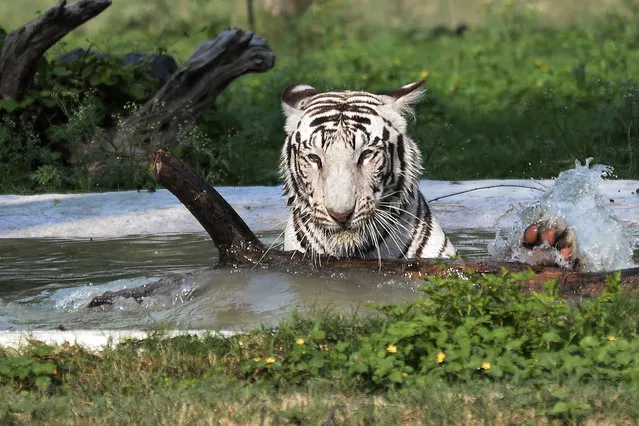
An Indian white tiger cools off in a pond in its enclosure at Chhat Bir Zoo on the outskirts of Chandigarh on May 22, 2016. Temperatures have soared to a scorching 51 degrees Celsius in one Indian city, meteorologists said, with the ferocious heat setting a new national record. Northern Phalodi wilted as the mercury reached a new high on May 20, equivalent to 123.8 Fahrenheit, beating a 60-year-old record. (Photo by Shammi Mehra/AFP Photo)
Details
29 May 2016 09:27:00
Family members collect clean water from supply pipes in Machimpur, Bangladesh on June 2, 2024, where people have been stranded after heavy flooding. Although the water has receded slowly in the last three days, there is still flood water in the low-lying areas of the city.(Photo by Md Rafayat Haque Khan/ZUMA Press Wir/Rex Features/Shutterstock)

Family members collect clean water from supply pipes in Machimpur, Bangladesh on June 2, 2024, where people have been stranded after heavy flooding. Although the water has receded slowly in the last three days, there is still flood water in the low-lying areas of the city.(Photo by Md Rafayat Haque Khan/ZUMA Press Wir/Rex Features/Shutterstock)
Details
13 Jun 2024 02:47:00
“Asaro from the Eastern Highlands”. The mudmen could not cover their faces with mud because the people of Papua New Guinea thought that the mud from the Asaro river was poisonous. So instead of covering their faces with this alleged poison, they made masks from pebbles that they heated and water from the waterfall, with unusual designs such as long or very short ears either going down to the chin or sticking up at the top, long joined eyebrows attached to the top of the ears, horns and sideways mouths. (Jimmy Nelson)

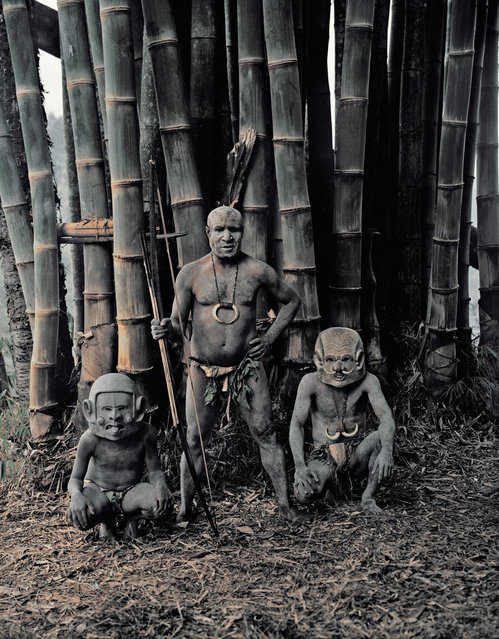
“Asaro from the Eastern Highlands”. The mudmen could not cover their faces with mud because the people of Papua New Guinea thought that the mud from the Asaro river was poisonous. So instead of covering their faces with this alleged poison, they made masks from pebbles that they heated and water from the waterfall, with unusual designs such as long or very short ears either going down to the chin or sticking up at the top, long joined eyebrows attached to the top of the ears, horns and sideways mouths. (Photo and caption by Jimmy Nelson)
Details
20 Oct 2013 08:54:00
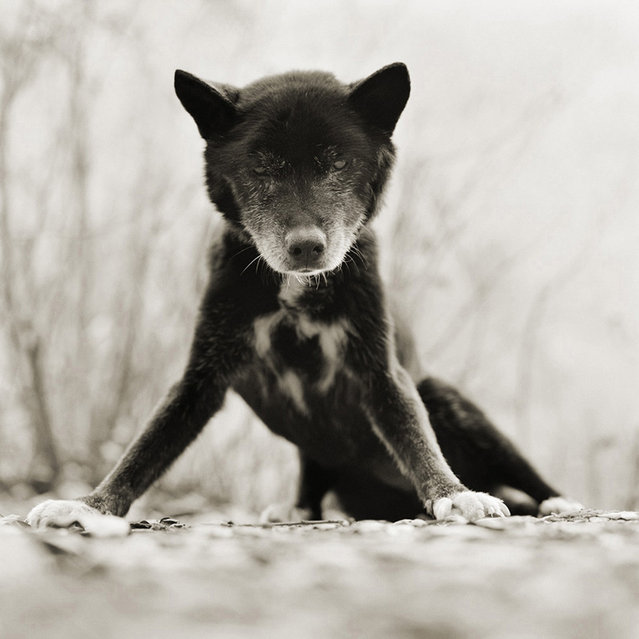
Blue, Australian Kelpie, Age 19, I

Blue, Australian Kelpie, Age 19

I am traveling to sanctuaries across the country to photograph animals that are elderly or at the end stage of their lives. I began this series shortly after I had spent a year in New Jersey helping my sister care for my mother who has Alzheimer’s disease. When mom got sick, I made a conscious decision not to photograph her. But, caring for her had a profound impact on me and I knew the experience would influence my photography. ...

Details
13 May 2012 07:33:00
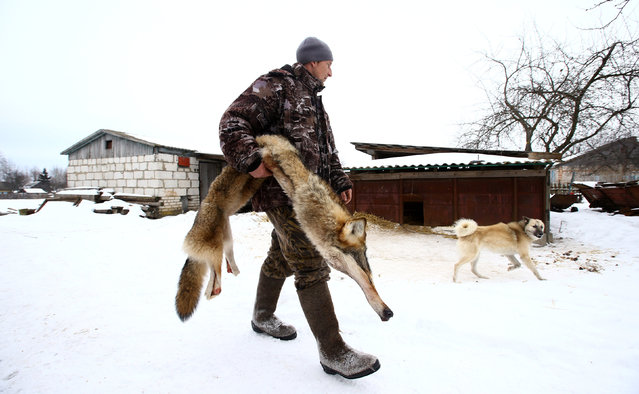
Nikolay Skidan, a hunter, carries the skin of a wolf in the village of Khrapkovo, Belarus February 1, 2017. (Photo by Vasily Fedosenko/Reuters)

Nikolay Skidan, a hunter, carries the skin of a wolf in the village of Khrapkovo, Belarus February 1, 2017. Wolf fur grows thickest in winter, so Belarussian hunter Vladimir Krivenchik only sets his traps once snow is on the ground. He and his wife live on the edge of the Chernobyl exclusion zone – 2,600 square km of land on the Belarus-Ukraine border that was contaminated by a nuclear disaster in 1986. (Photo by Vasily Fedosenko/Reuters)
Details
16 Feb 2017 00:04:00
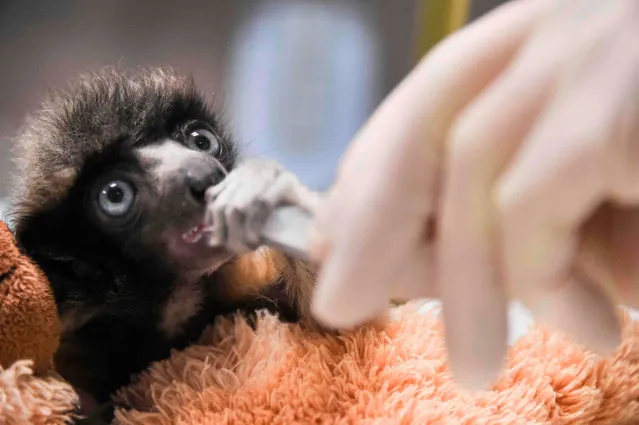
A veterinarian from the zoo of Besancon feeds “Soa”, a female crowned sifaka, in Besancon, eastern France, on February 18, 2019. The crowned sifaka is a critically endangered species from Madagascar. There were only 6 females over 20 individuals living in 7 zoos worldwide end of 2018. (Photo by Sébastien Bozon/AFP Photo)

A veterinarian from the zoo of Besancon feeds “Soa”, a female crowned sifaka, in Besancon, eastern France, on February 18, 2019. The crowned sifaka is a critically endangered species from Madagascar. There were only 6 females over 20 individuals living in 7 zoos worldwide end of 2018. (Photo by Sébastien Bozon/AFP Photo)
Details
24 Feb 2019 00:03:00