Loading...
Done
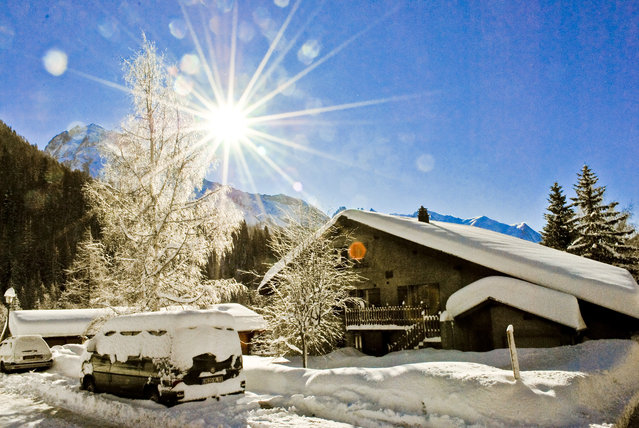
Chamonix Mont Blanc, France

Chamonix-Mont-Blanc or, more commonly, Chamonix is a commune in the Haute-Savoie département in the Rhône-Alpes region in south-eastern France. It was the site of the first Winter Olympics in 1924. The commune's population of around 9,800 ranks 865th within the country of France.
Details
27 Nov 2013 12:55:00
An unidentified man keeps a hotel employee with an explosive-laden vest at a balcony of the hotel in Brasilia on September 29, 2014. (Photo by Evaristo Sa/AFP Photo)

“A Brazilian hotel was evacuated in the capital, Brasilia, on Monday after a man took hostage an employee who was held for hours before he was safely released to police. Firefighters and police cordoned off the area and about 300 guests and other employees left the hotel – some reportedly told to leave by the man who took the employee hostage”. – Associated Press. (Photo by Evaristo Sa/AFP Photo)
Details
30 Sep 2014 08:59:00
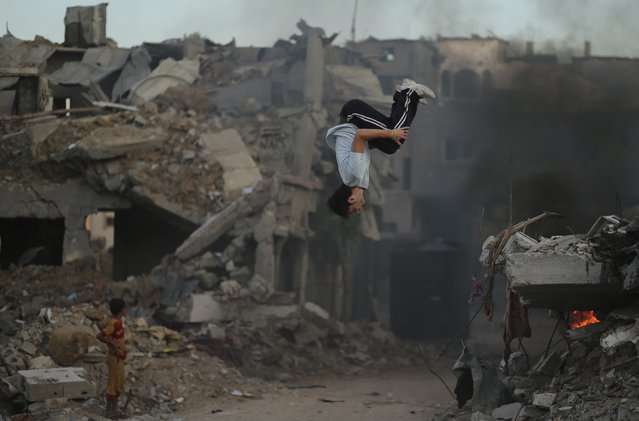
A Palestinian youth practices his Parkour skills over the ruins of houses, which witnesses said were destroyed during a seven-week Israeli offensive, in the Shejaia neighborhood east of Gaza City October 1, 2014. Some Palestinian youths aged between 13 and 17 years old, train in the devastated area as a personal initiative to develop their skills. Parkour is a physical discipline of movement focused on overcoming obstacles. (Photo by Mohammed Salem/Reuters)

A Palestinian youth practices his Parkour skills over the ruins of houses, which witnesses said were destroyed during a seven-week Israeli offensive, in the Shejaia neighborhood east of Gaza City October 1, 2014. Some Palestinian youths aged between 13 and 17 years old, train in the devastated area as a personal initiative to develop their skills. Parkour is a physical discipline of movement focused on overcoming obstacles. (Photo by Mohammed Salem/Reuters)
Details
02 Oct 2014 10:32:00
Untitled. (Photo by Ravshaniya)

Amazing gravity-defying photo manipulations by Ravshaniya, a photographer from Uzbekistan, teeters on the edge of levitation. Photo: Untitled. (Photo by Ravshaniya)
Details
27 Jun 2014 10:48:00
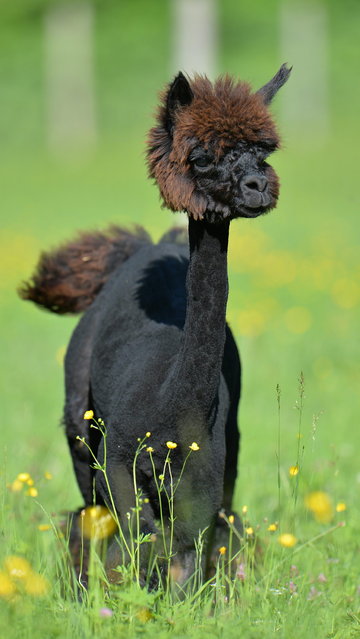
A shorn alpaca walks in a grass field at Alpaca-Land  farm in Unken in the Austrian province of Salzburg, Sunday July, 6, 2014. The annual shearing makes the animals more comfortable for the summer months. (Photo by Kerstin Joensson/AP Photo)

A shorn alpaca walks in a grass field at Alpaca-Land farm in Unken in the Austrian province of Salzburg, Sunday July, 6, 2014. The annual shearing makes the animals more comfortable for the summer months. (Photo by Kerstin Joensson/AP Photo)
Details
07 Jul 2014 13:50:00
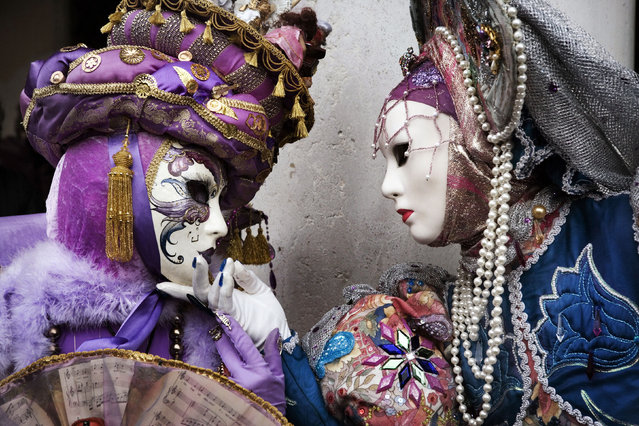
Masked participants stand in St.Mark's Square during the Carnival on February 10, 2007 in Venice, Italy.  (Photo by Marco Di Lauro)

Masked participants stand in St.Mark's Square during the Carnival on February 10, 2007 in Venice, Italy. (Photo by Marco Di Lauro). P.S. All pictures are presented in high resolution.
Details
29 Aug 2012 12:03:00
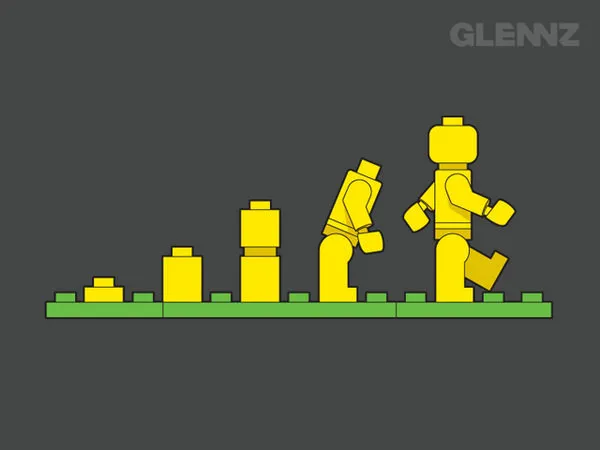
Funny Illustrations by Glenn Jones

Glenn Jones is a graphic designer and illustrator from Auckland, New Zealand. Design is one of his great hobbies and he has worked in the industry for over 15 years. Glenn Jones submitted T-shirt designs to Threadless.com before, and worked there for a few success years. Now he is concentrating on his own range of T-shirts at Glennz Tees.
The following are some designs of his T-shirts. Have fun and course you can vote to elect your favorite one in his online t-shirt store.
Details
11 Jan 2013 14:55:00
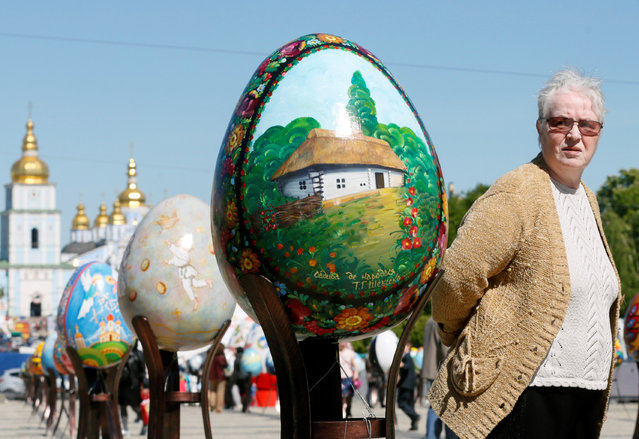
A woman looks at traditional Ukrainian Easter eggs “Pysanka”, installed as part of the upcoming celebrations of Easter, in central Kiev, Ukraine, April 29, 2016. A pysanka is a Ukrainian Easter egg, decorated with traditional Ukrainian folk designs using a wax-resist (batik) method. The word pysanka comes from the verb pysaty, “to write”, as the designs are not painted on, but written with beeswax. Many other eastern European ethnic groups decorate eggs using wax resist for Easter. These include the Belarusians, Bulgarians, Croats, Czechs, Hungarians, Lithuanians, Poles, Romanians, Serbs, Slovaks, Slovenes and Sorbs. (Photo by Valentyn Ogirenko/Reuters)

A woman looks at traditional Ukrainian Easter eggs “Pysanka”, installed as part of the upcoming celebrations of Easter, in central Kiev, Ukraine, April 29, 2016. A pysanka is a Ukrainian Easter egg, decorated with traditional Ukrainian folk designs using a wax-resist (batik) method. The word pysanka comes from the verb pysaty, “to write”, as the designs are not painted on, but written with beeswax. Many other eastern European ethnic groups decorate eggs using wax resist for Easter. These include the Belarusians, Bulgarians, Croats, Czechs, Hungarians, Lithuanians, Poles, Romanians, Serbs, Slovaks, Slovenes and Sorbs. (Photo by Valentyn Ogirenko/Reuters)

Details
30 Apr 2016 09:00:00