Loading...
Done
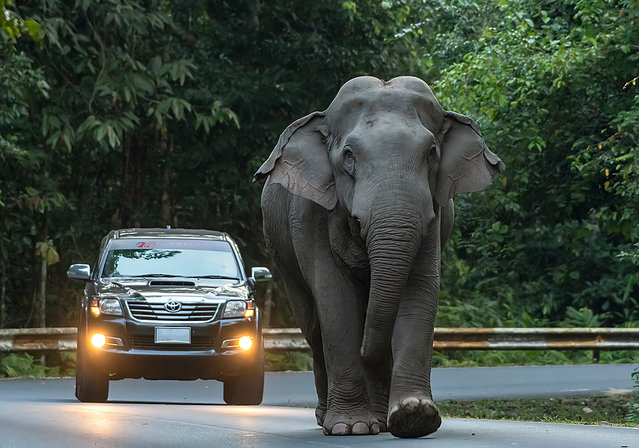
An Asian elephant called “Plai Deaw” goes for a walk on a mountain road in Nakhon Nayok, Thailand on July 11, 2022. The bull has become well known in the area for his taste for venturing out from the deep forest and emerging among cars and village homes. Thailand has an estimated 2,000 Asian elephants living in the wild but there is often conflict when they come into contact with humans on roads and in villages. A similar number of elephants are kept captive where they work in zoos and are hired out for religious festivals and weddings. (Photo by Mongkol Pitakmoo/ViralPress)

An Asian elephant called “Plai Deaw” goes for a walk on a mountain road in Nakhon Nayok, Thailand on July 11, 2022. The bull has become well known in the area for his taste for venturing out from the deep forest and emerging among cars and village homes. Thailand has an estimated 2,000 Asian elephants living in the wild but there is often conflict when they come into contact with humans on roads and in villages. A similar number of elephants are kept captive where they work in zoos and are hired out for religious festivals and weddings. (Photo by Mongkol Pitakmoo/ViralPress)
Details
04 Aug 2022 04:55:00
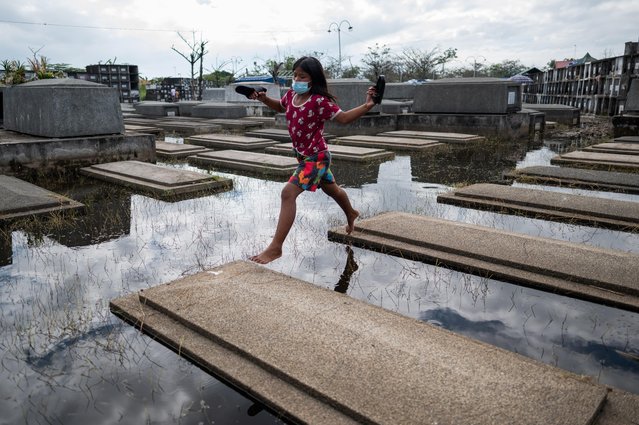
A girl jumps from a tomb, a day before the nationwide cemetery closure during All Saints' Day amid the coronavirus disease (COVID-19), at a flooded cemetery in Masantol, Pampanga, Philippines, October 28, 2021. (Photo by Lisa Marie David/Reuters)

A girl jumps from a tomb, a day before the nationwide cemetery closure during All Saints' Day amid the coronavirus disease (COVID-19), at a flooded cemetery in Masantol, Pampanga, Philippines, October 28, 2021. (Photo by Lisa Marie David/Reuters)
Details
13 Nov 2021 08:05:00
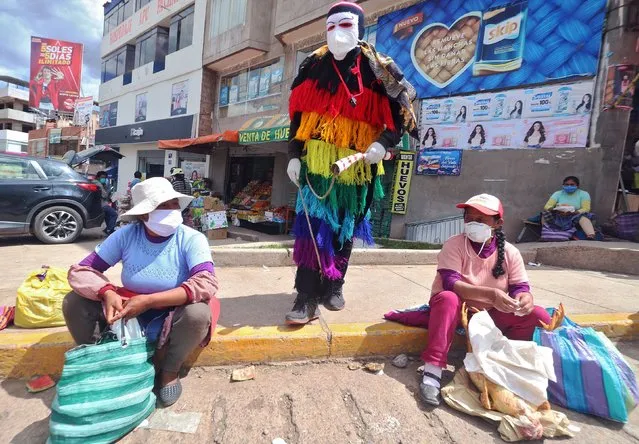
A man dressed in Andean attire as “Ukukus” or “Pabluchas”, a traditional character that acts as a vigilante imposing social order, uses a whip as a threat to force people to maintain their distance and remind them to wear face masks and gloves as a preventive measure against the novel coronavirus COVID-19, in the Vinocanchon market area in San Jeronimo district, close to the Peruvian Andean city of Cusco, on May 2, 2020. The government has identified public markets as major hotspots of the new coronavirus in Peru, where 40,459 confirmed cases and 1,124 deaths were reported on May 1. (Photo by Jose Carlos Angulo/AFP Photo)

A man dressed in Andean attire as “Ukukus” or “Pabluchas”, a traditional character that acts as a vigilante imposing social order, uses a whip as a threat to force people to maintain their distance and remind them to wear face masks and gloves as a preventive measure against the novel coronavirus COVID-19, in the Vinocanchon market area in San Jeronimo district, close to the Peruvian Andean city of Cusco, on May 2, 2020. The government has identified public markets as major hotspots of the new coronavirus in Peru, where 40,459 confirmed cases and 1,124 deaths were reported on May 1. (Photo by Jose Carlos Angulo/AFP Photo)
Details
04 May 2020 00:07:00
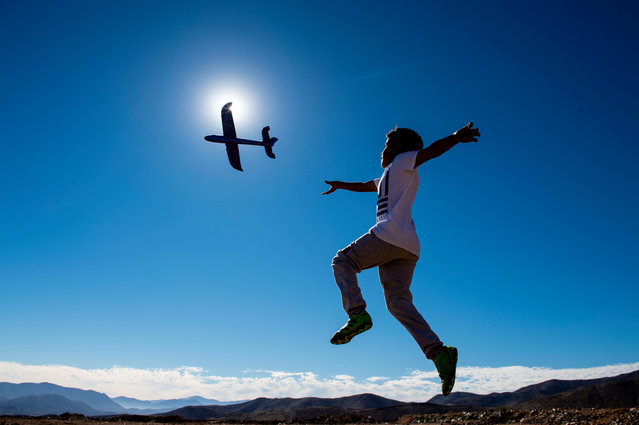
A boy plays with a toy plane on the eve of a solar eclipse, in La Higuera, Coquimbo Region, in the Atacama desert about 580 km north of Santiago, on July 1, 2019. A total solar eclipse will be visible from small parts of Chile and Argentina on July 2. (Photo by Martin Bernetti/AFP Photo)

A boy plays with a toy plane on the eve of a solar eclipse, in La Higuera, Coquimbo Region, in the Atacama desert about 580 km north of Santiago, on July 1, 2019. A total solar eclipse will be visible from small parts of Chile and Argentina on July 2. (Photo by Martin Bernetti/AFP Photo)
Details
14 May 2020 00:03:00
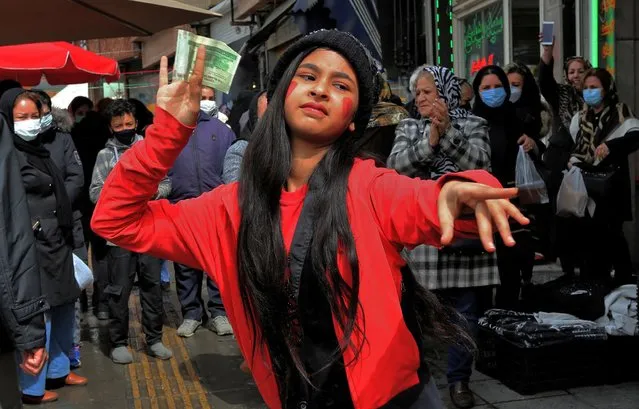
An Iranian girl wearing a costume inspired in the fictional folklore character Hajji Firuz, dances in Tehran on March 17, 2021 as Iranians prepare to celebrate Noruz, the Iranian New Year. Noruz, “new day” in Persian, is the New Year festivity celebrated in Iran as well as in Afghanistan and Kurdish regions in several countries. It begins with the spring equinox and symbolises rebirth. (Photo by Atta Kenare/AFP Photo)

An Iranian girl wearing a costume inspired in the fictional folklore character Hajji Firuz, dances in Tehran on March 17, 2021 as Iranians prepare to celebrate Noruz, the Iranian New Year. Noruz, “new day” in Persian, is the New Year festivity celebrated in Iran as well as in Afghanistan and Kurdish regions in several countries. It begins with the spring equinox and symbolises rebirth. (Photo by Atta Kenare/AFP Photo)
Details
20 Mar 2021 10:35:00
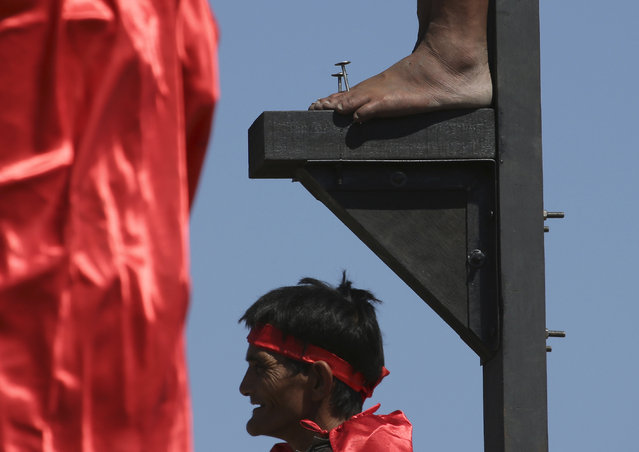
The feet of a Filipino penitent is nailed to a wooden cross during Good Friday rituals on April 3, 2015 at Cutud, Pampanga province, northern Philippines. Several Filipino devotees had themselves nailed to crosses Friday to remember Jesus Christ's suffering and death, an annual rite frowned upon by church leaders in this predominantly Roman Catholic country. (Photo by Aaron Favila/AP Photo)

The feet of a Filipino penitent is nailed to a wooden cross during Good Friday rituals on April 3, 2015 at Cutud, Pampanga province, northern Philippines. Several Filipino devotees had themselves nailed to crosses Friday to remember Jesus Christ's suffering and death, an annual rite frowned upon by church leaders in this predominantly Roman Catholic country. (Photo by Aaron Favila/AP Photo)
Details
05 Apr 2015 11:14:00
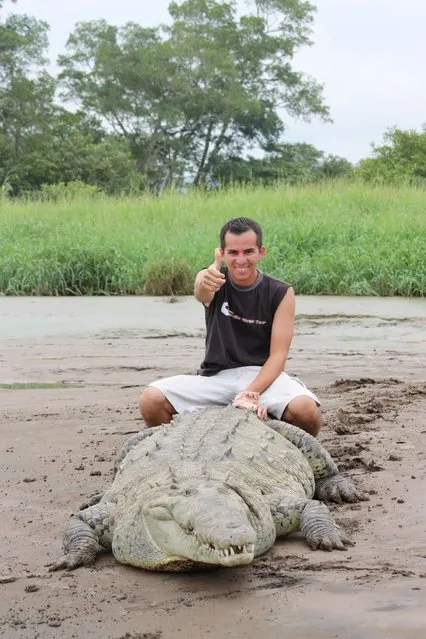
A tour guide shows a thumbs up as he sits on top of a crocodile on the Tarcoles river in Tarcoles, Costa Rica. (Photo and caption by Barcroft Media)

To most of us, hand-feeding crocodiles might sound like a one-way ticket to a watery grave. But for Jose Eduardo Chaves Salas, 32, coming within inches of the fearsome creatures’ razor-sharp teeth is all in a day’s work. He runs Jose's Crocodile River Tour on the Tarcoles River in Costa Rica, where tourists can watch him feed crocs up to 17 feet long. Photo: A tour guide shows a thumbs up as he sits on top of a crocodile on the Tarcoles river in Tarcoles, Costa Rica. (Photo and caption by Barcroft Media)
Details
20 Oct 2013 09:06:00
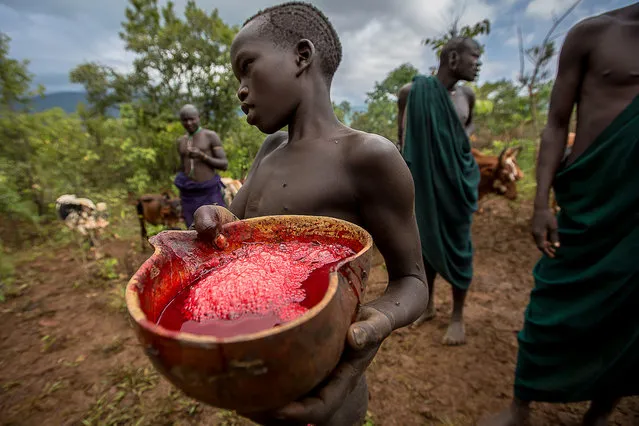
Surma tribe at a blood drinking ritual

“Suri tribes boys are collecting the blood of a cow in a calabash the vein of the animal was opened with a bow and an arrow. Like most pastoralists the Surma people are drinking fresh blood which is from the cow vein. Only some minutes after the wound at the vein is closed again the animals are back with their herd”. (Photo and caption by Anthony Pappone)
Details
17 Nov 2013 11:12:00