Loading...
Done
A man watches a classic Turkish movie from his car at a temporary drive-in theatre held in a shopping mall car park amid the ongoing Covid-19 pandemic on May 28, 2020 in Istanbul, Turkey. Istanbul and other major cities across Turkey have begun to ease restrictions and have started preparations for the reopening of some locations, shops and services as infection rates continue to drop. As of May 28, Turkey has reported 4,461 coronavirus-related deaths and 160,979 confirmed cases. (Photo by Chris McGrath/Getty Images)

A man watches a classic Turkish movie from his car at a temporary drive-in theatre held in a shopping mall car park amid the ongoing Covid-19 pandemic on May 28, 2020 in Istanbul, Turkey. Istanbul and other major cities across Turkey have begun to ease restrictions and have started preparations for the reopening of some locations, shops and services as infection rates continue to drop. As of May 28, Turkey has reported 4,461 coronavirus-related deaths and 160,979 confirmed cases. (Photo by Chris McGrath/Getty Images)
Details
08 Jun 2020 00:05:00
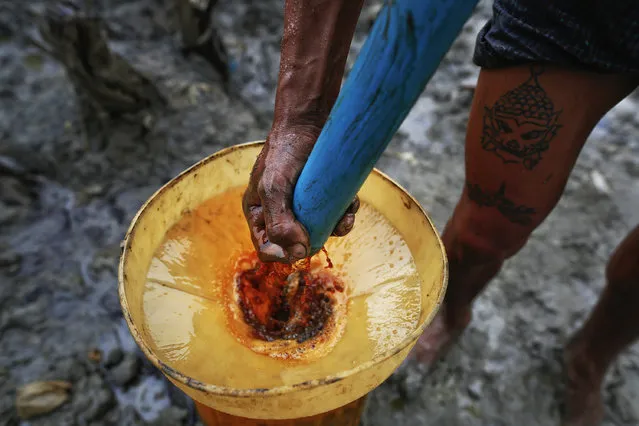
Ko Min, 26, manually extracts oil from one of three 300 feet deep wells he works on in the Minhla township of the Magwe district October 27, 2013. Everyday, Ko Min makes around $30 extracting crude oil from three small wells after he bought rights to use them for close to $1000 from a farmer who owns the land. (Photo by Damir Sagolj/Reuters)

Ko Min, 26, manually extracts oil from one of three 300 feet deep wells he works on in the Minhla township of the Magwe district October 27, 2013. Everyday, Ko Min makes around $30 extracting crude oil from three small wells after he bought rights to use them for close to $1000 from a farmer who owns the land. In Myanmar, an impoverished country rich with natural resources, people from poor communities find ways to supplement their income by exploiting such resources, such as the Minhla township, traditionally rich with oil, often using primitive and dangerous methods. (Photo by Damir Sagolj/Reuters)
Details
21 Apr 2014 10:06:00
Muslims women walk to the prayer hall of a mosque for a mass prayer during Eid al-Adha celebrations at Kuala Lumpur, Malaysia, on June 17, 2024. (Photo by Hasnoor Hussain/Reuters)

Muslims women walk to the prayer hall of a mosque for a mass prayer during Eid al-Adha celebrations at Kuala Lumpur, Malaysia, on June 17, 2024. (Photo by Hasnoor Hussain/Reuters)
Details
11 Sep 2024 04:07:00
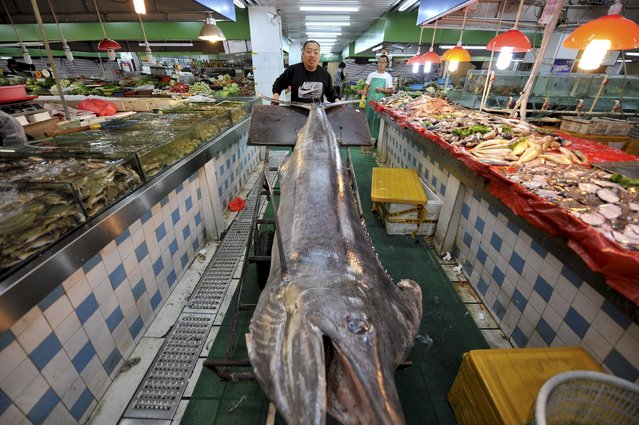
A seafood vendor moves a giant swordfish to his stall at a market in Qingdao, Shandong province, China, September 12, 2015. (Photo by Reuters/Stringer)

A seafood vendor moves a giant swordfish to his stall at a market in Qingdao, Shandong province, China, September 12, 2015. The 4.1-metre-long (13.5 feet) swordfish, weighed about 309.5 kilograms (682 lbs), was caught by local fishermen on Friday, local media reported. (Photo by Reuters/Stringer)
Details
13 Sep 2015 13:44:00
A tourist lies down on the tomato and water soup that has formed on August 30, 2023 in Bunol, Spain. Spain's tomato throwing party in the streets of Bunol, Valencia brings together almost 20,000 people, with some 150,000 kilos of tomatoes thrown each year, this year with a backdrop of high food prices affected by Spain's historic drought. (Photo by Zowy Voeten/Getty Images)

A tourist lies down on the tomato and water soup that has formed on August 30, 2023 in Bunol, Spain. Spain's tomato throwing party in the streets of Bunol, Valencia brings together almost 20,000 people, with some 150,000 kilos of tomatoes thrown each year, this year with a backdrop of high food prices affected by Spain's historic drought. (Photo by Zowy Voeten/Getty Images)
Details
11 Nov 2024 03:38:00
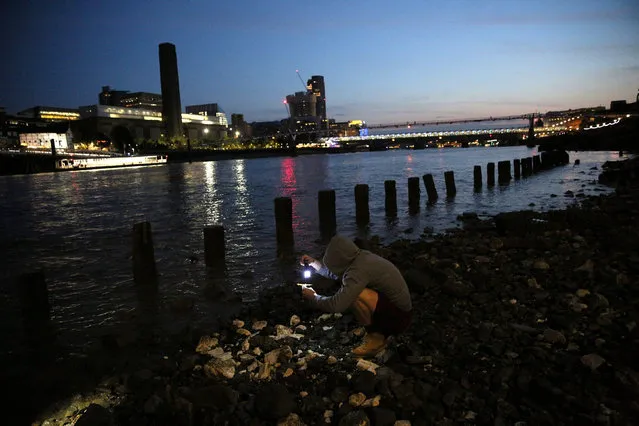
A mudlark uses a torch to look for items on the bank of the River Thames in London, Britain June 06, 2016. Mudlarking is believed to trace its origins to the 18th and 19th century, when scavengers searched the Thames' shores for items to sell. These days, history and archaeology fans are the ones hoping to find old relics such as coins, ceramics, artifacts or everyday items from across centuries. They wait for the low tide and then scour specific areas of exposed shores. "If you're in a field you could be out all day long, with the river you're restricted to about two or three hours," mudlark Nick Stevens said. While many just use the naked eye for their searches, others rely on metal detectors for which a permit from the Port of London Authority is needed. Digging also requires consent. (Photo by Neil Hall/Reuters)

A mudlark uses a torch to look for items on the bank of the River Thames in London, Britain June 06, 2016. Mudlarking is believed to trace its origins to the 18th and 19th century, when scavengers searched the Thames' shores for items to sell. These days, history and archaeology fans are the ones hoping to find old relics such as coins, ceramics, artifacts or everyday items from across centuries. their finds with the Portable Antiquities Scheme. Any item over 300 years old must be recorded. (Photo by Neil Hall/Reuters)
Details
27 Aug 2016 10:43:00
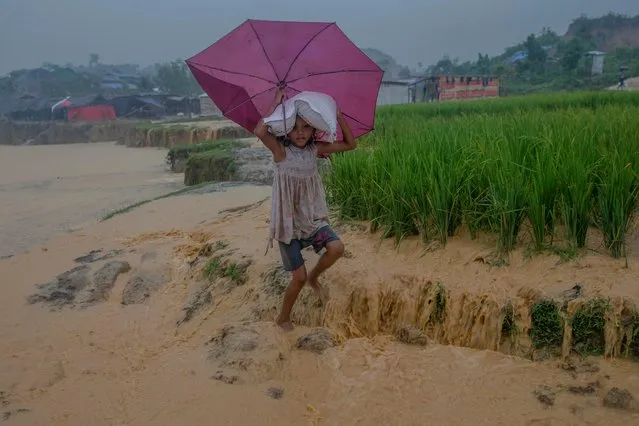
A Rohingya Muslim girl, Saira Begum carries food items distributed in aid as she walks towards her shelter in Taiy Khali refugee camp, Bangladesh, Tuesday, September 19, 2017. With a mass exodus of Rohingya Muslims sparking accusations of ethnic cleansing from the United Nations and others, Myanmar leader Aung San Suu Kyi on Tuesday said her country does not fear international scrutiny and invited diplomats to see some areas for themselves. (Photo by Dar Yasin/AP Photo)

A Rohingya Muslim girl, Saira Begum carries food items distributed in aid as she walks towards her shelter in Taiy Khali refugee camp, Bangladesh, Tuesday, September 19, 2017. With a mass exodus of Rohingya Muslims sparking accusations of ethnic cleansing from the United Nations and others, Myanmar leader Aung San Suu Kyi on Tuesday said her country does not fear international scrutiny and invited diplomats to see some areas for themselves. (Photo by Dar Yasin/AP Photo)
Details
04 Jun 2018 00:05:00
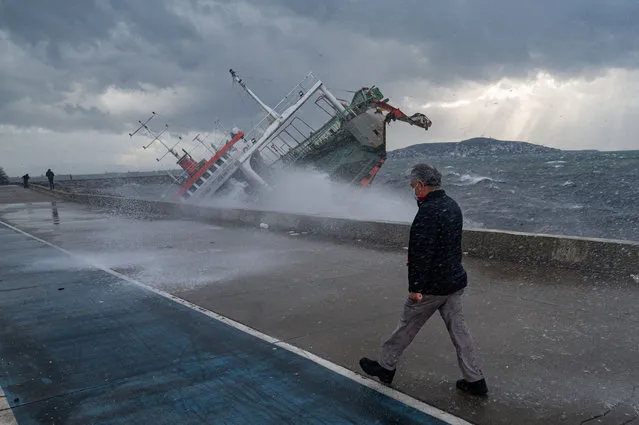
A man walks near a boat which has capsized due to strong winds in Istanbul on November 30, 2021. Strong winds continue to blow across Istanbul where the Bosphorus strait is temporarily closed to boat traffic. Four people were killed and dozens injured on Monday in Istanbul, which was hit by high winds. (Photo by Yasin Akgul/AFP Photo)

A man walks near a boat which has capsized due to strong winds in Istanbul on November 30, 2021. Strong winds continue to blow across Istanbul where the Bosphorus strait is temporarily closed to boat traffic. Four people were killed and dozens injured on Monday in Istanbul, which was hit by high winds. (Photo by Yasin Akgul/AFP Photo)
Details
25 Jul 2022 10:19:00