Loading...
Done
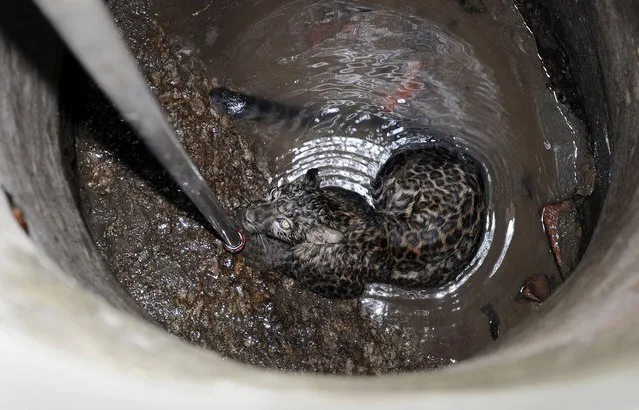
A leopard trapped in a well looks up to forest officials on the premises of the Kamakhya temple in Gauhati, India, Thursday, April 4, 2013.  According to locals, the leopard fell into the well while scouring for food. (Photo by Anupam Nath/AP Photo)

A leopard trapped in a well looks up to forest officials on the premises of the Kamakhya temple in Gauhati, India, Thursday, April 4, 2013. According to locals, the leopard fell into the well while scouring for food. (Photo by Anupam Nath/AP Photo)
Details
05 Apr 2013 08:50:00
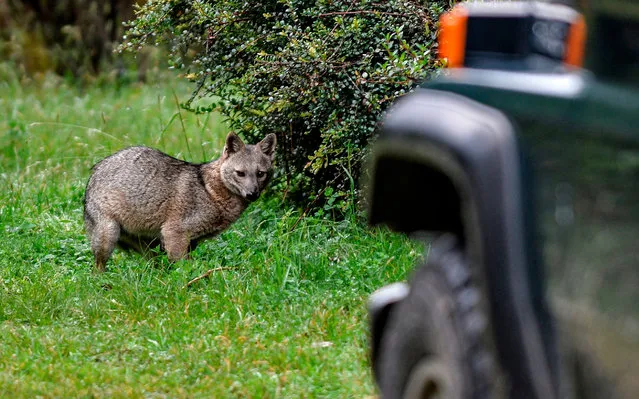
A crab-eating fox (Cerdocyon thous), also known as the forest fox, wood fox, or maikong, is seen in the wild in the municipality of Guasca, some 50 km from Bogota, on May 16, 2020. (Photo by Diana Sánchez/AFP Photo)

A crab-eating fox (Cerdocyon thous), also known as the forest fox, wood fox, or maikong, is seen in the wild in the municipality of Guasca, some 50 km from Bogota, on May 16, 2020. (Photo by Diana Sánchez/AFP Photo)
Details
03 Jun 2020 00:03:00
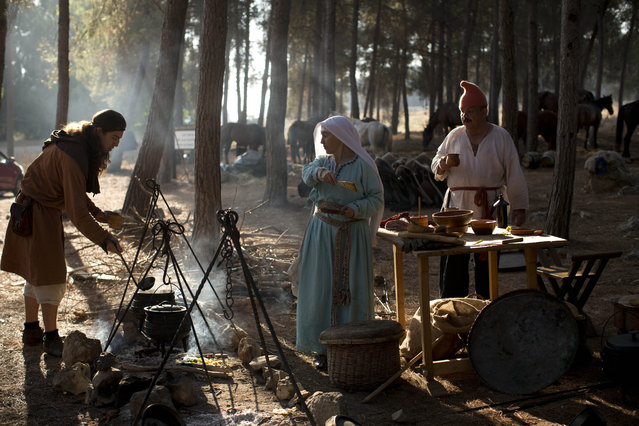
In this Saturday, July 4, 2015 photo, Israeli and Russian members of knight clubs cook their breakfast before the reenactment of the Battle of Hattin in Lavi Forest, northern Israel. (Photo by Oded Balilty/AP Photo)

In this Saturday, July 4, 2015 photo, Israeli and Russian members of knight clubs cook their breakfast before the reenactment of the Battle of Hattin in Lavi Forest, northern Israel. About a third of the participants arrived with their elaborate gear from Russia. The project is supported by the Lower Galilee Regional Council. (Photo by Oded Balilty/AP Photo)
Details
06 Jul 2015 09:58:00
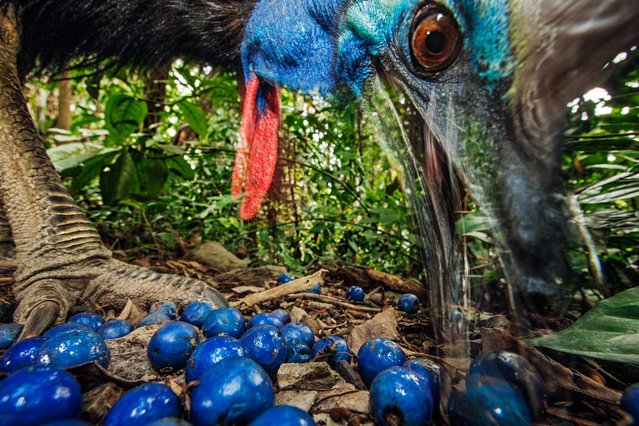
“Cassowaries are large, flightless birds related to emus and (more distantly) to ostriches, rheas, and kiwis”, writes Olivia Judson in the September issue of National Geographic magazine. (Photo by Christian Ziegler/National Geographic)

“Cassowaries are large, flightless birds related to emus and (more distantly) to ostriches, rheas, and kiwis”, writes Olivia Judson in the September issue of National Geographic magazine. How large? People-size: Adult males stand well over five foot five and top 110 pounds. Females are even taller, and can weigh more than 160 pounds. Dangerous when roused, they’re shy and peaceable when left alone. But even birds this big and tough are prey to habitat loss. The dense New Guinea and Australia rain forests where they live have dwindled. Today cassowaries might number 1,500 to 2,000. And because they help shape those same forests – by moving seeds from one place to another – “if they vanish”, Judson writes, “the structure of the forest would gradually change” too. (Photo by Christian Ziegler/National Geographic)

Details
06 Jan 2014 12:21:00
Hucul horses play in the wild meadows and forests near Odrzychowa in southeastern Poland on October 18, 2014. Huculs, a primitive breed of horse, escaped total extinction due to the efforts of scientists and Polish farmers. (Photo by Janek Skarzynski/AFP Photo)

Hucul horses play in the wild meadows and forests near Odrzychowa in southeastern Poland on October 18, 2014. Huculs, a primitive breed of horse, escaped total extinction due to the efforts of scientists and Polish farmers. (Photo by Janek Skarzynski/AFP Photo)
Details
25 Oct 2014 14:08:00
Flames from the Falls Fire burn on a hillside along South Main Divide Road in the Cleveland National Forest as firefighters drive through the area on Monday, August 5, 2013. (Photo by Kurt Miller/AP Photo/The Press-Enterprise)

Flames from the Falls Fire burn on a hillside along South Main Divide Road in the Cleveland National Forest as firefighters drive through the area on Monday, August 5, 2013. (Photo by Kurt Miller/AP Photo/The Press-Enterprise)
Details
09 Aug 2013 09:20:00
People visit the Yellow Sea forest park as the leaves of Dawn Redwoods turn red and yellow in winter in Yancheng, eastern China's Jiangsu province on December 4, 2025. (Photo by AFP Photo/China Stringer Network)

People visit the Yellow Sea forest park as the leaves of Dawn Redwoods turn red and yellow in winter in Yancheng, eastern China's Jiangsu province on December 4, 2025. (Photo by AFP Photo/China Stringer Network)
Details
10 Dec 2025 05:04:00
The coendou porcupine couple 'Joppi' (L) and 'Fletcher' nibble at a vegetables in their enclosure at the zoo in Frankfurt am Main, Germany, 03 December 2015. Coendou porcupines are nocturnal rodents related to porcupines and guinea pigs and native to the rain forests of Central and South America as well as Trinidad. (Photo by Arne Dedert/EPA)

The coendou porcupine couple 'Joppi' (L) and 'Fletcher' nibble at a vegetables in their enclosure at the zoo in Frankfurt am Main, Germany, 03 December 2015. Coendou porcupines are nocturnal rodents related to porcupines and guinea pigs and native to the rain forests of Central and South America as well as Trinidad. (Photo by Arne Dedert/EPA)
Details
05 Dec 2015 08:03:00