Loading...
Done
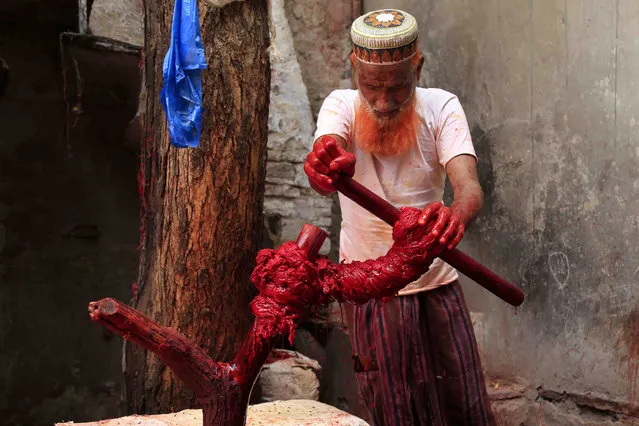
An Indian Muslim worker applies colors on Kalavas (sacred threads) in Ajmer in the Indian state of Rajasthan on May 24, 2018. (Photo by Himanshu Sharma/AFP Photo)

An Indian Muslim worker applies colors on Kalavas (sacred threads) in Ajmer in the Indian state of Rajasthan on May 24, 2018. (Photo by Himanshu Sharma/AFP Photo)
Details
30 May 2018 00:01:00
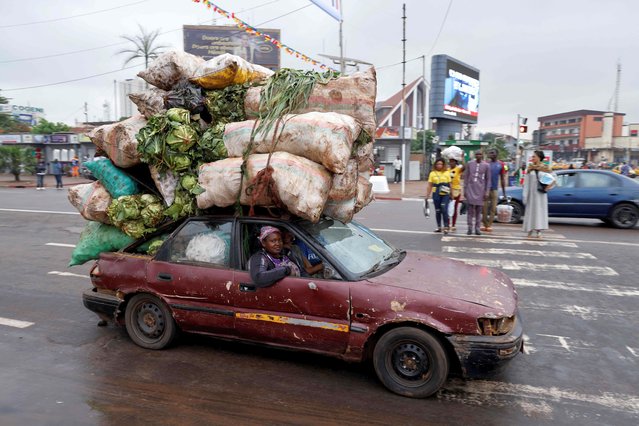
A motorist drives a car overloaded with vegetables and fruit on a street in Yaounde on July 25, 2022, prior to the French president's visit. (Photo by Ludovic Marin/AFP Photo)

A motorist drives a car overloaded with vegetables and fruit on a street in Yaounde on July 25, 2022, prior to the French president's visit. (Photo by Ludovic Marin/AFP Photo)
Details
29 Jul 2022 05:22:00
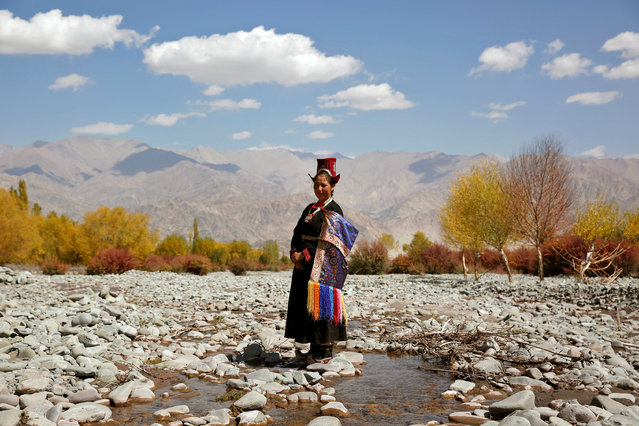
Tsewang Dolma, 33, a farmer and housewife poses for a photograph in Matho, a village nestled high in the Indian Himalayas, India September 29, 2016. When asked how living in the world's fastest growing major economy had affected life, Dolma replied: “Our culture is spoiled now. We don't wear our traditional dress”. (Photo by Cathal McNaughton/Reuters)

Tsewang Dolma, 33, a farmer and housewife poses for a photograph in Matho, a village nestled high in the Indian Himalayas, India September 29, 2016. When asked how living in the world's fastest growing major economy had affected life, Dolma replied: “Our culture is spoiled now. We don't wear our traditional dress”. (Photo by Cathal McNaughton/Reuters)
Details
13 Oct 2016 11:32:00
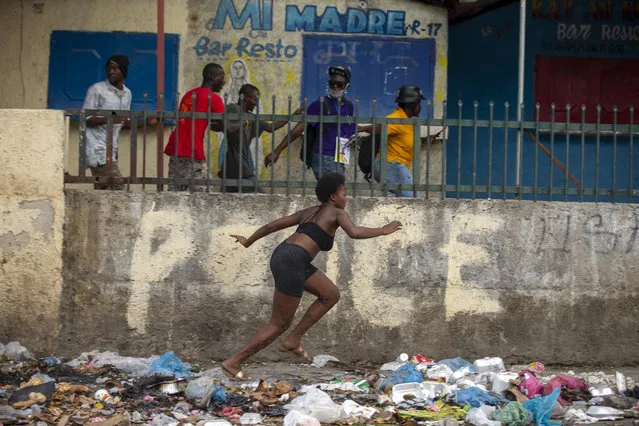
Protesters run away as the police fires tear gas during a nationwide strike demanding the resignation of Haitian President Jovenel Moise in Port-au-Prince, Haiti, Tuesday, February 2, 2021. (Photo by Dieu Nalio Chery/AP Photo)

Protesters run away as the police fires tear gas during a nationwide strike demanding the resignation of Haitian President Jovenel Moise in Port-au-Prince, Haiti, Tuesday, February 2, 2021. (Photo by Dieu Nalio Chery/AP Photo)
Details
10 Feb 2021 10:56:00
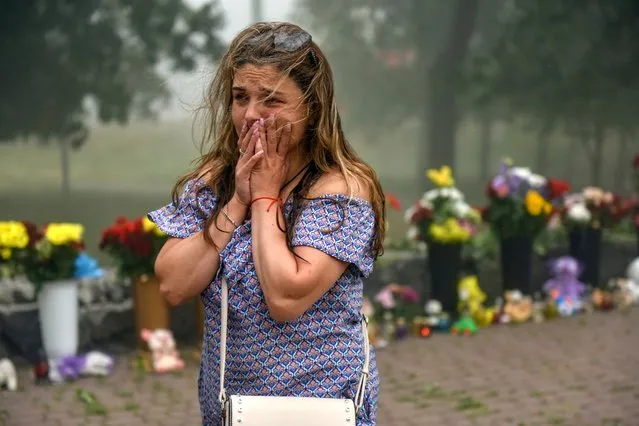
A woman cries near the flowers, brought to  the destroyed Amstor shopping mall in Kremenchuk, Ukraine, 28 June 2022. At least 18 people died following Russian airstrikes on the crowded shopping mall, the State Emergency Service (SES) of Ukraine said in a Telegram post. The Amstor shopping center one-story building was hit by Russian rockets on 27 June afternoon. (Photo by Oleg Petrasyuk/EPA/EFE)

A woman cries near the flowers, brought to the destroyed Amstor shopping mall in Kremenchuk, Ukraine, 28 June 2022. At least 18 people died following Russian airstrikes on the crowded shopping mall, the State Emergency Service (SES) of Ukraine said in a Telegram post. The Amstor shopping center one-story building was hit by Russian rockets on 27 June afternoon. (Photo by Oleg Petrasyuk/EPA/EFE)
Details
30 Jun 2022 05:13:00
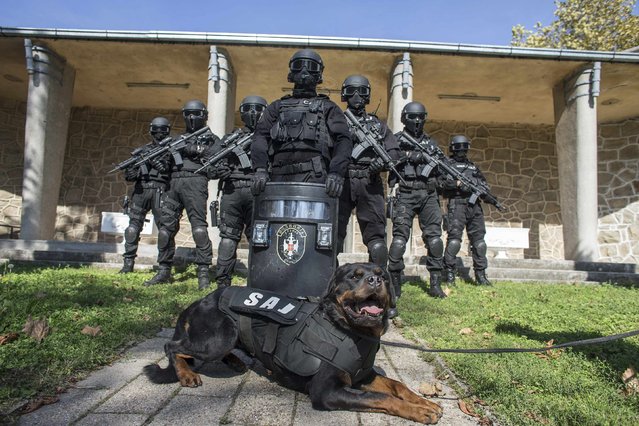
Serbian police officers of the Special Anti-Terrorist Unit pose for a picture in their base outside Belgrade October 8, 2014. (Photo by Marko Djurica/Reuters)

Serbian police officers of the Special Anti-Terrorist Unit pose for a picture in their base outside Belgrade October 8, 2014. When the killing of an unarmed black teenager by a white policeman in Ferguson, Missouri, in August sparked sometimes violent protests, the response of police in camouflage gear and armoured vehicles wielding stun grenades and assault rifles seemed more like a combat operation than a public order measure. Some U.S. police departments have recently acquired U.S. military-surplus hardware from wars abroad, but there are many law enforcers around the world whose rules of engagement also allow the use of lethal force with relatively few restrictions. But for every regulation that gives police wide scope to use firearms, there is another code that sharply limits their use. In Serbia, police may use measures ranging from batons to special vehicles, water cannon and tear gas on groups of people who have gathered illegally and are behaving in a way that is violent or could cause violence, but they may use firearms only when life is endangered. (Photo by Marko Djurica/Reuters)
Details
27 Nov 2014 14:53:00
A man wearing a costume of the StarWars protagonist Din Djarin poses in front of a giant replica of the Razor Crest, a gunship from the StarWars spinoff series “The Mandalorian” used by the hit TV show's mysterious bounty hunter to roam the galaxy's outer reaches, in a park of the eastern Siberian city of Yakutsk on March 14, 2021. (Photo by Evgeniy Sofroneyev/AFP Photo)

A man wearing a costume of the StarWars protagonist Din Djarin poses in front of a giant replica of the Razor Crest, a gunship from the StarWars spinoff series “The Mandalorian” used by the hit TV show's mysterious bounty hunter to roam the galaxy's outer reaches, in a park of the eastern Siberian city of Yakutsk on March 14, 2021. (Photo by Evgeniy Sofroneyev/AFP Photo)
Details
19 Jan 2022 06:09:00
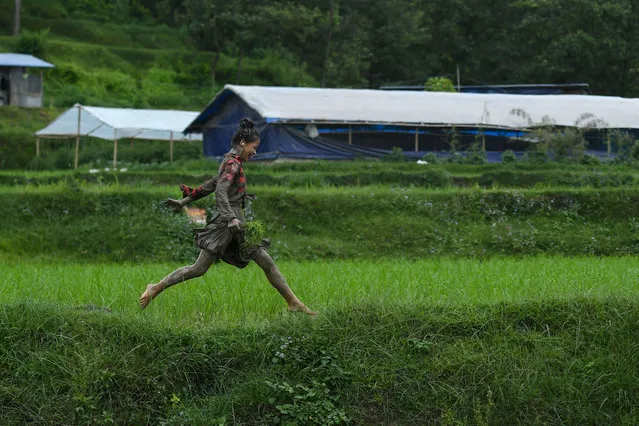
A girl walks along rice paddy fields during “National Paddy Day”, which marks the start of the annual rice planting season, in Tokha village on the outskirts of Kathmandu on June 29, 2020. Splashing mud and drinking local rice beer, Nepali farmers this week celebrated National Paddy Day to mark the beginning of the rice-planting season, despite some coronavirus lockdown measures still in place. Traditional farming songs and laughter echoed in the air as farmers waded into waterlogged fields to sow green paddy. (Photo by Prakash Mathema/AFP Photo)

A girl walks along rice paddy fields during “National Paddy Day”, which marks the start of the annual rice planting season, in Tokha village on the outskirts of Kathmandu on June 29, 2020. Splashing mud and drinking local rice beer, Nepali farmers this week celebrated National Paddy Day to mark the beginning of the rice-planting season, despite some coronavirus lockdown measures still in place. Traditional farming songs and laughter echoed in the air as farmers waded into waterlogged fields to sow green paddy. (Photo by Prakash Mathema/AFP Photo)
Details
02 Aug 2020 00:01:00