Loading...
Done
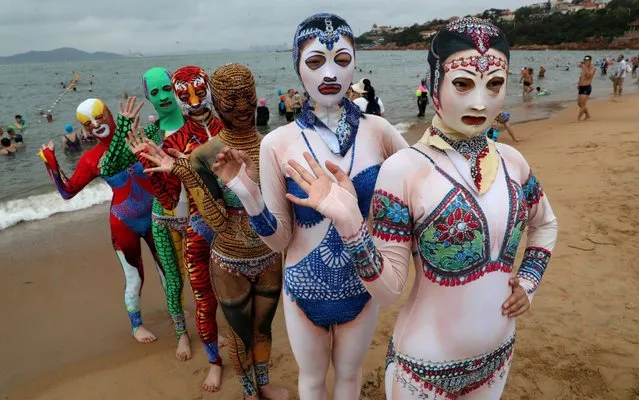
Models wearing facekinis, popular with female bathers who want to protect more than just their modesty, pose for a picture on a beach on August 5, 2019 in the Chinese seaside city of Qingdao, Shandong Province of China. (Photo by Xu Chongde/VCG via Getty Images)

Models wearing facekinis, popular with female bathers who want to protect more than just their modesty, pose for a picture on a beach on August 5, 2019 in the Chinese seaside city of Qingdao, Shandong Province of China. (Photo by Xu Chongde/VCG via Getty Images)
Details
09 Aug 2019 00:01:00
The Aurora Borealis (Northern Lights) is seen in the sky in Ivalo of Lapland, Finland on September 27, 2019. (Photo by Alexander Kuznetsov/Reuters)

The Aurora Borealis (Northern Lights) is seen in the sky in Ivalo of Lapland, Finland on September 27, 2019. (Photo by Alexander Kuznetsov/Reuters)
Details
09 Oct 2019 00:01:00
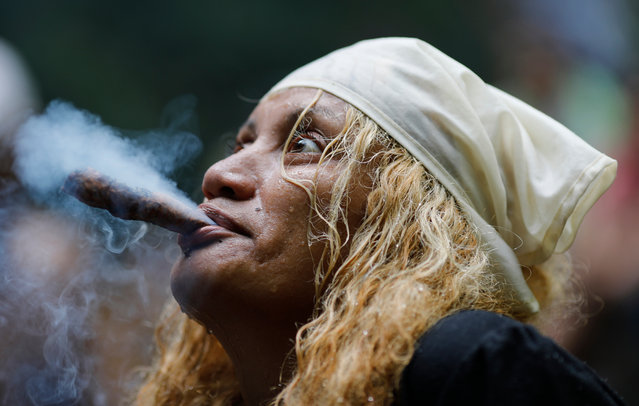
In this photo taken October 12, 2019, a spiritual healer known as a “madrina” starts a ritual on Sorte Mountain where followers of indigenous goddess Maria Lionza gather annually in Venezuela's Yaracuy state. While her followers gather on the mountain for weeks at this time of the year, October 12 marks the biggest gathering, coinciding with Indigenous People's Day, known in Latin America as “Dia de la Raza”. (Photo by Ariana Cubillos/AP Photo)

In this photo taken October 12, 2019, a spiritual healer known as a “madrina” starts a ritual on Sorte Mountain where followers of indigenous goddess Maria Lionza gather annually in Venezuela's Yaracuy state. While her followers gather on the mountain for weeks at this time of the year, October 12 marks the biggest gathering, coinciding with Indigenous People's Day, known in Latin America as “Dia de la Raza”. (Photo by Ariana Cubillos/AP Photo)
Details
17 Oct 2019 00:05:00
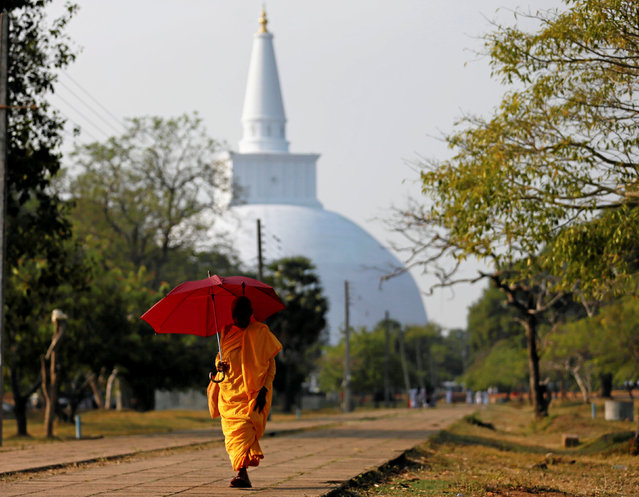
A Buddhist nun walks along a path as a stupa is seen at a temple in Anuradhapura, Sri Lanka October 16, 2016. (Photo by Dinuka Liyanawatte/Reuters)

A Buddhist nun walks along a path as a stupa is seen at a temple in Anuradhapura, Sri Lanka October 16, 2016. (Photo by Dinuka Liyanawatte/Reuters)
Details
17 Oct 2016 10:33:00
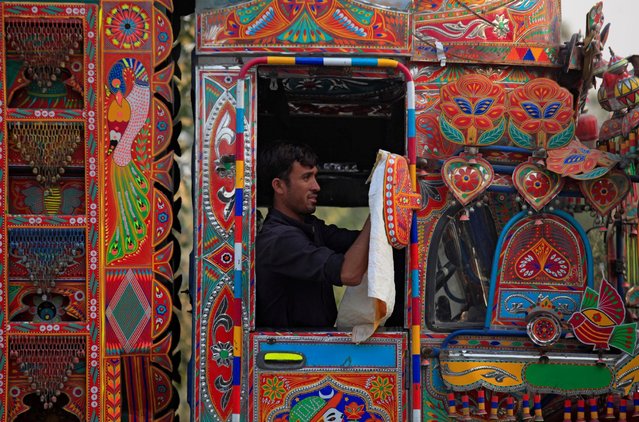
A truck driver cleans the mirror of his decorated truck in Charsadda outside Peshawar, Pakistan October 18, 2016. (Photo by Fayaz Aziz/Reuters)

A truck driver cleans the mirror of his decorated truck in Charsadda outside Peshawar, Pakistan October 18, 2016. (Photo by Fayaz Aziz/Reuters)
Details
10 Nov 2016 12:15:00
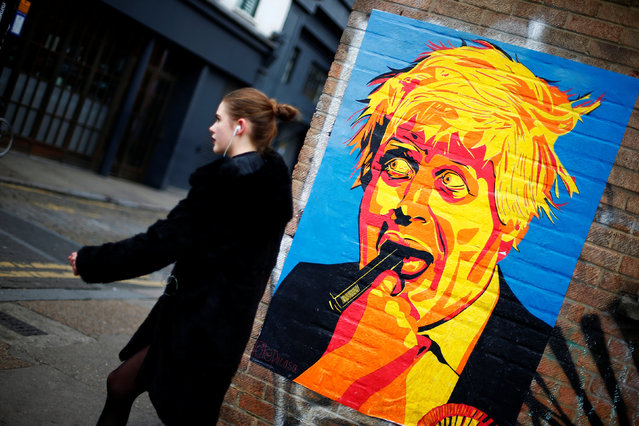
A woman walks past a caricature of Britain's Foreign Secretary Boris Johnson in east London, Britain November 18, 2016. (Photo by Andrew Winning/Reuters)

A woman walks past a caricature of Britain's Foreign Secretary Boris Johnson in east London, Britain November 18, 2016. (Photo by Andrew Winning/Reuters)
Details
07 Dec 2016 12:33:00
Kang Na-ra, a North Korean defector who is now a beauty YouTuber, points at her lips after putting on a lipstick made by North Korea, in Seoul, South Korea, June 11, 2019. (Photo by Kim Hong-Ji/Reuters)

Kang Na-ra, a North Korean defector who is now a beauty YouTuber, points at her lips after putting on a lipstick made by North Korea, in Seoul, South Korea, June 11, 2019. (Photo by Kim Hong-Ji/Reuters)
Details
06 Dec 2019 00:05:00
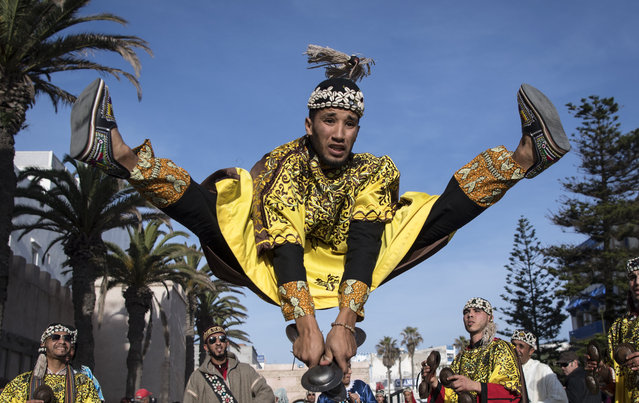
A Gnawa traditional group performs in the city of Essaouira on December 14, 2019, to celebrate the decision of adding the Gnawa culture to UNESCO's list of Intangible Cultural Heritage of Humanity. Gnawa culture, a centuries-old Moroccan practice rooted in music, African rituals and Sufi traditions, was added to UNESCO's list of Intangible Cultural Heritage of Humanity earlier in the week. Gnawa refers to a “set of musical productions, fraternal practices and therapeutic rituals where the secular mixes with the sacred”, according to the nomination submitted by Morocco. Often dressed in colourful outfits, Gnawa musicians play the guenbri, a type of lute with three strings, accompanied by steel castanets called krakebs. (Photo by Fadel Senna/AFP Photo)

A Gnawa traditional group performs in the city of Essaouira on December 14, 2019, to celebrate the decision of adding the Gnawa culture to UNESCO's list of Intangible Cultural Heritage of Humanity. Gnawa culture, a centuries-old Moroccan practice rooted in music, African rituals and Sufi traditions, was added to UNESCO's list of Intangible Cultural Heritage of Humanity earlier in the week. Gnawa refers to a “set of musical productions, fraternal practices and therapeutic rituals where the secular mixes with the sacred”, according to the nomination submitted by Morocco. Often dressed in colourful outfits, Gnawa musicians play the guenbri, a type of lute with three strings, accompanied by steel castanets called krakebs. (Photo by Fadel Senna/AFP Photo)

Details
18 Dec 2019 00:05:00