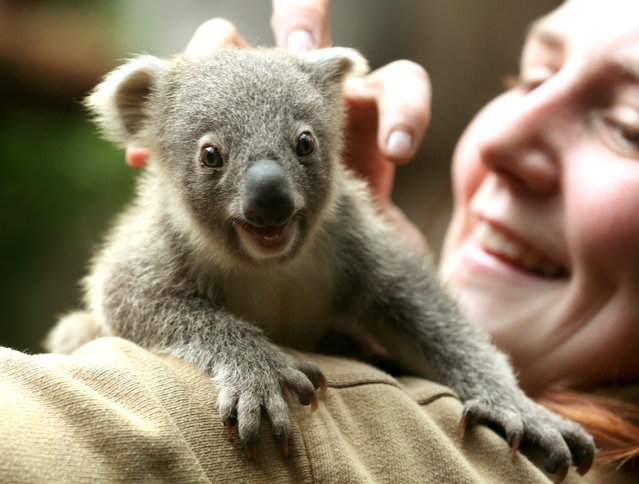
The six-months-old female koala cub holds on to the back of zoo keeper Lena at the zoo in Duisburg, Germany, 23 October 2015. The yet unnamed baby weighs 580 grams. (Photo by Roland Weihrauch/EPA)
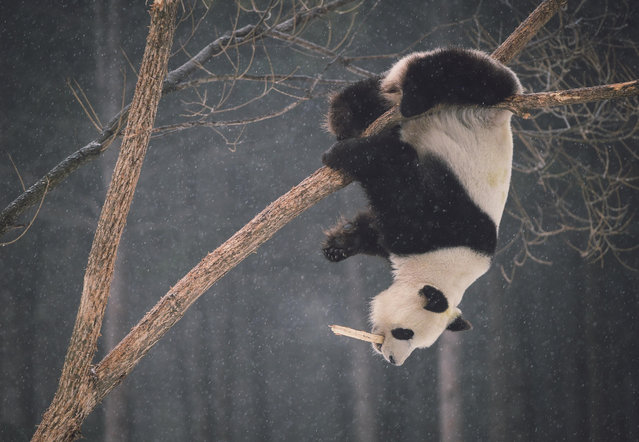
Giant panda Meng Meng plays on a tree at a Siberian tiger-breeding base in Changchun, China on December 10, 2015. (Photo by Xu Chang/Xinhua Press/Corbis)
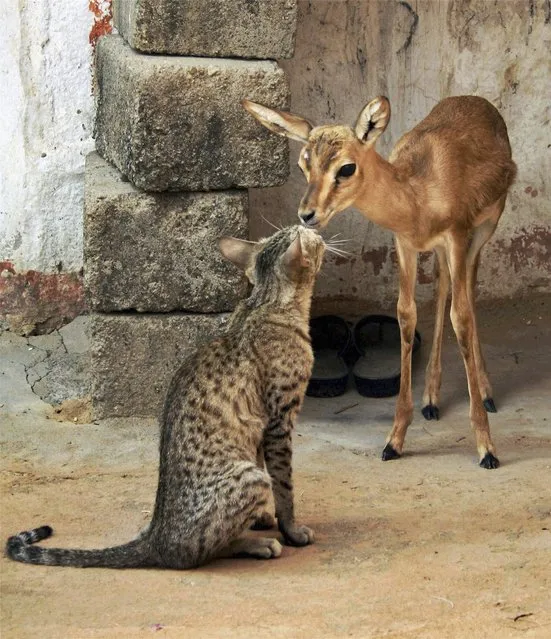
In this Wednesday, May 23, 2012 photograph, a young deer and a cat share a moment in Feench village near Jodhpur, Rajasthan state, India. (Photo by AP Photo)
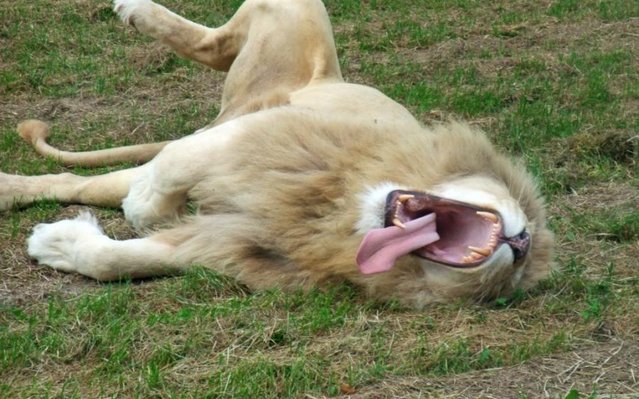
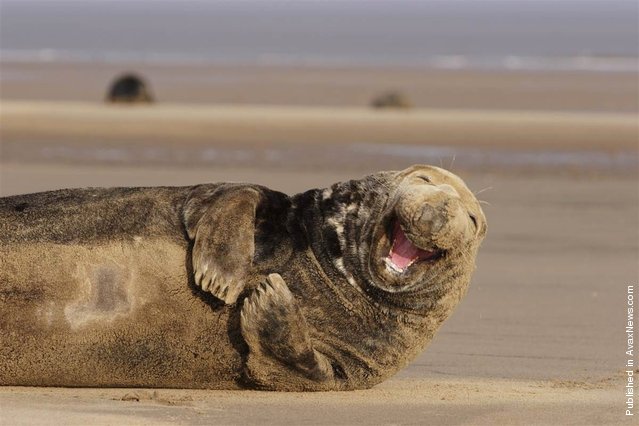
In animals, yawning can serve as a warning signal. For example, Charles Darwin, in his book The Expression of the Emotions in Man and Animals, mentioned that baboons yawn to threaten their enemies, possibly by displaying large canine teeth. Similarly, Siamese fighting fish yawn only when they see a conspecific (same species) or their own mirror-image, and their yawn often accompanies aggressive attack. Guinea pigs also yawn in a display of dominance or anger, displaying their impressive incisor teeth. This is often accompanied by teeth chattering, purring and scent marking.