Loading...
Done
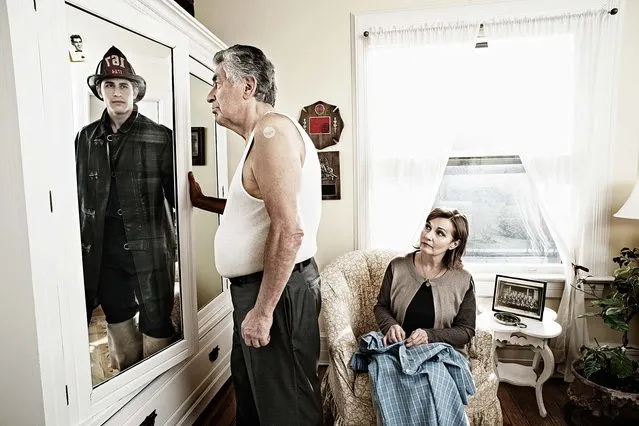
Reflections Of the Past By Tom Hussey

Tom Hussey is a photographer who focuses on advertising and portrait photography. The project featured on this post is called “Reflections” and was created for a new Novartis drug called the Exelon Patch. The drug in question is a prescription medicine for the treatment of mild to moderate Alzheimer’s dementia. The highly conceptual photographs shows an older person looking at the reflection of their younger self.
Details
23 Oct 2013 09:55:00
Roman Sakovich's By Portraits Before And After Drug Abuse

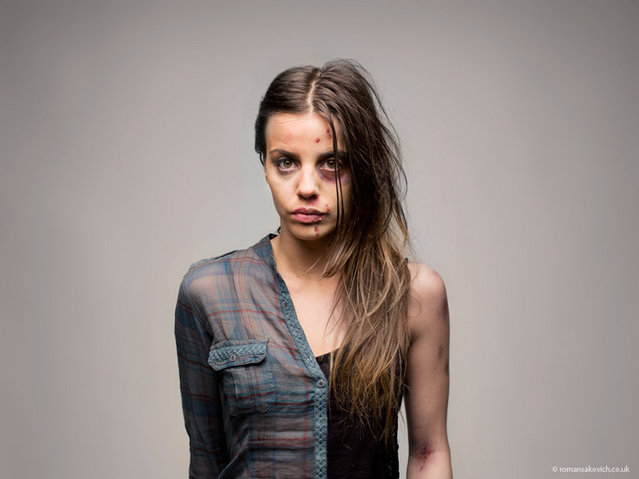
The above portrait is part of London-based photographer Roman Sakovich's project, “Half”, which highlights the drastic physical effects of substance abuse. Sakovich has created split images that simultaneously portray an individual prior to and post addiction, leaving the viewer with a stark visualization of the damaging effects of drug use on our bodies.
Details
10 Mar 2013 11:19:00
The Fantastic Adventures Of Biddy The Hedgehog

“The other day while taking photos of our Hedgehog I thought of your site! Me and my gf have a Hedgehog named Biddy that we enjoy taking on road trips/adventures. We made a hash tag on Instagram that we use every time we post a photo of him.” From Cuteporter Thomas U.
Details
13 Jun 2013 09:06:00
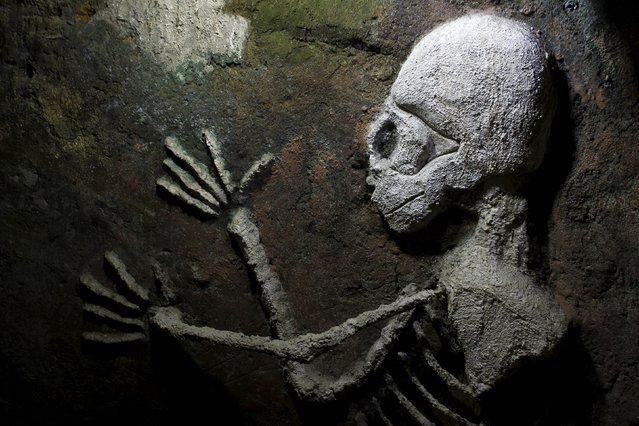
A figure of a skeleton is seen painted in a hallway of the house built underground by Manuel Barrantes in San Isidro de Perez Zeledon, Costa Rica, March 14, 2016. (Photo by Juan Carlos Ulate/Reuters)

A figure of a skeleton is seen painted in a hallway of the house built underground by Manuel Barrantes in San Isidro de Perez Zeledon, Costa Rica, March 14, 2016. Barrantes started digging through red soil and volcanic rock on his farm 12 years ago to build his subterranean house, between 15 and 63 feet (4.57 and 19.2m) underground. The dwelling, which Barrantes says provides a peaceful and comfortable home for him and his family away from noise pollution and the effects of climate change, now covers about 2,000 square feet (185.8 square metres). (Photo by Juan Carlos Ulate/Reuters)
Details
17 Mar 2016 15:34:00
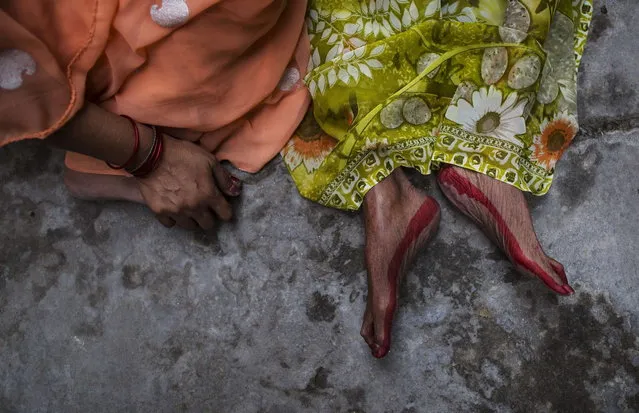
A relative (L) of Champa Devi, 88, sits next to her body, minutes after her death at Mukti Bhavan (Salvation House) at Varanasi, in the northern Indian state of Uttar Pradesh, June 21, 2014. (Photo by Danish Siddiqui/Reuters)

A relative (L) of Champa Devi, 88, sits next to her body, minutes after her death at Mukti Bhavan (Salvation House) at Varanasi, in the northern Indian state of Uttar Pradesh, June 21, 2014. The city of Varanasi, on the banks of the River Ganges, is widely considered Hinduism's holiest city and many Hindus believe that dying there and having their remains scattered in the Ganges allows their soul to escape a cycle of death and rebirth, attaining “moksha” or salvation. “Mukti Bhavan” or “Salvation House”, is a charity-run hostel that caters for people who wish to come to Varanasi to die. Guests can normally stay up to two weeks after which, if they haven't yet passed away, they are gently asked to leave. (Photo by Danish Siddiqui/Reuters)
Details
24 Jul 2014 12:32:00
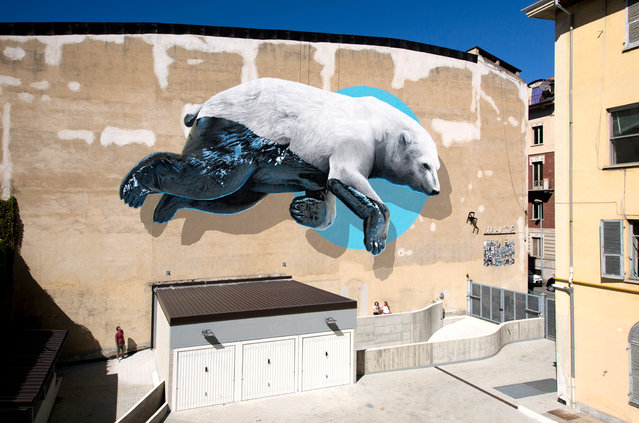
A polar bear whose bottom half is caked in oily black gunk. A whale wrapped in striped fabric: a pseudo straightjacket. These are the messes climate change leaves behind, the things we know are happening but often don’t have the opportunity to see with our own eyes. Swiss street art duo Christian Rebecchi and Pablo Togni, otherwise known as NeverCrew, met in art school when they were 15 and started making work together soon after. As a team, the artists adorn the world with eye-popping and gut-wrenching images depicting the consequences of humanity’s actions on earth. Here: “Black machine” mural painting and installation on the Colosseo theater in Turin, Italy, in September 2015. (Photo by NeverCrew/The Huffington Post)

A polar bear whose bottom half is caked in oily black gunk. A whale wrapped in striped fabric: a pseudo straightjacket. These are the messes climate change leaves behind, the things we know are happening but often don’t have the opportunity to see with our own eyes. Swiss street art duo Christian Rebecchi and Pablo Togni, otherwise known as NeverCrew, met in art school when they were 15 and started making work together soon after. As a team, the artists adorn the world with eye-popping and gut-wrenching images depicting the consequences of humanity’s actions on earth. (Photo by NeverCrew/The Huffington Post)
Details
13 Aug 2016 11:09:00
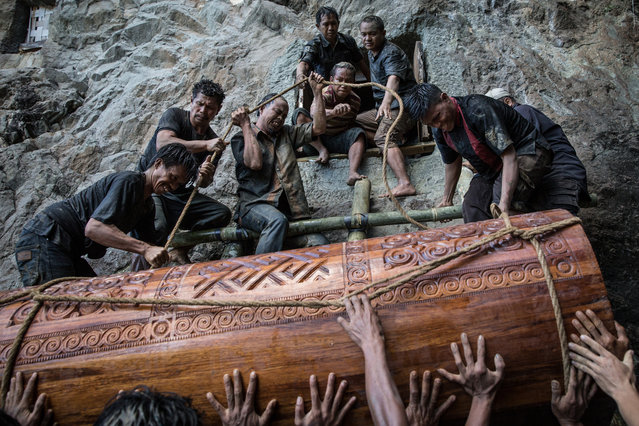
It is said that Torajans are people who “live to die”. For this Indonesian ethnic group, funerals are such extravagant events that they sometimes attract tourists. Families can postpone burials years (and the deceased are considered sick and hosted at home until the funeral) until the family can raise enough money and gather as many relatives as possible. And then it’s a jubilant multiday social event with a parade, dances and animal sacrifices. Agung Parameswara photographed these funerary practices when he traveled to South Sulawesi province, where the Torajans live. But often, their funeral isn’t the last time the dead are seen. In August, crypts are opened, coffins are slid back out and bodies delicately unsheathed. This tender ritual is known as Ma’Nene, which is customarily performed every few years. (Photo by Agung Parameswara/The Washington Post)

It is said that Torajans are people who “live to die”. For this Indonesian ethnic group, funerals are such extravagant events that they sometimes attract tourists. Families can postpone burials years (and the deceased are considered sick and hosted at home until the funeral) until the family can raise enough money and gather as many relatives as possible. And then it’s a jubilant multiday social event with a parade, dances and animal sacrifices. Agung Parameswara photographed these funerary practices when he traveled to South Sulawesi province, where the Torajans live. (Photo by Agung Parameswara/The Washington Post)
Details
06 Oct 2016 09:15:00
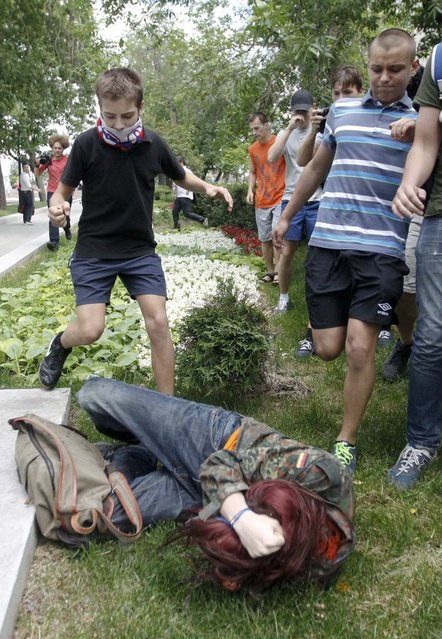
Youths kick a gay rights activist during a protest against a proposed new law termed by the State Duma, the lower house of Parliament, as “against advocating the rejection of traditional family values” in central Moscow June 11, 2013. (Photo by Maxim Shemetov/Reuters)

Youths kick a gay rights activist during a protest against a proposed new law termed by the State Duma, the lower house of Parliament, as “against advocating the rejection of traditional family values” in central Moscow June 11, 2013. (Photo by Maxim Shemetov/Reuters)
Details
12 Jun 2013 08:46:00