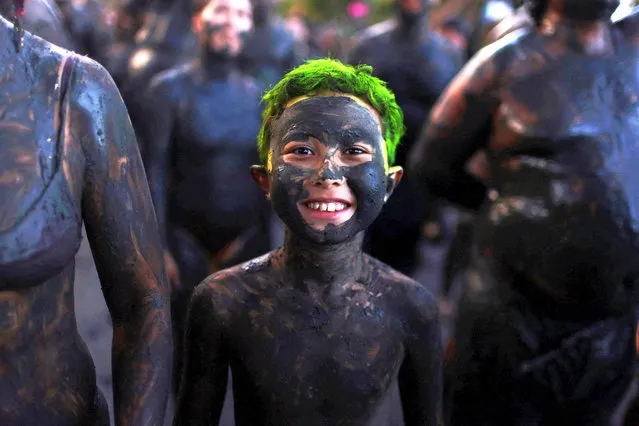
A boy attends the “Bloco da Lama” (Block of Mud) group during the carnival festivities, in Paraty, Brazil on February 11, 2024. (Photo by Pilar Olivares/Reuters)
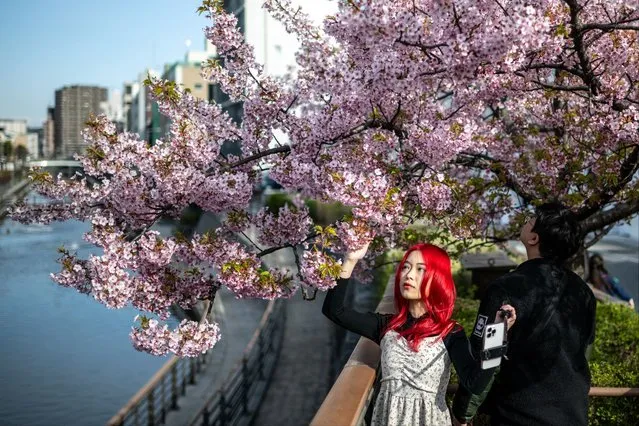
A woman takes pictures with the Kawazu cherry blossom trees, one of the earliest blooming cherry blossoms in Japan, in Tokyo's Sumida district on March 11, 2024. (Photo by Philip Fong/AFP Photo)
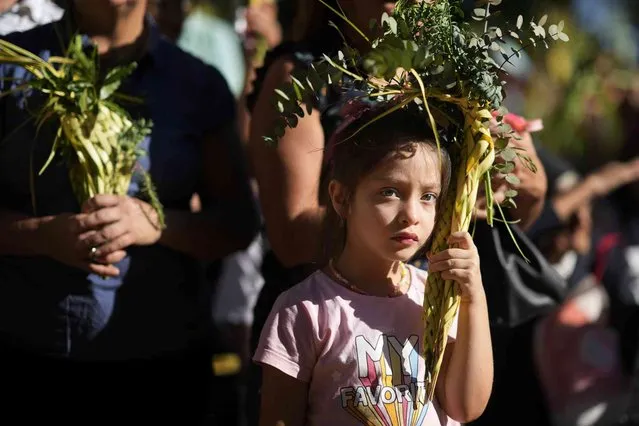
Catholic faithful attend a Palm Sunday mass at the start of Holy Week in San Lorenzo, Paraguay, Sunday, March 24, 2024. (Photo by Jorge Saenz/AP Photo)
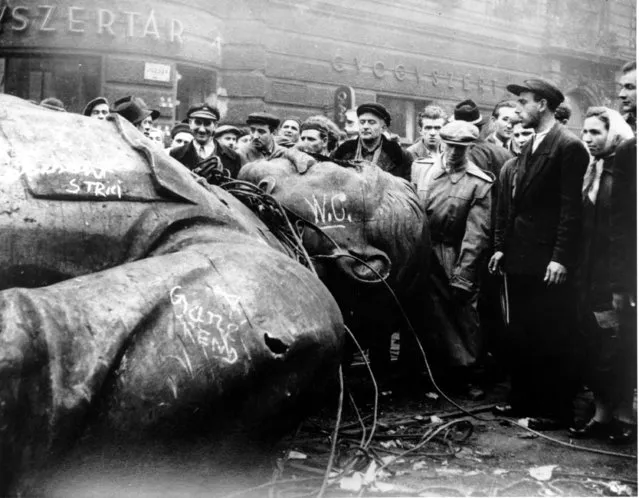
Hungarians witness the fallen statue of communist leader Josef Stalin in front of the National Theater in Budapest on October 24, 1956. Demonstrators revolting against communist rule in Hungary pulled the statue to the ground at Dozsa Gyorgy on Oct. 23 and hauled it by tractor to Blaha Lujza where it was later smashed to pieces by the people. (Photo by Arpad Hazafi/AP Photo)
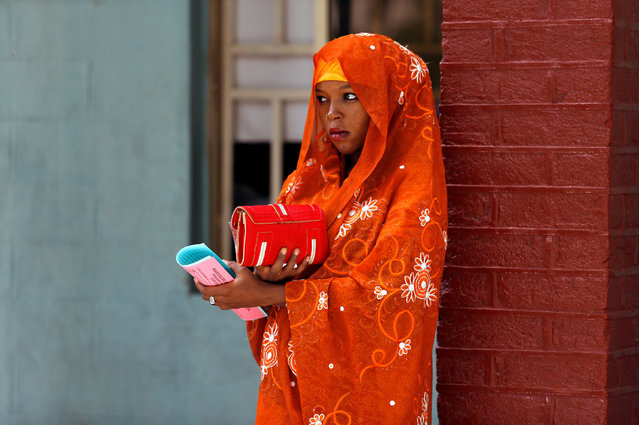
A woman waits at a polio immunisation health centre, in Maiduguri, Borno State, Nigeria, August 29, 2016. Nigeria's military has liberated large swathes of land from Boko Haram but a ride with an army convoy, all guns firing for fear of ambush, shows how far the northeast is from normality after a brutal Islamist insurgency that has displaced millions. (Photo by Afolabi Sotunde/Reuters)
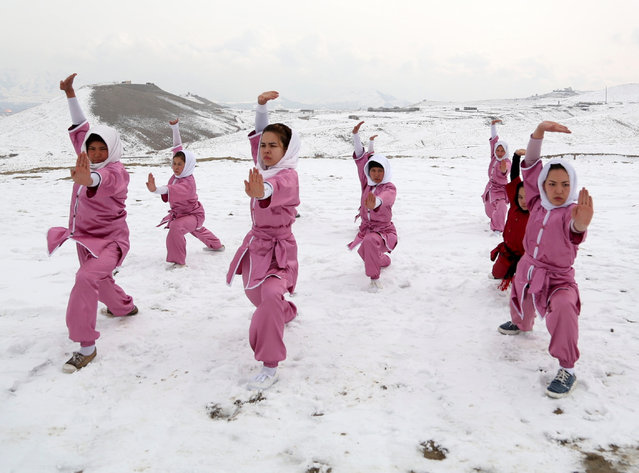
Afghan girl athletes perform Wushu on the top of a hill in Kabul, capital of Afghanistan, January 18, 2017. In the conservative Afghan society where people especially in the countryside deeply believe in the old traditions and don't allow their girls and female members of the family to go out of home, exercising sport in open is extremely risky, but a group of girls are broken the taboo and exercising Wushu on a hilltop where the temperature is minus 2 Celsius degrees. (Photo by Rahmat Alizadah/Xinhua/Barcroft Images)
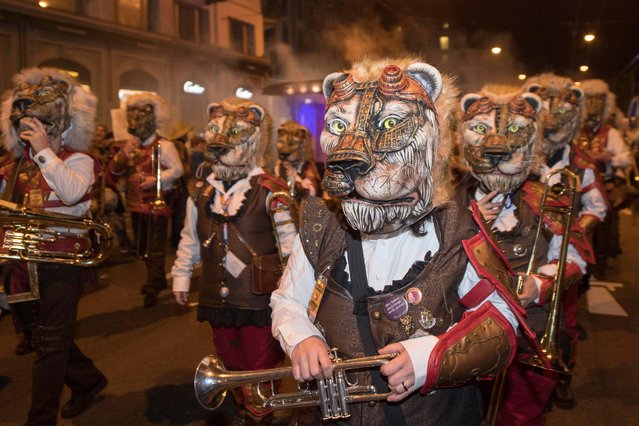
Masked Guggen music bands parade through the streets on the occasion of the beginning of the Fasnacht Carnival of Lucerne, Switzerland, early 23 February 2017. (Photo by Urs Flueeler/EPA)
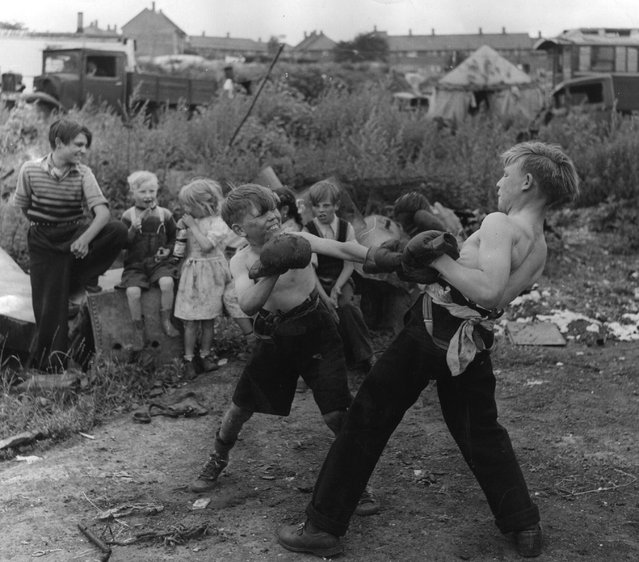
The unromantic gypsies. Children boxing in a gypsy camp in Kent, England on July 1, 1951. Like all boys these gypsy lads like to try their hand at boxing. Encouraged by their friends they fight it out on Corke's Meadow. Few Romanies now live a life of wandering romance. Most are like the three hundred squatters of Corke's Meadow, Kent, which is part of a “gypsy problem” that involves about 100,000 today. Of those about 25,000 can be rightly called gypsies, the rest are Mumpers and Posh-rats and Hobos. Corke's Meadow has both kinds. “Picture Post” cameraman Bert Hardy photographs the Corke's Meadow gypsies in their encampment. (Photo by Hulton-Deutsch Collection/Corbis via Getty Images)