Loading...
Done
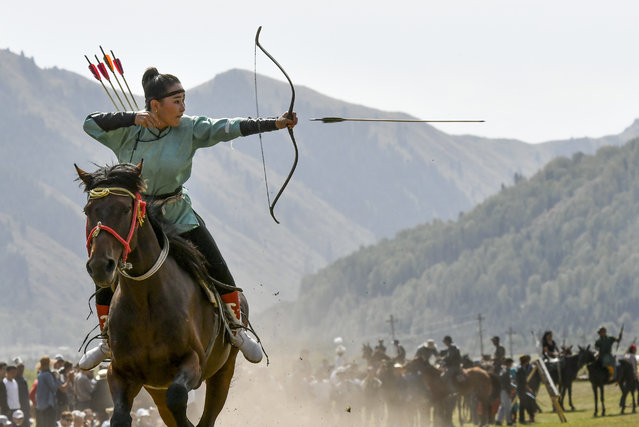
In this photo taken on Thursday, September 6, 2018, a women releases an arrow during an archery competition during the Third Nomad Games, in Cholpon-Ata, 250 kilometers (156 miles) of Bishkek, Kyrgyzstan. The Central Asian nation of Kyrgyzstan held its biennial Nomad Games to promote and celebrate traditional sports of nomadic people. The week-long competition, which is held in a gorge near the picturesque Lake Issyk-Kul, feature traditional sports of nomad peoples such as horseback wrestling and goat polo. (Photo by Vladimir Voronin/AP Photo)

In this photo taken on Thursday, September 6, 2018, a women releases an arrow during an archery competition during the Third Nomad Games, in Cholpon-Ata, 250 kilometers (156 miles) of Bishkek, Kyrgyzstan. The Central Asian nation of Kyrgyzstan held its biennial Nomad Games to promote and celebrate traditional sports of nomadic people. The week-long competition, which is held in a gorge near the picturesque Lake Issyk-Kul, feature traditional sports of nomad peoples such as horseback wrestling and goat polo. (Photo by Vladimir Voronin/AP Photo)
Details
13 Sep 2018 10:43:00
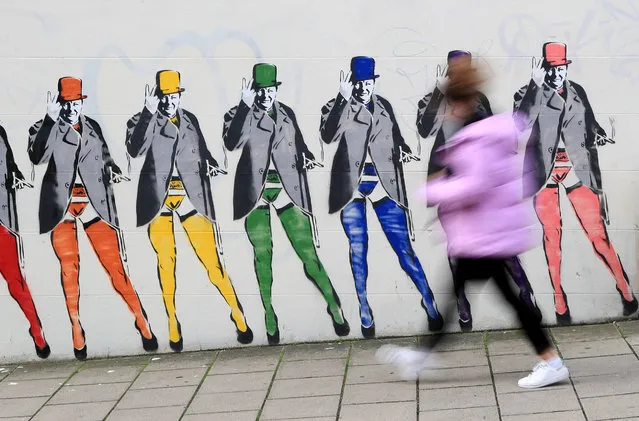
Mural of wartime leader Sir Winston Churchill wearing stockings and suspenders and giving the “V” sign by illusive local artist who goes by the name Horace, on the side of the Sandpiper guest house in Brighton on November 22, 2020. (Photo by Gareth Fuller/PA Images via Getty Images)

Mural of wartime leader Sir Winston Churchill wearing stockings and suspenders and giving the “V” sign by illusive local artist who goes by the name Horace, on the side of the Sandpiper guest house in Brighton on November 22, 2020. (Photo by Gareth Fuller/PA Images via Getty Images)
Details
09 Dec 2020 00:03:00
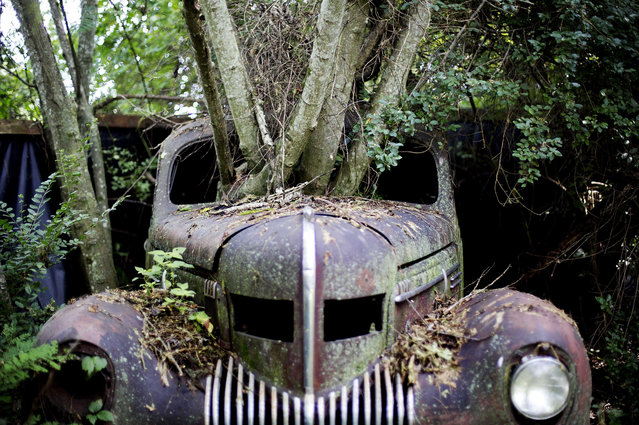
Trees grow through the windshield of a 1937 Chrysler Imperial as it sits at Old Car City, the world's largest known classic car junkyard Thursday, July 16, 2015, in White, Ga. Many of the cars have never moved in over 30 years and in some cases, trees now grow through them, even lifting some off the ground. (Photo by David Goldman/AP Photo)

Trees grow through the windshield of a 1937 Chrysler Imperial as it sits at Old Car City, the world's largest known classic car junkyard Thursday, July 16, 2015, in White, Ga. Over 4,000 classic cars decorate 32 acres of forest which have been turned into a junkyard museum by owner Walter Dean Lewis. The two grew up playing in the cars on the lot which started as a general store selling auto parts in 1931 by Lewis' parents. Lewis stopped selling parts about six years ago when he realized he could sustain the business more as a museum, charging $15 for visitors just looking, and $25 for photographers. Many of the cars have never moved in over 30 years and in some cases, trees now grow through them, even lifting some off the ground. (Photo by David Goldman/AP Photo)
Details
17 Jul 2015 13:14:00
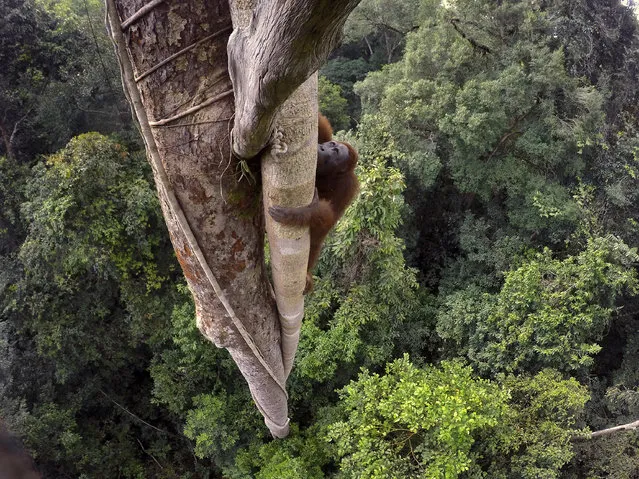
“Tough Times for Orangutans”. Nature, first prize stories. Tim Laman, USA. Location: West Kalimantan, Indonesia. A Bornean orangutan climbs over 30 meters up a tree in the rain forest of Gunung Palung National Park, West Kalimantan, Indonesia, August 12, 2015. The lives of wild orangutans are brought to light. Threats to these orangutans from fires, the illegal animal trade and loss of habitat due to deforestation have resulted in many orphan orangutans ending up at rehabilitation centers. (Photo by Tim Laman/World Press Photo Contest)

“Tough Times for Orangutans”. Nature, first prize stories. Tim Laman, USA. Location: West Kalimantan, Indonesia. A Bornean orangutan climbs over 30 meters up a tree in the rain forest of Gunung Palung National Park, West Kalimantan, Indonesia, August 12, 2015. The lives of wild orangutans are brought to light. Threats to these orangutans from fires, the illegal animal trade and loss of habitat due to deforestation have resulted in many orphan orangutans ending up at rehabilitation centers. (Photo by Tim Laman/World Press Photo Contest)
Details
19 Feb 2016 13:06:00
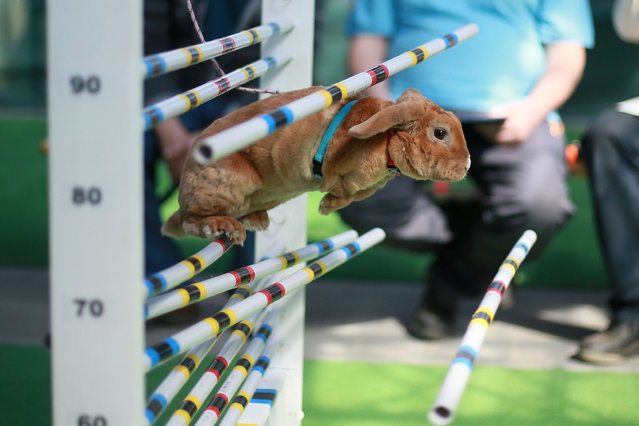
A rabbit fails to jump over an obstacle during a rabbit track and field competition on the sidelines of a hunting exhibition in Kromeriz, about 60 km east of Prague, on April 1, 2017. Circa 100 rabbits took part in the competition, including disciplines as long jump, high jump and running on a flat track. (Photo by  Radek Mica/AFP Photo)

A rabbit fails to jump over an obstacle during a rabbit track and field competition on the sidelines of a hunting exhibition in Kromeriz, about 60 km east of Prague, on April 1, 2017. Circa 100 rabbits took part in the competition, including disciplines as long jump, high jump and running on a flat track. (Photo by Radek Mica/AFP Photo)
Details
09 Apr 2017 09:49:00
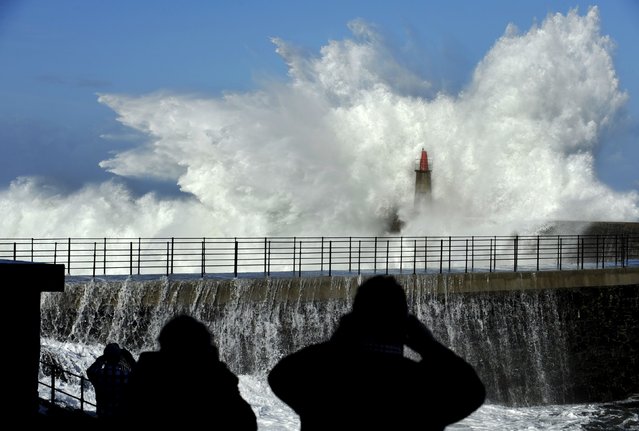
People take pictures of huge waves crash on the Viavelez seafront in the northern Spanish region of Asturias January 2, 2016. (Photo by Eloy Alonso/Reuters)

People take pictures of huge waves crash on the Viavelez seafront in the northern Spanish region of Asturias January 2, 2016. (Photo by Eloy Alonso/Reuters)
Details
03 Jan 2016 10:32:00
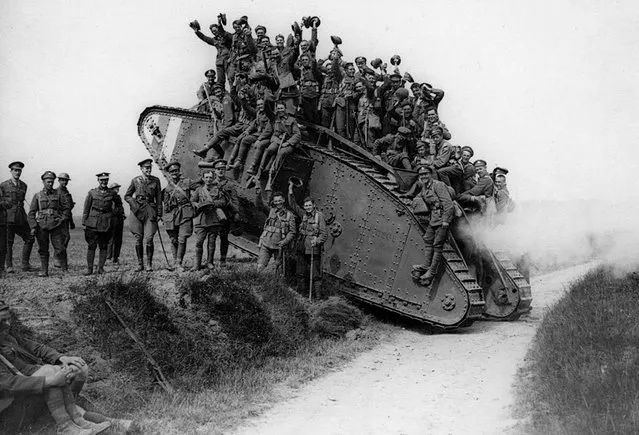
These black-and-white photos are taken from the new book “Armoured Warfare in the First World War 1916 – 1918” by Anthony Tucker-Jones and published by Pen & Sword Military. “Interestingly the British, French and Germans took completely different approaches with varying results”. The British military produced “Little Willie” in Autumn 1915 weighing 18 tonnes, which had a crew of two plus four gunners. “Inspired by a tracked artillery tractor “Little Willie” was referred to as a water tank – hence the name tank – to ensure secrecy”, said Anthony. “This led to the strange looking Mark I with its peculiar rhomboid shape, designed to cross trenches with guns in sponsons on either side. The Germans saw the tank as unchivalrous and were slow to grasp its utility. They favoured the Stormtrooper (specialist soldiers used to infiltrate enemy trenches) and artillery, not the tank”, said Anthony. “However, they didn’t hesitate to make use of captured British tanks. Although the tank helped secure victory and German soldiers dubbed it “Germany’s Downfall” the country was ultimately brought to its knees by the Allies blockade”. Here: British troops hitch a ride on a Mark IV after the massed tank fleet spearheading attack at Cambrai on November 20, 1917. (Photo by Anthony Tucker-Jones/Mediadrumworld.com)

These black-and-white photos are taken from the new book “Armoured Warfare in the First World War 1916 – 1918” by Anthony Tucker-Jones and published by Pen & Sword Military. Here: British troops hitch a ride on a Mark IV after the massed tank fleet spearheading attack at Cambrai on November 20, 1917. (Photo by Anthony Tucker-Jones/Mediadrumworld.com)
Details
23 Feb 2017 00:02:00
New Yorkers Celebrate At West Indian Day Parade

“The Labor Day Parade (or West Indian Carnival), is an annual celebration held on American Labor Day (the first Monday in September), in Crown Heights, Brooklyn, New York. Ms. Jessie Waddell and some of her West Indian friends started the Carnival in Harlem in the 1920s by staging costume parties in large enclosed places like the Savoy, Renaissance and Audubon Ballrooms due to the cold wintry weather of February. This is the usual time for the pre-Lenten celebrations held in most countries around the world. However, because of the very nature of Carnival, and the need to parade in costume to music, indoor confinement did not work well. The earliest known Carnival street parade was held on September 1, 1947. The Trinidad Carnival Pageant Committee was the founding force behind the parade, which was held in Harlem. The parade route was along Seventh Avenue, starting at 110th St.” – Wikipedia

Photo: A reveler looks on during the West Indian-American Day Parade September 5, 2011 in the Brooklyn borough of New York City. More than 2 million spectators were expected to attend the celebration of Caribbean culture. (Photo by Mario Tama/Getty Images)
Details
06 Sep 2011 11:18:00