Loading...
Done
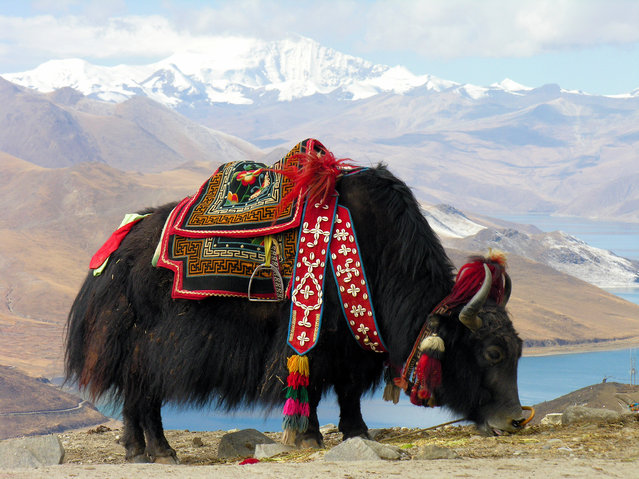
Yak near Yamdrok lake, Tibet. It is a long-haired bovinae found throughout the Himalayan region of south Central Asia, the Tibetan Plateau and as far north as Mongolia and Russia. The Tibetan economy is dominated by subsistence agriculture. Due to limited arable land, the primary occupation of the Tibetan Plateau is raising livestock, such as sheep, cattle, goats, camels, yaks, dzo, and horses. The Tibetan yak is an integral part of Tibetan life. (Photo by Dennis Jarvis)

Yak near Yamdrok lake, Tibet. It is a long-haired bovinae found throughout the Himalayan region of south Central Asia, the Tibetan Plateau and as far north as Mongolia and Russia. The Tibetan economy is dominated by subsistence agriculture. Due to limited arable land, the primary occupation of the Tibetan Plateau is raising livestock, such as sheep, cattle, goats, camels, yaks, dzo, and horses. The Tibetan yak is an integral part of Tibetan life. (Photo by Dennis Jarvis)
Details
10 Jun 2015 10:48:00
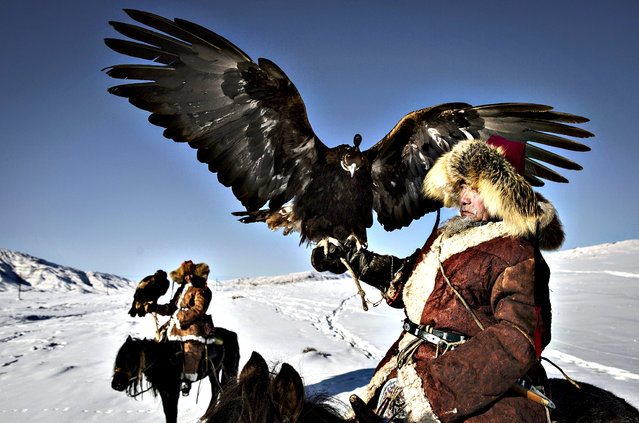
Chinese Kazakh eagle hunters sit on horseback as they travel to a local competition on January 29, 2015 in the mountains of Qinghe County, Xinjiang, northwestern China. The festival, organised by the local hunting community, is part of an effort to promote and grow traditional hunting practices for new generations in the mountainous region of western China that borders Kazakhstan, Russia and Mongolia. (Photo by Kevin Frayer/Getty Images)

Chinese Kazakh eagle hunters sit on horseback as they travel to a local competition on January 29, 2015 in the mountains of Qinghe County, Xinjiang, northwestern China. The festival, organised by the local hunting community, is part of an effort to promote and grow traditional hunting practices for new generations in the mountainous region of western China that borders Kazakhstan, Russia and Mongolia. The training and handling of the large birds of prey follows a strict set of ancient rules that Kazakh eagle hunters are preserving for future generations. (Photo by Kevin Frayer/Getty Images)
Details
07 Feb 2015 14:11:00
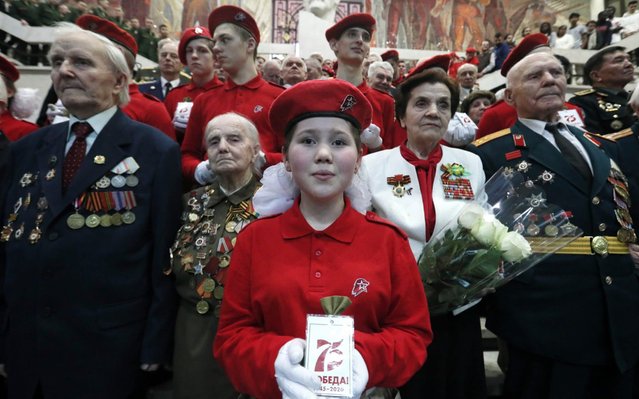
WWII veterans attend a ceremony to place tobacco pouches of soil from WWII mass graves of Red Army soldiers abroad, in the custody of the Central Armed Forces Museum in Moscow, Russia on March 6, 2020. The grave soil has been brought from Abkhazia, Germany, Kyrgyzstan, US, Ukraine, France, Estonia, Mongolia, Bulgaria, UK, Uzbekistan and South Ossetia. (Photo by Alexander Shcherbak/TASS)

WWII veterans attend a ceremony to place tobacco pouches of soil from WWII mass graves of Red Army soldiers abroad, in the custody of the Central Armed Forces Museum in Moscow, Russia on March 6, 2020. The grave soil has been brought from Abkhazia, Germany, Kyrgyzstan, US, Ukraine, France, Estonia, Mongolia, Bulgaria, UK, Uzbekistan and South Ossetia. (Photo by Alexander Shcherbak/TASS)
Details
02 Apr 2020 00:01:00
Heesco, Windsor. Born and raised in Mongolia and now living and working in Melbourne, Heesco is well known for his skill in rendering photo-realistic portraits. They speak to the viewer in a way that the subtext is enjoyable to decipher. Just what is the Blue Lady’s message? The sunglasses might mask the confronting gaze but her body language fills in the gaps. Heesco’s characters often wear traditional jewellery and clothing that remind us of his Mongolian cultural heritage. (Photo by Lou Chamberlin/The Guardian)

Heesco, Windsor. Born and raised in Mongolia and now living and working in Melbourne, Heesco is well known for his skill in rendering photo-realistic portraits. They speak to the viewer in a way that the subtext is enjoyable to decipher. Just what is the Blue Lady’s message? The sunglasses might mask the confronting gaze but her body language fills in the gaps. Heesco’s characters often wear traditional jewellery and clothing that remind us of his Mongolian cultural heritage. (Photo by Lou Chamberlin/The Guardian)
Details
26 Dec 2017 08:28:00
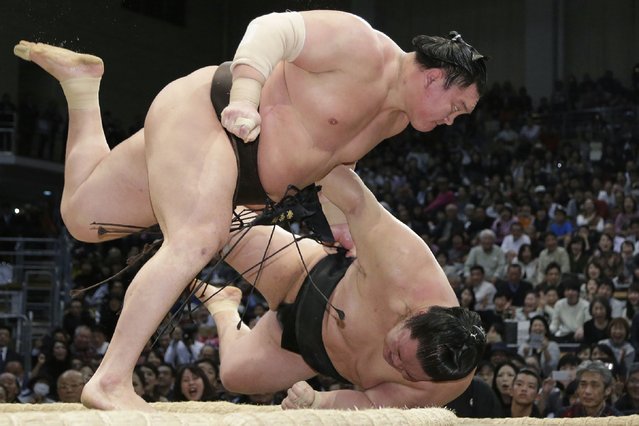
Yokozuna-ranked sumo wrestler Hakuho of Mongolia (top) throws Goeido of Japan during their bout on the final day of the 15-day Kyushu Grand Sumo Tournament in Fukuoka on November 26, 2017. Mongolian grand champion Hakuho won the latest sumo tournament on November 25 as Japan's national sport continued to draw media attention after another top wrestler faced a police probe into an alleged assault. He won the 15-day tournament at 13-1 by Saturday with one day remaining as his closest contenders were all defeated at 11-3 before his bout on the day. (Photo by AFP Photo/JIJI Press)

Yokozuna-ranked sumo wrestler Hakuho of Mongolia (top) throws Goeido of Japan during their bout on the final day of the 15-day Kyushu Grand Sumo Tournament in Fukuoka on November 26, 2017. Mongolian grand champion Hakuho won the latest sumo tournament on November 25 as Japan's national sport continued to draw media attention after another top wrestler faced a police probe into an alleged assault. He won the 15-day tournament at 13-1 by Saturday with one day remaining as his closest contenders were all defeated at 11-3 before his bout on the day. (Photo by AFP Photo/JIJI Press)
Details
27 Nov 2017 09:09:00
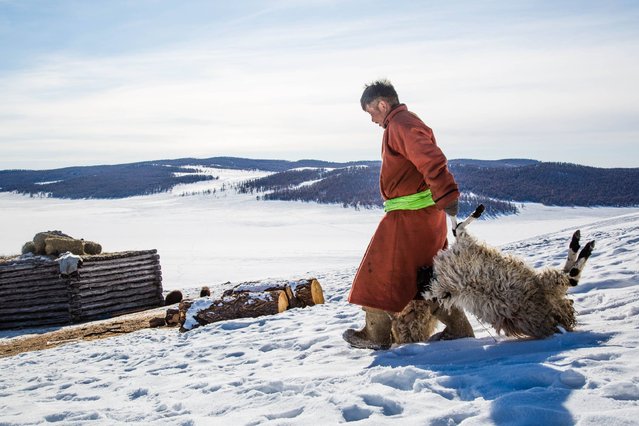
This handout photo taken on February 12, 2017 and released on February 16 by the International Federation of Red Cross and Red Crescent Societies (IFRC) shows Mongolian herder Munkhbat Bazarragchaa (C) dragging two sheep – which recently died due to the weather - to a pile of dead animals behind his “ger” in Khuvsgul province, northern Mongolia. Thousands of Mongolian herders face disastrous livestock losses from dreaded severe weather  known as the “dzud”, the Red Cross said on February 16, 2017 in launching an international emergency aid appeal. (Photo by Mirva Helenius/AFP Photo/IFRC)

This handout photo taken on February 12, 2017 and released on February 16 by the International Federation of Red Cross and Red Crescent Societies (IFRC) shows Mongolian herder Munkhbat Bazarragchaa (C) dragging two sheep – which recently died due to the weather - to a pile of dead animals behind his “ger” in Khuvsgul province, northern Mongolia. Thousands of Mongolian herders face disastrous livestock losses from dreaded severe weather known as the “dzud”, the Red Cross said on February 16, 2017 in launching an international emergency aid appeal. (Photo by Mirva Helenius/AFP Photo/IFRC)
Details
17 Feb 2017 11:40:00
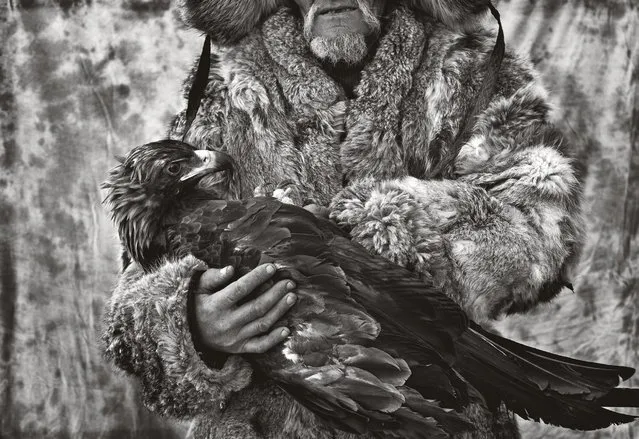
A Kazakh hunter has taken an eaglet from the nest, given it pride of place in their home and trained it. All hunters describe the eagle as part of their family. (Photo by Palani Mohan)

Kazakh nomads have been grazing their livestock in Mongolia for hundreds of years. Fascinated by the bond between hunter and eagle, photographer Palani Mohan has spent the last few years documenting the burkitshi. Mohan's photos of the landscape, isolation of the hunt, and most of all the trusting relationship between man and bird, convey the importance that the eagle plays in their lives. (Photo by Palani Mohan)
Details
11 Jan 2016 08:03:00
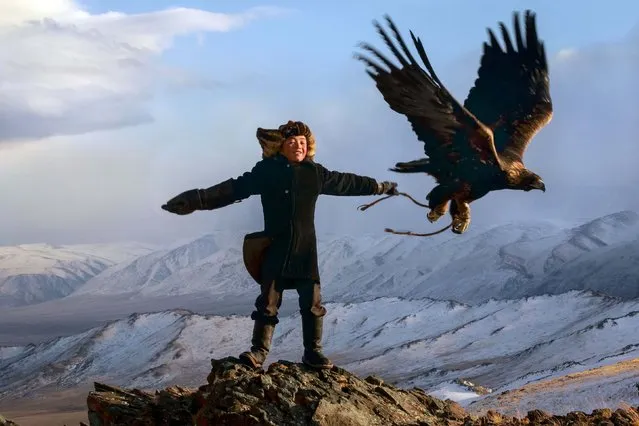
13 year old Irka Bolen with his eagle. Tradition wise, when a boy turns 13, then are strong enough to hold the weight of a fully grown eagle. (Photo by Asher Svidensky/Caters News)

These stunning photographs show the changing face of a majestic centuries old Kazakh pastime tradition that still lives in the lands of mongolia – eagle hunters. Photo: 13 year old Irka Bolen with his eagle. Tradition wise, when a boy turns 13, then are strong enough to hold the weight of a fully grown eagle. (Photo by Asher Svidensky/Caters News)
Details
20 Apr 2014 10:33:00