Loading...
Done
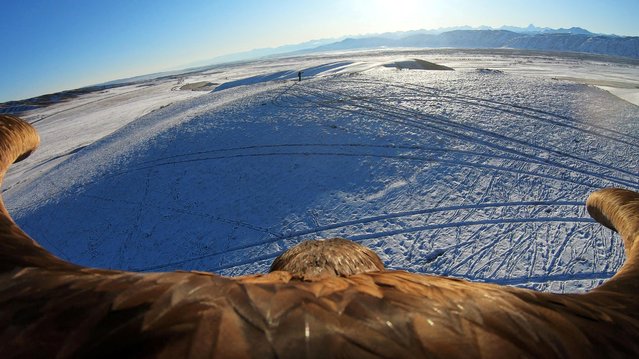
A still image taken from a video shows a tamed golden eagle soaring during a traditional hunting contest outside the village of Kaynar in Almaty region, Kazakhstan on December 9, 2019. (Photo by Pavel Mikheyev/Reuters)

A still image taken from a video shows a tamed golden eagle soaring during a traditional hunting contest outside the village of Kaynar in Almaty region, Kazakhstan on December 9, 2019. (Photo by Pavel Mikheyev/Reuters)
Details
14 Dec 2019 00:05:00


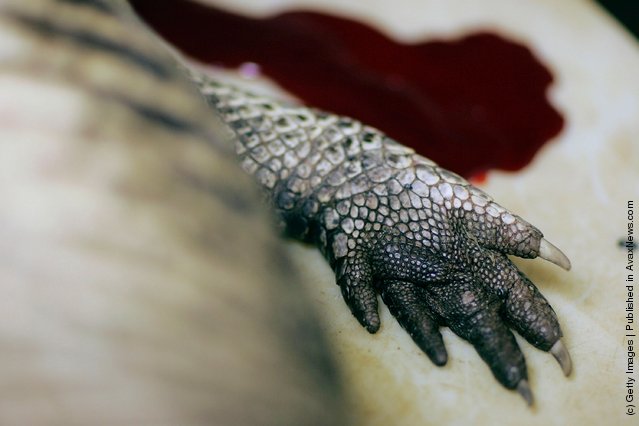
An alligator is skinned at All American Gator August 16, 2006 in Pembroke Park, Florida. The company processes gators for their skins, meat and trophies and was at full capacity a day after the start of gator hunting season. This year more than 4,000 licenses were sold with each license allowing hunters to kill two gators. The hunt has been expanded by 41 days over previous years, running August 15 to November 1. (Photo by Joe Raedle/Getty Images)
Details
04 Apr 2011 10:51:00
Cooktown Hog Hunt

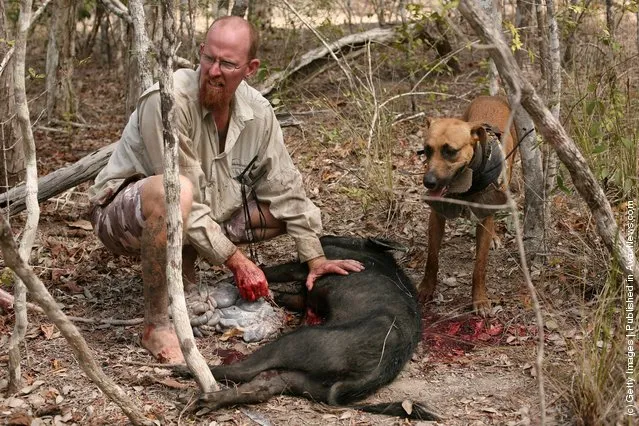
Tom Nevins guts a feral pig sow during hunting on Silver Plains Station on October 8, 2011 outside of Coen, Australia. Feral pigs are recognised as environmental and agricultural pests reported to have a population of up to 23.5 million over around half of Australia. The Cooktown Hog Hunt is held annually with this year's hunting window open from registration at 2pm on Friday to the end of weigh in at 2pm on Sunday afternoon. (Photo by Mark Kolbe/Getty Images)
Details
12 Oct 2011 11:30:00
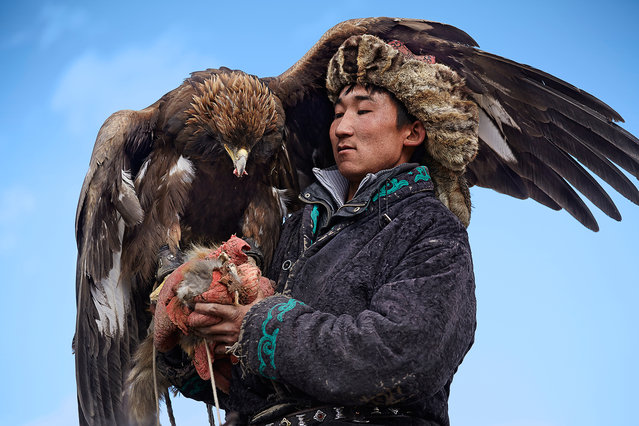
In one of the planet’s most desolate and harsh terrains, the Altai Mountains which run from Siberia in Russia down to Mongolia’s Gobi Desert, hunting with eagles is currently only practiced by a handful of Kyrgyz and Kazakhs. This form of falconry, the practice of hunting with the aid of birds of prey, can be traced back as far as 4,000 years in Central Asia. (Photo by Tariq Zaidi/The Washington Post)

In one of the planet’s most desolate and harsh terrains, the Altai Mountains which run from Siberia in Russia down to Mongolia’s Gobi Desert, hunting with eagles is currently only practiced by a handful of Kyrgyz and Kazakhs. This form of falconry, the practice of hunting with the aid of birds of prey, can be traced back as far as 4,000 years in Central Asia. Here: after a successful hunt, a proud hunter rewards his eagle by feeding it the lungs of the prey, which is considered the most highly prized part of the animal. (Photo by Tariq Zaidi/The Washington Post)
Details
22 Aug 2015 12:46:00
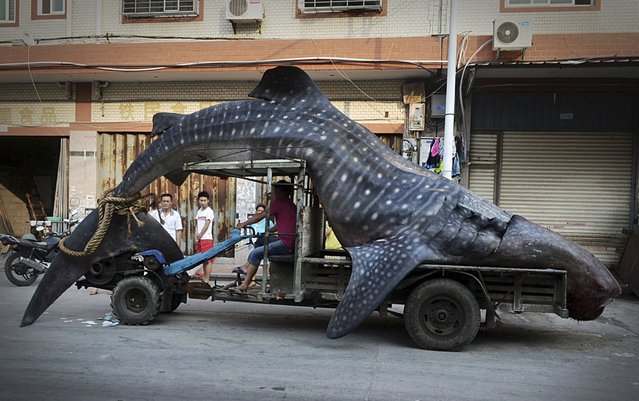
A fisherman transports a dead whale shark after it was caught in fishermen's net, in Yangzhi county, Fujian province August 1, 2014. According to local media, the whale shark is five-metre-long and weighs over 2 tonnes. (Photo by Reuters/Stringer)

A fisherman transports a dead whale shark after it was caught in fishermen's net, in Yangzhi county, Fujian province August 1, 2014. According to local media, the whale shark is five-metre-long and weighs over 2 tonnes. (Photo by Reuters/Stringer)
Details
05 Aug 2014 12:15:00
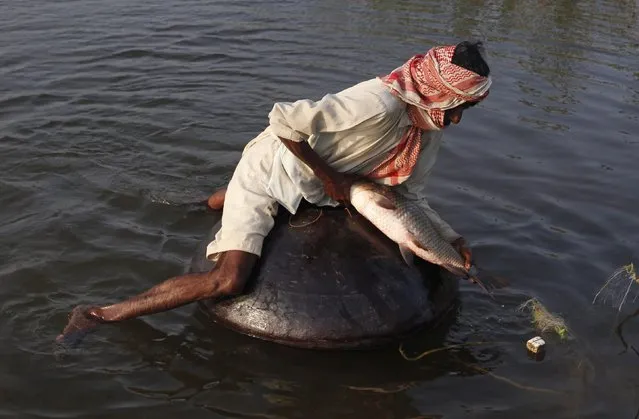
A man uses a floating pitcher to catch a fish after removing it from a net at Keenjhar Lake, near Thatta, February 22, 2015. This technique of fishing using floating pitchers is a unique and traditional one for this community, found only on Keenjhar Lake, one of the largest freshwater lakes in Pakistan, which is famous for its variety of breeding and wintering waterbirds. (Photo by Akhtar Soomro/Reuters)

A man uses a floating pitcher to catch a fish after removing it from a net at Keenjhar Lake, near Thatta, February 22, 2015. This technique of fishing using floating pitchers is a unique and traditional one for this community, found only on Keenjhar Lake, one of the largest freshwater lakes in Pakistan, which is famous for its variety of breeding and wintering waterbirds. (Photo by Akhtar Soomro/Reuters)
Details
23 Feb 2015 13:27:00
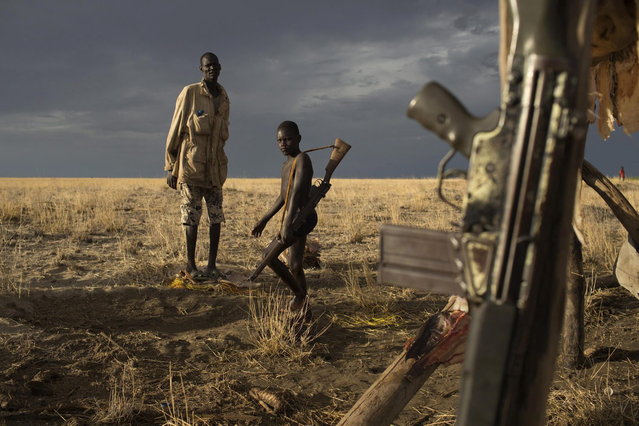
A Turkana man and a boy carrying a gun look on as a G3 battle rifle hangs from a structure used to dry fish at a fishing camp on the shores of Lake Turkana, some kilometres from Todonyang near the Kenya-Ethiopia border in northwestern Kenya October 12, 2013. (Photo by Siegfried Modola/Reuters)

A Turkana man and a boy carrying a gun look on as a G3 battle rifle hangs from a structure used to dry fish at a fishing camp on the shores of Lake Turkana, some kilometres from Todonyang near the Kenya-Ethiopia border in northwestern Kenya October 12, 2013The Turkana are traditionally nomadic pastoralists, but they have seen the pasture that they need to feed their herds suffer from recurring droughts and many have turned to fishing. However, Lake Turkana is overfished, and scarcity of food and pastureland is fuelling long-standing conflict with Ethiopian indigenous Dhaasanac, who have seen grazing grounds squeezed by large-scale government agricultural schemes in southern Ethiopia. The Dhaasanac now venture ever deeper into Kenyan territory in search of fish and grass, clashing with neighbours. Fighting between the communities has a long history, but the conflict has become ever more fatal as automatic weapons from other regional conflicts seep into the area. While the Turkana region is short of basics like grass and ground-water, it contains other resources including oil reserves and massive, newly discovered underground aquifers. (Photo by Siegfried Modola/Reuters)
Details
05 Dec 2013 12:08:00
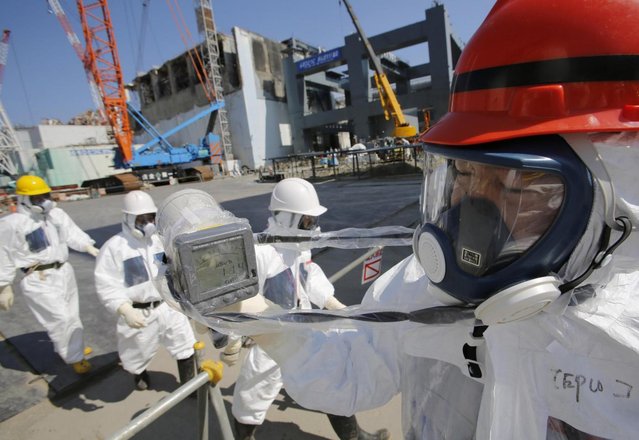
A radiation monitor indicates 114.00 microsieverts per hour near the building housing the plant's No. 4 reactor, center, and an under construction foundation, right, which will store the reactor's melted fuel rods at Tokyo Electric Power Co.'s tsunami-crippled Fukushima Dai-ichi nuclear power plant in Okuma, Fukushima prefecture, Wednesday, March 6, 2013, ahead of the second anniversary of the March 11, 2011 tsunami and earthquake. (Photo by Issei Kato/AP Photo/Pool)

A radiation monitor indicates 114.00 microsieverts per hour near the building housing the plant's No. 4 reactor, center, and an under construction foundation, right, which will store the reactor's melted fuel rods at Tokyo Electric Power Co.'s tsunami-crippled Fukushima Dai-ichi nuclear power plant in Okuma, Fukushima prefecture, Wednesday, March 6, 2013, ahead of the second anniversary of the March 11, 2011 tsunami and earthquake. Some 110,000 people living around the nuclear plant were evacuated after the massive March 11, 2011, earthquake and tsunami knocked out the plant's power and cooling systems, causing meltdowns in three reactors and spewing radiation into the surrounding air, soil and water. (Photo by Issei Kato/AP Photo/Pool)

Details
06 Mar 2013 13:19:00