Loading...
Done


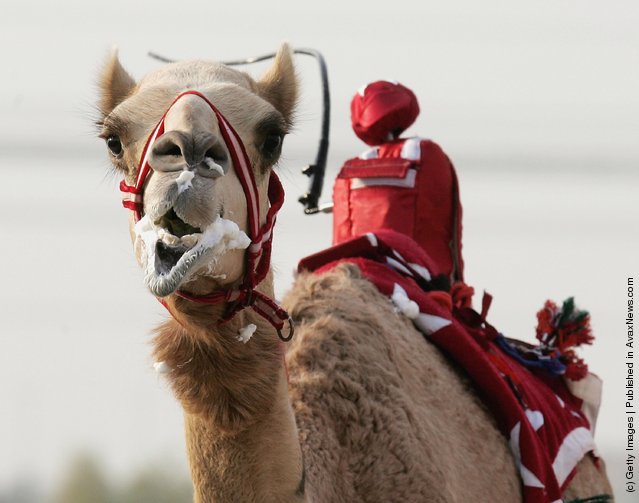
A camel foams at the mouth as he is whipped by a robot jockey during a race at Nad al-Sheba on December 6, 2006 in Dubai, United Arab Emirates. This is the first season that robotic jockeys have been used to race camels in Dubai. Controversially children from India were used to ride the camels in past seasons. These robot jockeys costing 15000GBP and up, were designed in Geneva and include shock absorbers and GPS tracking systems. The camel's owners control them from their speeding four wheel drives at the side of the track. (Photo by Chris Jackson/Getty Images)
Details
01 May 2011 09:01:00


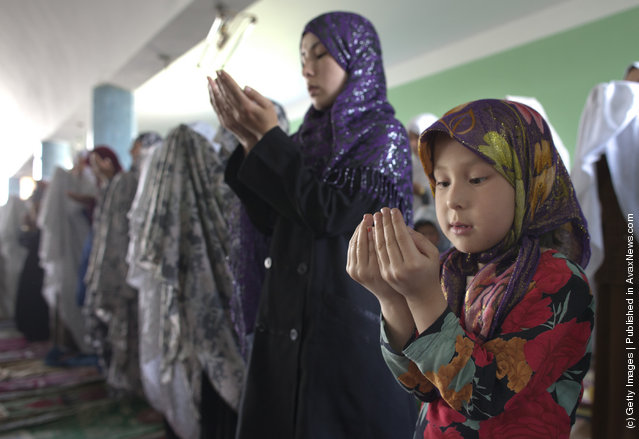
Afghan women pray at the Karti Sakhi shrine on May 13, 2011 in Kabul, Afghanistan. Within many mosques women have separate areas from the men for prayer, however, in many parts of Taliban controlled Afghanistan, women are only allowed to pray at home. (Photo by Paula Bronstein /Getty Images)
Details
16 May 2011 07:58:00
Afghan war amputees

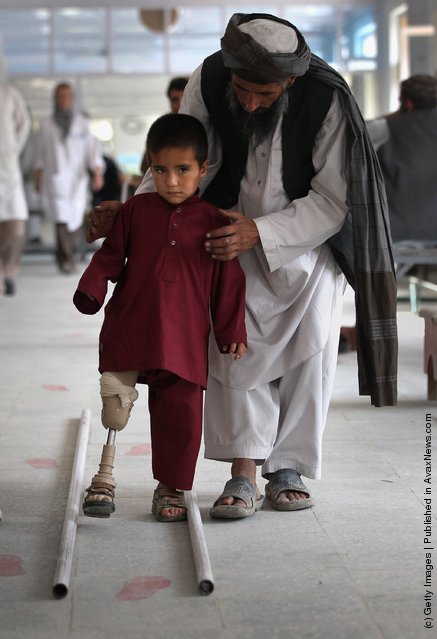
An Afghan child practices walking with his new prosthesis at the International Committee of the Red Cross (ICRC), orthopedic center on September 10, 2011 in Kabul, Afghanistan. After more than 30 years of war and a decade since the 9/11 attacks in the United States, thousands of Afghans, both military and civilian, continue to pay a heavy price from the conflict. The ICRC center makes prosthetics for amputees and helps them, as well as Afghans with spinal injuries and children with congenital birth defects, to learn to walk. (Photo by John Moore/Getty Images)
Details
11 Sep 2011 09:56:00
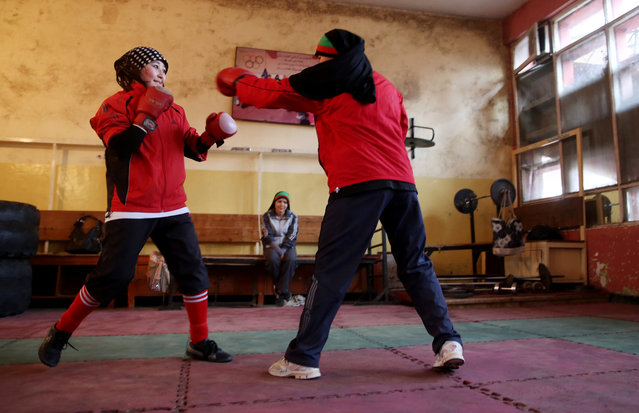
In this Wednesday, March, 5, 2014 photo, Afghan female boxers practice at the Kabul Stadium boxing club, Afghanistan. The women, who are 18 and older, don't have much more than determination, and a trainer who runs them through their paces, watches as they spar, corrects their technique, tells them when to jab, how to protect themselves, when to power through with a left and then a right. (Photo by Massoud Hossaini/AP Photo)

In this Wednesday, March, 5, 2014 photo, Afghan female boxers practice at the Kabul Stadium boxing club, Afghanistan. The women, who are 18 and older, don't have much more than determination, and a trainer who runs them through their paces, watches as they spar, corrects their technique, tells them when to jab, how to protect themselves, when to power through with a left and then a right. (Photo by Massoud Hossaini/AP Photo)
Details
11 Mar 2014 09:45:00
Massive Landslide Buries Remote Afghan Village

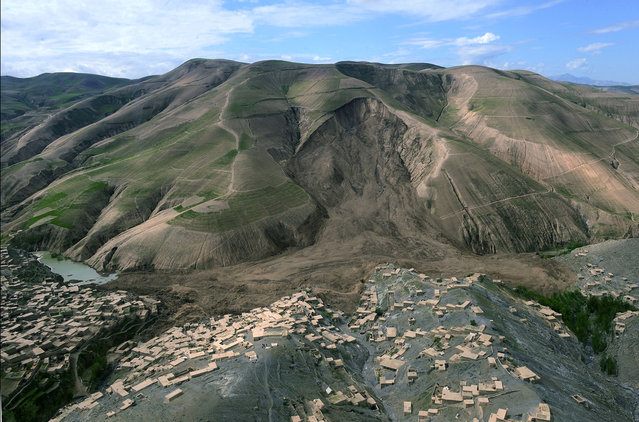
Last Friday, in Afghanistan's mountainous northeastern province of Badakhshan, an enormous landslide took place, burying much of a small village, and killing hundreds. Officials say that at least 300 residents of Abi Barik village were killed, but are uncertain about exact numbers, cautioning that the final number could be 500 or more. Rescue teams gave up hope on Saturday of finding any survivors, focusing energy on helping the hundreds suddenly made homeless. Many of the surviving families have struggled to get aid. Some have gone to nearby villages to stay with relatives or friends, while others have slept in tents provided by aid groups.
Details
30 May 2014 11:27:00


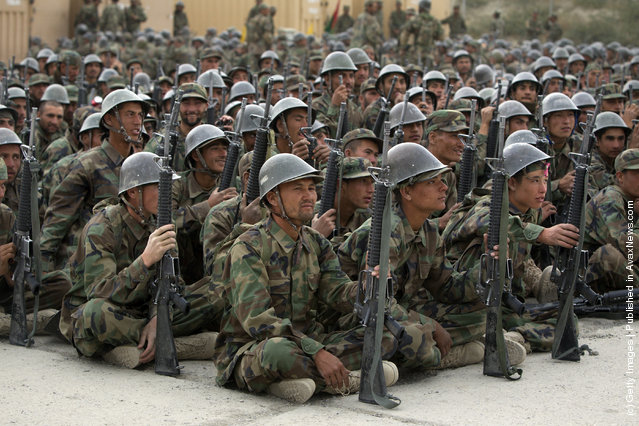
Afghan National Army (ANA) soldiers sit waiting to return their weapons after a day of traning at the Kabul Military Training Center (KMTC) October 3, 2010 in Kabul, Afghanistan. There are between 5,000 to 7,000 troops on the training facility in eight-week cycles trained by the coalition forces to ultimately take over the role of military operations in the country. (Photo by Paula Bronstein/Getty Images)
Details
01 Jun 2011 11:33:00
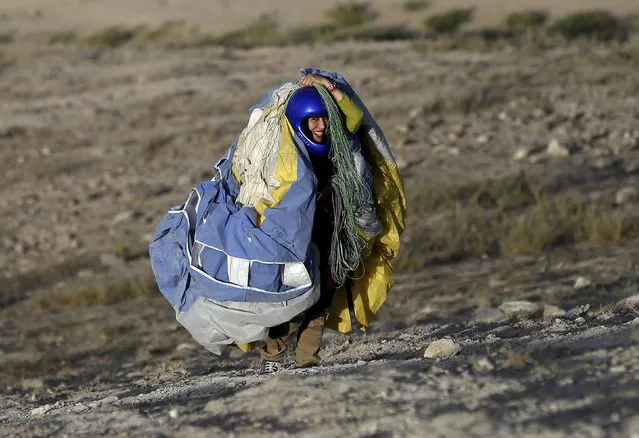
Afghan paraglider Leeda Ozori, 21, walks after practicing in Kabul, Afghanistan September 14, 2015. (Photo by Mohammad Ismail/Reuters)

Afghan paraglider Leeda Ozori, 21, walks after practicing in Kabul, Afghanistan September 14, 2015. She is one of a group of young Afghans taking to the skies of a capital where military helicopters and surveillance balloons are a far more familiar sight. Women in Afghanistan's conservative Muslim society are increasingly entering areas such as education, sports and the workplace, but most still wear the head-to-toe garment, the burqa. (Photo by Mohammad Ismail/Reuters)
Details
23 Sep 2015 08:02:00
Lv Mengmeng, who was born in 1995, poses for a photograph in Shanghai August 22, 2014. When asked if she would like siblings, Mengmeng said: “Maybe brothers, because I think they could protect me”. (Photo by Carlos Barria/Reuters)

Reuters Photographer Carlos Barria photographed a person born in each year China's one child policy has been in existence; from a man born in 1979, to a baby born in 2014, and asked them if they would have like to have siblings. Here: Lv Mengmeng, who was born in 1995, poses for a photograph in Shanghai August 22, 2014. When asked if she would like siblings, Mengmeng said: “Maybe brothers, because I think they could protect me”. (Photo by Carlos Barria/Reuters)
Details
06 Oct 2014 08:20:00