Loading...
Done
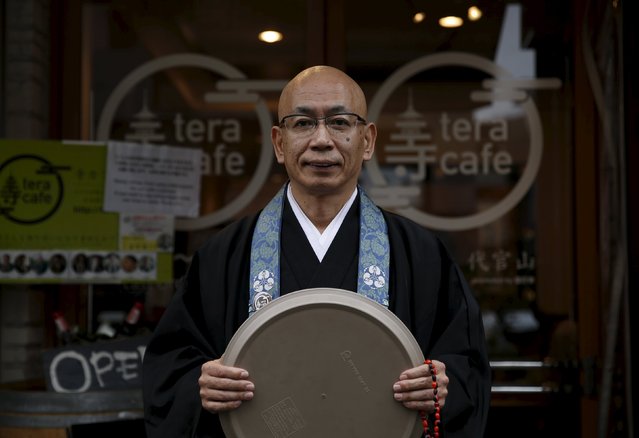
Shokyo Miura, a Buddhist monk and one of the on-site priests, poses for pictures outside Tera Cafe in Tokyo, Japan, April 1, 2016. (Photo by Yuya Shino/Reuters)

Shokyo Miura, a Buddhist monk and one of the on-site priests, poses for pictures outside Tera Cafe in Tokyo, Japan, April 1, 2016. At first glance, the cafe, which also serves alcohol, looks like any other except for an altar next to the countertop bar with a Buddha statue set against a gold backdrop. The menu confirms this is something different. It lists classes for 1,500 yen ($14) in weaving prayer beads, calligraphy with sutras, or lines of scripture, and consultations with a Buddhist priest. (Photo by Yuya Shino/Reuters)
Details
09 Apr 2016 13:21:00
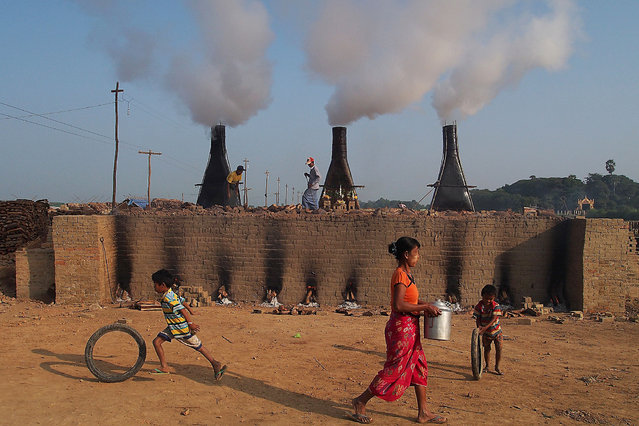
Children play in front of a brick factory on the outskirts of the northern Myanmar city of Mandalay on December 14, 2015. (Photo by Phyo Hein Kyaw/AFP Photo)

Children play in front of a brick factory on the outskirts of the northern Myanmar city of Mandalay on December 14, 2015. (Photo by Phyo Hein Kyaw/AFP Photo)
Details
06 May 2016 13:11:00
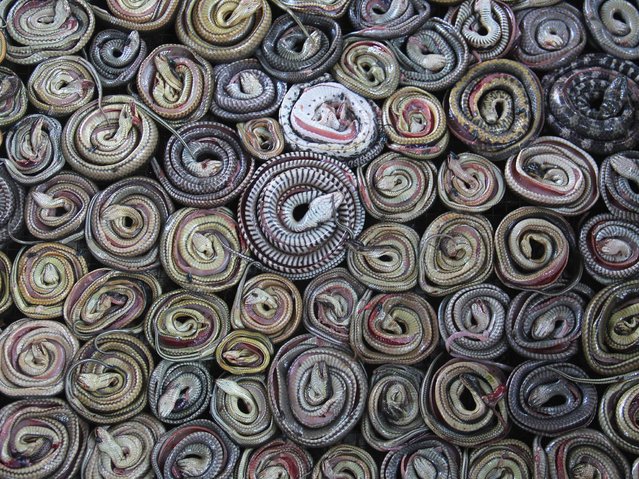
Snakes are collected and rolled before putting into the oven on March 2, 2014 in the village of Kertasura, Cirebon, Indonesia. (Photo by Nurcholis Anhari Lubis/Getty Images)

Snakes are collected and rolled before putting into the oven on March 2, 2014 in the village of Kertasura, Cirebon, Indonesia. At slaughter house snake skins measuring in the hundreds of metres, are sold to bag factories in the West and Central Java provinces on a monthly basis. From snake skin was manufactured into bags, shoes, wallets and belts. The price of a bag made from snake skin costs between 150,000 rupiah ($15 USD) and 300,000 rupiah ($30 USD), depending on its size. When snake skins reach Western fashion houses their price can increase dramatically and sell for up to $4,000 USD. (Photo by Nurcholis Anhari Lubis/Getty Images)
Details
05 Mar 2014 07:31:00
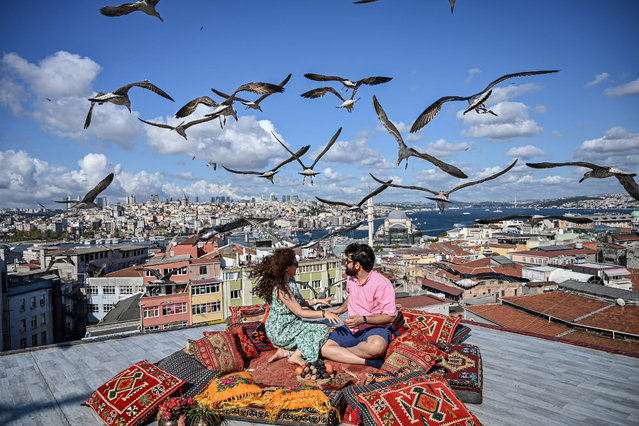
A couple sit on the terrase of a cafe in Istanbul as seagulls fly over them on September 10, 2019. (Photo by Ozan Kose/AFP Photo)

A couple sit on the terrase of a cafe in Istanbul as seagulls fly over them on September 10, 2019. (Photo by Ozan Kose/AFP Photo)
Details
12 Sep 2019 00:05:00
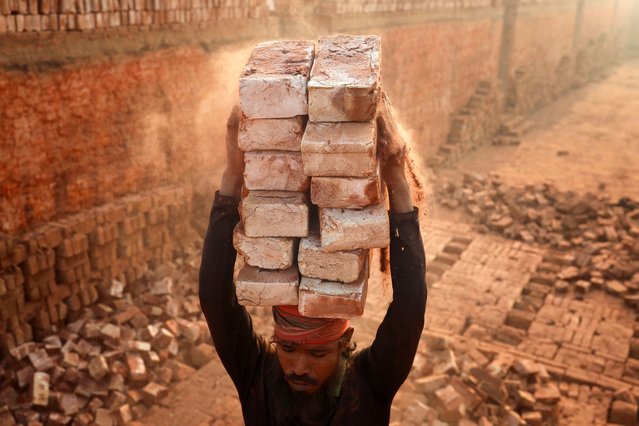
CGAP Photo Contest – South Asia Regional Winner: Bricks Worker, Bangladesh. A private enterprise worker is working at a brick field. These small businesses are creating new job opportunities for many poor people. (Photo by Moksumul Haque)

The shoemaker in Turkey, the potato seller in Vietnam, and the weaver in Bolivia are among the billions of low-income entrepreneurs who make the world go round. They are also the type of people who can benefit significantly from microfinance. Every year, the Consultative Group To Assist The Poor (or CGAP) hosts a photo contest asking entrants to submit photos based around the idea of microfinance.The purpose of the contest is to give amateur and professional photographers a chance to show the different ways that poor households manage their financial lives and make their lives better through financial inclusion. Photo: South Asia Regional Winner – “Bricks Worker”, Bangladesh. A private enterprise worker is working at a brick field. These small businesses are creating new job opportunities for many poor people. (Photo by Moksumul Haque)
Details
14 Aug 2014 10:58:00
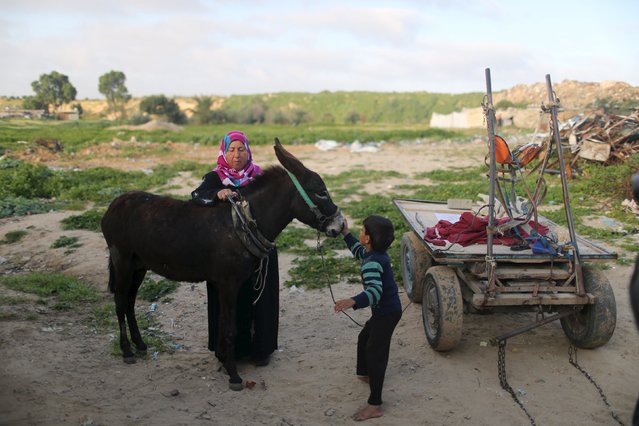
Palestinian woman Jihan Abu Muhsen prepares her donkey with her son Kareem before going work collecting bricks for sale from sites of demolished buildings, at her dwelling in Khan Younis in the southern Gaza Strip March 8, 2016. Abu Muhsen gathers bricks from the sites of demolished buildings and sells them to recycling factories. She earns around 20 shekels ($5) a day and her 10-year-old son Mohammad helps her when he is not at school. (Photo by Ibraheem Abu Mustafa/Reuters)

Palestinian woman Jihan Abu Muhsen prepares her donkey with her son Kareem before going work collecting bricks for sale from sites of demolished buildings, at her dwelling in Khan Younis in the southern Gaza Strip March 8, 2016. Abu Muhsen gathers bricks from the sites of demolished buildings and sells them to recycling factories. She earns around 20 shekels ($5) a day and her 10-year-old son Mohammad helps her when he is not at school. (Photo by Ibraheem Abu Mustafa/Reuters)
Details
19 Apr 2016 13:32:00
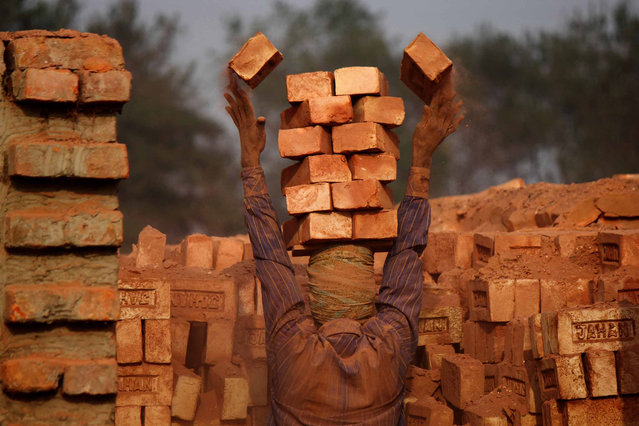
A man stacks more bricks on his head while working at in brickfields Narayanganj near Dhaka Bangladesh on January 02, 2021. (Photo by Kazi Salahuddin Razu/NurPhoto via Getty Images)

A man stacks more bricks on his head while working at in brickfields Narayanganj near Dhaka, Bangladesh on January 02, 2021. (Photo by Kazi Salahuddin Razu/NurPhoto via Getty Images)
Details
29 Jan 2021 09:38:00
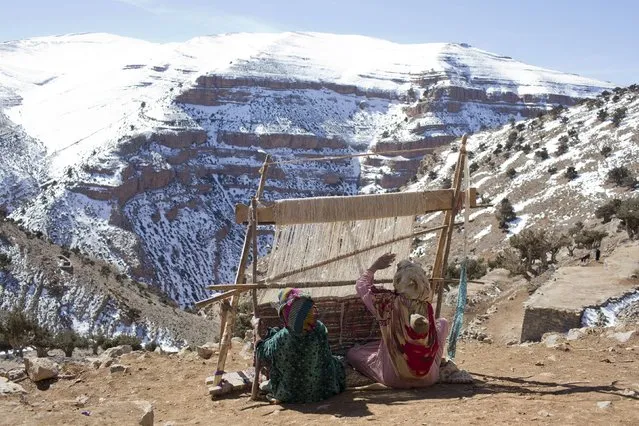
Berber women weave traditional carpets in the village of Ait Sghir in the High Atlas region of Morocco February 15, 2015. The snowy foothills of the High Atlas mountains in Morocco are home to several Berber villages where the inhabitants make their living by farming, baking bread in traditional ovens, herding cattle, and the making and selling of honey, olive oil and pottery. Extreme weather fluctuations and erosion that causes flooding and landslides have led to a drop in agricultural productivity, the United Nations said. (Photo by Youssef Boudlal/Reuters)

Berber women weave traditional carpets in the village of Ait Sghir in the High Atlas region of Morocco February 15, 2015. The snowy foothills of the High Atlas mountains in Morocco are home to several Berber villages where the inhabitants make their living by farming, baking bread in traditional ovens, herding cattle, and the making and selling of honey, olive oil and pottery. Extreme weather fluctuations and erosion that causes flooding and landslides have led to a drop in agricultural productivity, the United Nations said. (Photo by Youssef Boudlal/Reuters)
Details
26 Feb 2015 06:07:00