Loading...
Done
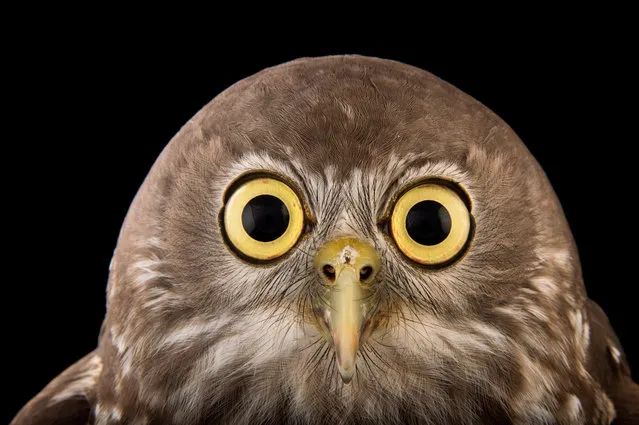
The National Geographic Photo Ark is a travelling exhibition of photographer Joel Sartore’s quest to create a photo archive of biodiversity around the world. So far, Sartore has captured studio portraits of more than 6,000 species – a number that he hopes to double. On 1 July, the ark will open at Melbourne zoo – the first time it has been exhibited in the southern hemisphere. More than 50 portraits will be on display, including many of Australian endangered animals being protected by programs at the zoo itself. These captions have been edited from text supplied by Melbourne zoo. Here: Barking owl. So-named because its call sounds like a barking dog, these birds are native to Australia, Indonesia and Papua New Guinea. In Victoria they are listed as an endangered species, and in 2003 there were estimated to be fewer than 50 breeding pairs. The main threat to the species in Victoria is loss of habitat, especially large trees with hollows in which they can nest and on which many of their prey depend. Apart from a bark, they may utter a chilling scream when they feel threatened. (Photo by Joel Sartore/National Geographic Photo Ark/The Guardian)

The National Geographic Photo Ark is a travelling exhibition of photographer Joel Sartore’s quest to create a photo archive of biodiversity around the world. So far, Sartore has captured studio portraits of more than 6,000 species – a number that he hopes to double. On 1 July, the ark will open at Melbourne zoo – the first time it has been exhibited in the southern hemisphere. More than 50 portraits will be on display, including many of Australian endangered animals being protected by programs at the zoo itself. These captions have been edited from text supplied by Melbourne zoo. Here: Barking owl. (Photo by Joel Sartore/National Geographic Photo Ark/The Guardian)
Details
01 Jul 2017 07:45:00
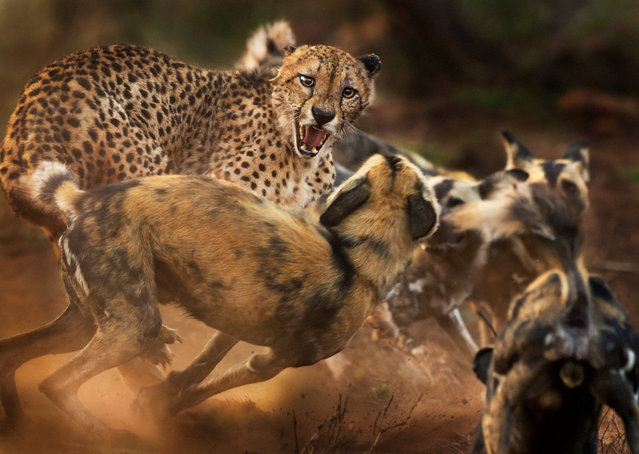
A lone male cheetah is set upon by a pack of African wild dogs. Peter Haygarth had been following the dogs as they hunted in Zimanga Private Game Reserve in KwaZulu-Natal, South Africa. On first encountering the cheetah, the dogs were wary, but as the rest of the pack arrived, their confidence grew and they began to encircle the cat. Peter kept his focus on the cat’s face. In a few minutes the spat was over as the cheetah fled. (Behaviour: mammals category). (Photo by Peter Haygarth)

A lone male cheetah is set upon by a pack of African wild dogs. Peter Haygarth had been following the dogs as they hunted in Zimanga Private Game Reserve in KwaZulu-Natal, South Africa. On first encountering the cheetah, the dogs were wary, but as the rest of the pack arrived, their confidence grew and they began to encircle the cat. Peter kept his focus on the cat’s face. In a few minutes the spat was over as the cheetah fled. (Behaviour: mammals category). (Photo by Peter Haygarth)
Details
10 Sep 2019 00:03:00
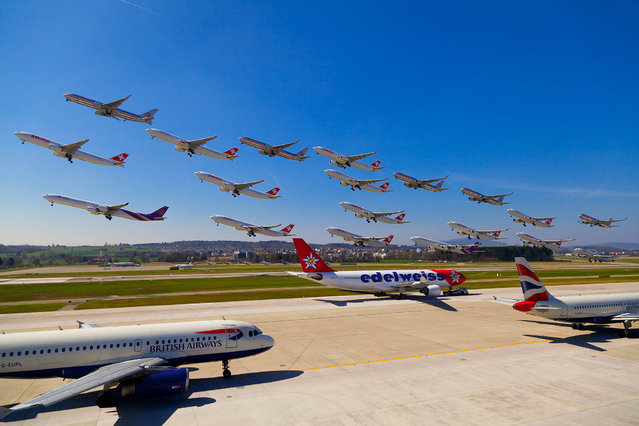
Sequence Photography

Sequence photography is a technique of shooting a series of images in where the subject is captured in successive motion. This technique conveys motion in a static image, and comes in great use for sport based photography. A merged photo sequence can radically show a different perspective much more than what can be captured in a single image, you get to experience the entire process of the action taken by the athlete.
Details
14 Jul 2012 04:44:00
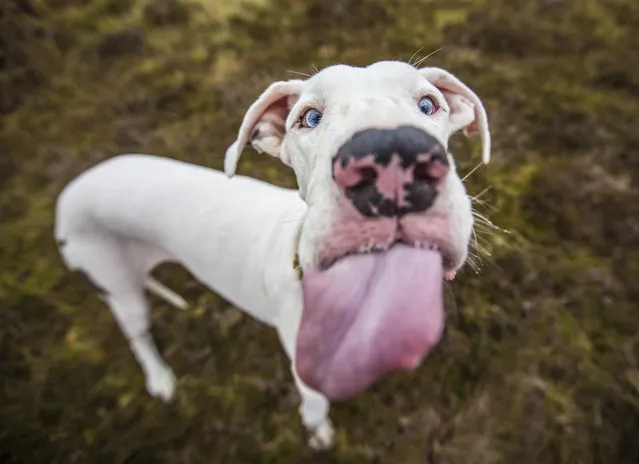
Tillie. (Photo by CatsDog Photography/Caters News Agency)

These photos were snapped at just the right moment – leading to some truly unusual images. Some of the pups are sticking out their tongue, while others are just looking at the camera – and the results are hilarious. Cat Race, 33, a dog photographer from Preston, Lancashire, in the U.K., captured the funny moments in the northwest of England over the past two years. Here: Tillie. (Photo by CatsDog Photography/Caters News Agency)
Details
30 Oct 2019 00:05:00
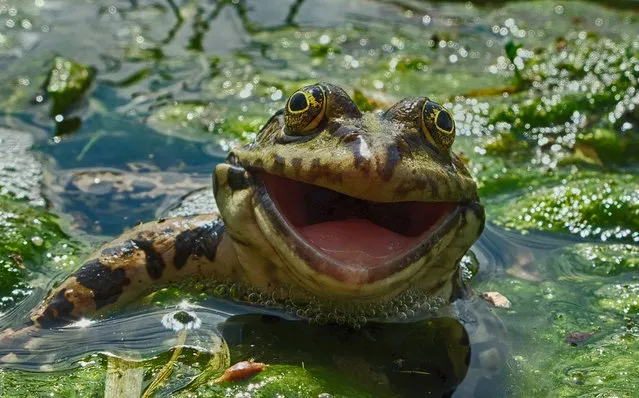
A frog appears to have a big smile for the camera, Russia. (Photo by Artyom Krivosheev/Barcroft Images/Comedy Wildlife Photography Awards 2016)

A frog appears to have a big smile for the camera, Russia. Things are heating up at the Comedy Wildlife Photography Awards as the shortlisted final 40 entries are revealed. This year's competition has featured over 2200 hilarious entries from around the world with photos including a fox face planting in the snow, a dancing brown bear and a pair of seemingly headless penguins – all beautifully photographed with perfect comedy timing and a strong conservation message. (Photo by Artyom Krivosheev/Barcroft Images/Comedy Wildlife Photography Awards 2016)
Details
08 Oct 2016 11:57:00
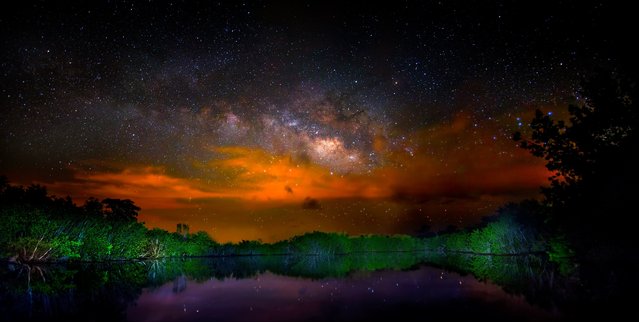
Brush fires in Everglades National Park, Florida make for a dramatic Milky Way in this panorama. A photographer set out to inspire awe in nature's wonders through the tropical wetlands of Florida. (Photo by Mark Andrew Thomas/Rex Feature/Shutterstock)

Brush fires in Everglades National Park, Florida make for a dramatic Milky Way in this panorama. A photographer set out to inspire awe in nature's wonders through the tropical wetlands of Florida. (Photo by Mark Andrew Thomas/Rex Feature/Shutterstock)
Details
21 Sep 2016 10:10:00
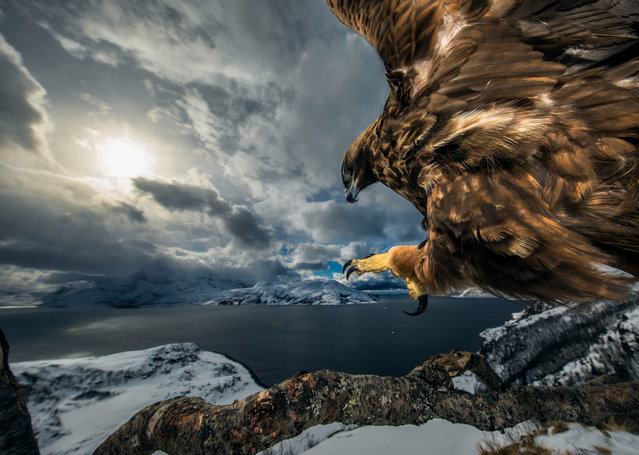
Birds behaviour winner: Land of the Eagle by Audun Rikardsen, Norway. High on a ledge, on the coast near his home in northern Norway, Rikardsen carefully positioned an old tree branch that he hoped would make a perfect golden eagle lookout. To this, he bolted a tripod head with a camera, flashes and motion sensor attached, and built himself a hide a short distance away. From time to time, he left road‑kill carrion nearby. Very gradually – over the next three years – a golden eagle got used to the camera and started to use the branch regularly to survey the coast below. (Photo by Audun Rikardsen/2019 Wildlife Photographer of the Year)

Birds behaviour winner: Land of the Eagle by Audun Rikardsen, Norway. High on a ledge, on the coast near his home in northern Norway, Rikardsen carefully positioned an old tree branch that he hoped would make a perfect golden eagle lookout. To this, he bolted a tripod head with a camera, flashes and motion sensor attached, and built himself a hide a short distance away. From time to time, he left road‑kill carrion nearby. Very gradually – over the next three years – a golden eagle got used to the camera and started to use the branch regularly to survey the coast below. (Photo by Audun Rikardsen/2019 Wildlife Photographer of the Year)
Details
17 Oct 2019 00:03:00


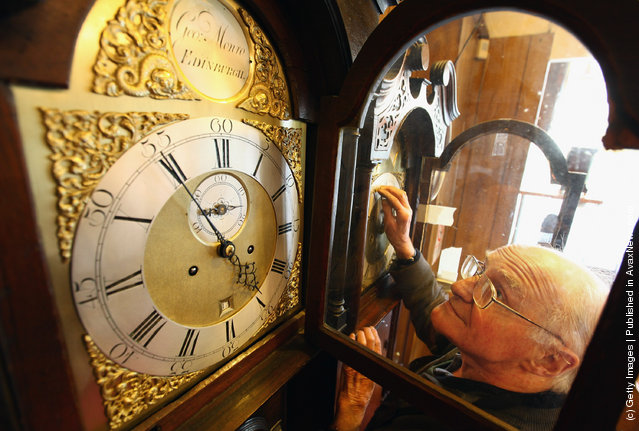
Archie McQuater, 82-year-old clockmaker at Craiglea clocks, adjusts a clock face to British Summer Time (BST) on March 25, 2011 in Edinburgh, Scotland. Clocks will be put forward by one hour at 1:00 AM GMT on Sunday March 27, 2011 officially the start of British Summer Time. British Summer Time will end this year on October 30. (Photo by Jeff J Mitchell/Getty Images)
Details
26 Mar 2011 12:06:00