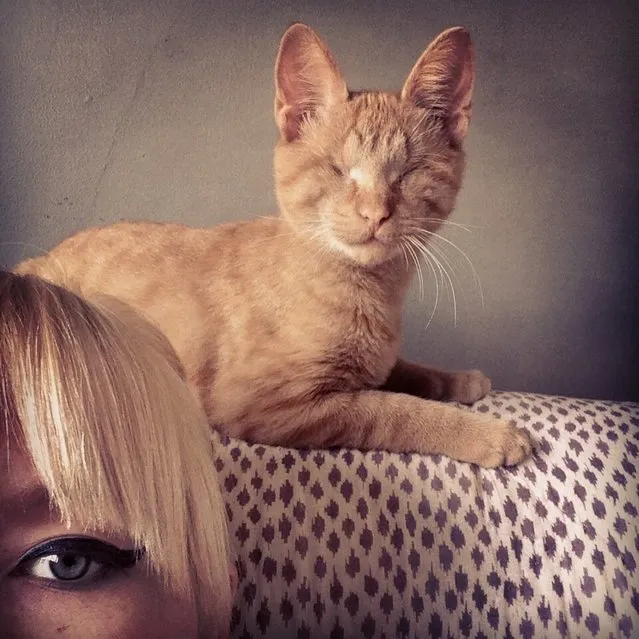
Dillon was born in the spring of 2013. He lived for four months on the streets near Boston, MA before being scooped up by the Animal Rescue League of Boston.
On the streets of Kunming, Yunnan Province, you can find odd couple – a dog and a cat who sits on his four-legged companion. They are Vantsay and Mimi. The owner of animals, a 42-year-old retired policeman Xu Jin is surprised with so strong friendship. “When I got the dog, and I began to take her for a walk, the cat became plaintive, – says the man. – So I bought a leash and began to take her too. Soon, however, the cat began to tire and quickly realized that it is much easier to ride on the back of a dog. ”
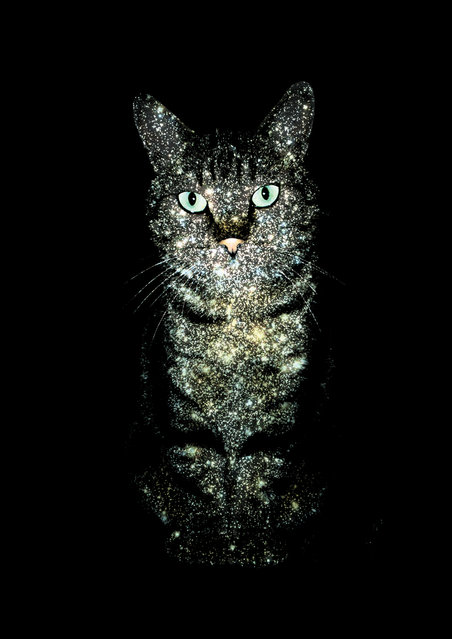
Boya Latumahina, alter ego, Zippora Lux is a Design student studying at Central St Martins in London. She has created these space age cats by combining two of her favourite things, cats and telescopic photographs.
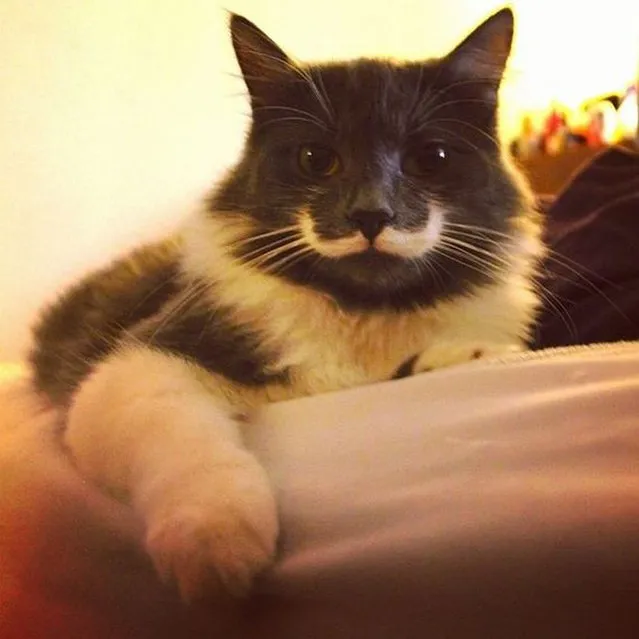
Hamilton is a rescue kitty that was born on the 4th of July (probably). He has a real mustache that is better than any mustache that has ever walked this planet
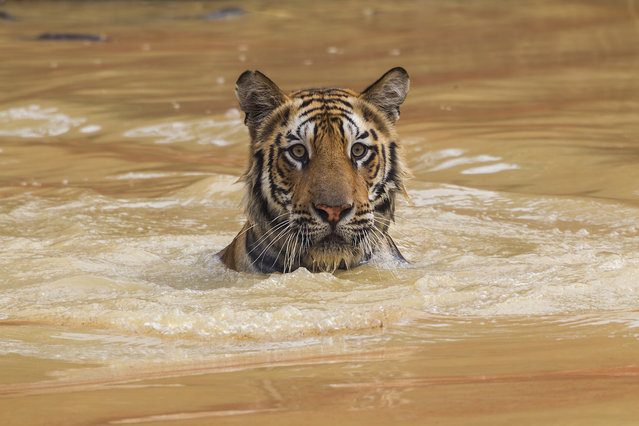
National Geographic photographer Steve Winter has spent most of his adult life shooting wild cats. Photo: A 14-month-old cub, cooling off in a pond, is riveted by a deer that appeared near the shore. Tigers are powerful swimmers; they can easily cross rivers four to five miles wide and have been known to swim distances of up to 18 miles. (Photo by Steve Winter/National Geographic)
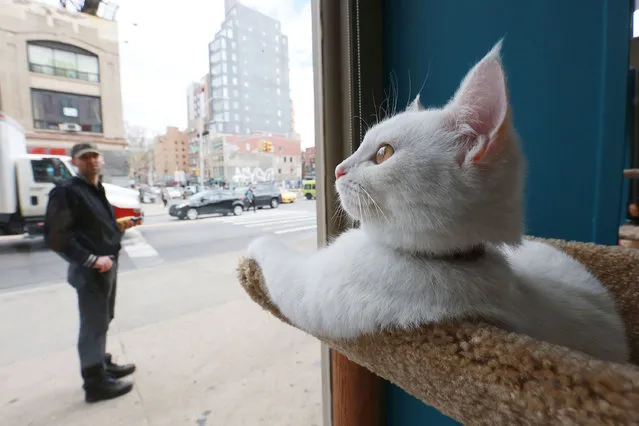
Cat lounges and makes itself at home at the new Cat Café by Purina ONE on Wednesday, April 23, 2014 in New York. (Photo by Amy Sussman/Invision for Purina ONE/AP Images)