Loading...
Done
Undivided by Patricia Piccinini

“Patricia Piccinini (born in 1965 in Freetown, Sierra Leone) is an Australian artist and hyperrealist sculptor. Her art work came to prominence in Australia in the late 1990s. Her major artworks often reflect her interests in issues such as bioethics, biotechnologies and the environment”. – Wikipedia
Details
10 Apr 2012 14:04:00
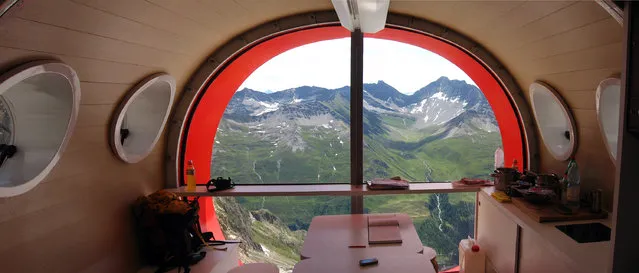
Refuge Gervasutti

New Refuge Gervasutti, the survival unit was designed by Italian architects LEAPfactory, who specialise in modular accommodation for extreme environments.’ This is a solar powered tubular mountain cabin installed on Mt.Blanc with the use of helicopters.
Details
28 Oct 2012 09:03:00
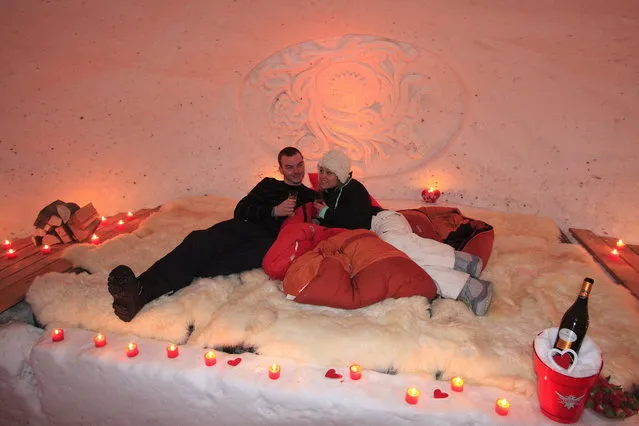
The Iglu Hotel

Welcome to nature amidst a carefully designed environment made of glistening snow crystals – rebuilt every season from 3000 tons of snow at six locations in the Alps and the Pyrenees. A vivid product for exciting events and one of the most innovative hotel concepts of our times – CO2-neutral and sustainable. A memorable experience awaits you!
Details
10 Jul 2013 11:19:00
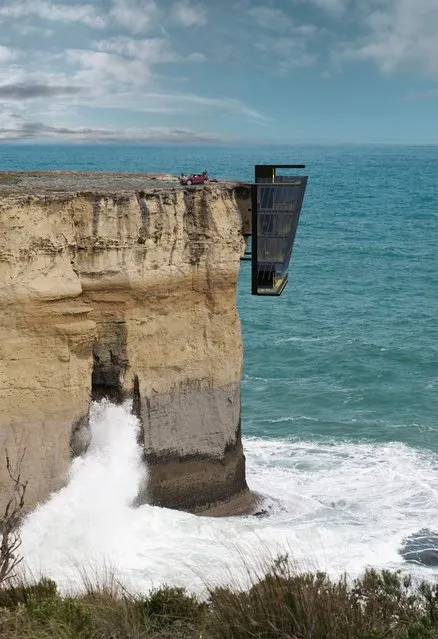
Cliff Yous By Modscape

Modscape creates beautifully simplistic prefabricated homes. The Cliff House by Modscape ($TBA) is their latest concept and it’s absolutely breathtaking. The home was created as a vacation getaway and as a complete extension of the natural environment.
Details
12 Sep 2014 09:38:00
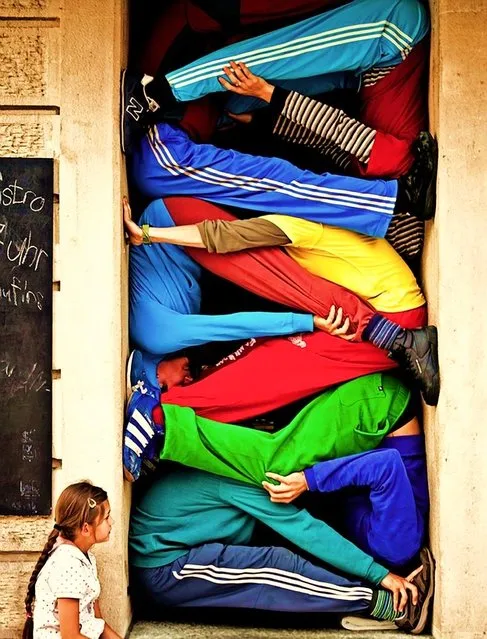
Bodies In Urban Space

“Bodies in urban spaces” is a temporarily intervention in diversified urban architectural environments. The intention of “Bodies in urban spaces” is to point out the urban functional structure and to uncover the restricted movement possibilities and behavior as well as rules and limitations.
Details
31 Jul 2014 13:41:00
Stuttgart City Library

The city of Stuttgart, Germany has officially opened a marvelous new media center, the Stuttgart City Library. This cavernous white wonder is unobtrusive in design, where the books and visitors provide the color to an otherwise neutral environment. The visual center of the Stuttgart City Library is its grand atrium, a five-story open chamber that feels like the work of a modernist MC Esher. The interior is bright without direct lighting, it is warm without paint color and intimate yet open. This work by Yi Architects is a success in design, instantly one of the world’s most beautiful libraries
Details
30 Jan 2013 14:39:00
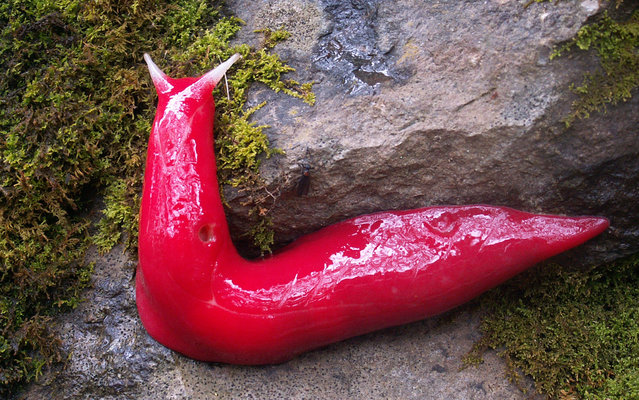
It would seem to be something you'd see only in a cartoon or at a Phish concert, but according to park rangers in New South Wales, Australia, dozens of giant, fluorescent pink slugs have been popping up on a mountaintop there. (Photo by Michael Murphy/AFP Photo/NSW Environment Office)

It would seem to be something you'd see only in a cartoon or at a Phish concert, but according to park rangers in New South Wales, Australia, dozens of giant, fluorescent pink slugs have been popping up on a mountaintop there. The eight-inch creatures have been spotted only on Mount Kaputar, a 5,000-foot peak in the Nandewar Range in northern New South Wales. Scientists believe the eye-catching organisms are survivors from an era when Australia was home to rainforests. A series of volcanoes, millions of years of erosion and other geological changes “have carved a dramatic landscape at Mount Kaputar”, the park service wrote on its Facebook page, and unique arid conditions spared the slugs from extinction. (Photo by Michael Murphy/AFP Photo/NSW Environment Office)

Details
01 Jun 2013 14:09:00
On August 31, 2012, a long filament of solar material that had been hovering in the sun's atmosphere, the corona, erupted out into space at 4:36 p.m. EDT. The coronal mass ejection, or CME, traveled at over 900 miles per second. The CME did not travel directly toward Earth, but did connect with Earth's magnetic environment, or magnetosphere, causing aurora to appear on the night of Monday, September 3. (Photo by NASA/GSFC/SDO)

On August 31, 2012, a long filament of solar material that had been hovering in the sun's atmosphere, the corona, erupted out into space at 4:36 p.m. EDT. The coronal mass ejection, or CME, traveled at over 900 miles per second. The CME did not travel directly toward Earth, but did connect with Earth's magnetic environment, or magnetosphere, causing aurora to appear on the night of Monday, September 3. (Photo by NASA/GSFC/SDO via The Atlantic)
Details
14 Sep 2012 09:01:00